Tag Archives: England

Watership Down

I still can’t believe I read this book aloud. It is huge. There are names that are very challenging to pronounce. There is a seagull character who is supposed to have a Russian accent (who I’m afraid ended up sounding like he came from the south-eastern part of the United States) And did I mention that it is huge? But the boys were getting older and they really enjoyed it, so it was all worth it.

(No, I did not show them the movie. I saw snippets of it as a child, about the same time as I saw snippets of The Last Unicorn and it terrified me–and apparently everyone else, this really is not a movie for children.)

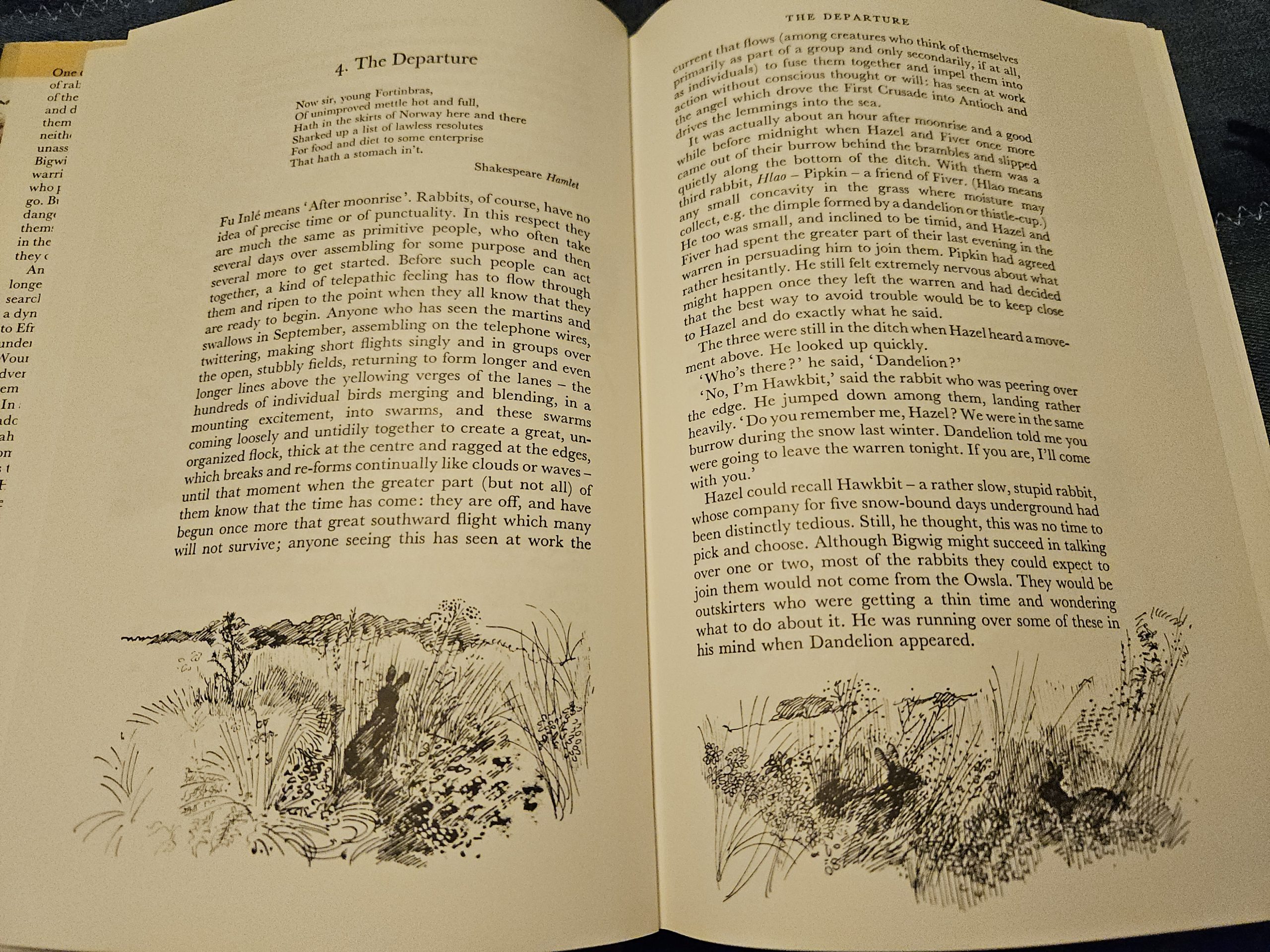
I expect this will be the final entry for this blog. My boys are now well past the optimal age of reading aloud, which means there are no new books waiting to be added. So, although I read this to the boys using a mass market paperback, as a special treat, and commemoration of the end of this project, I purchased an illustrated version of this book from England, pictured below. It has been a true pleasure working on this blog; this time with my boys was incredibly precious and this project has brought back and preserved so many memories. All the best.

Author: Richard Adams

Illustrator: John Lawrence
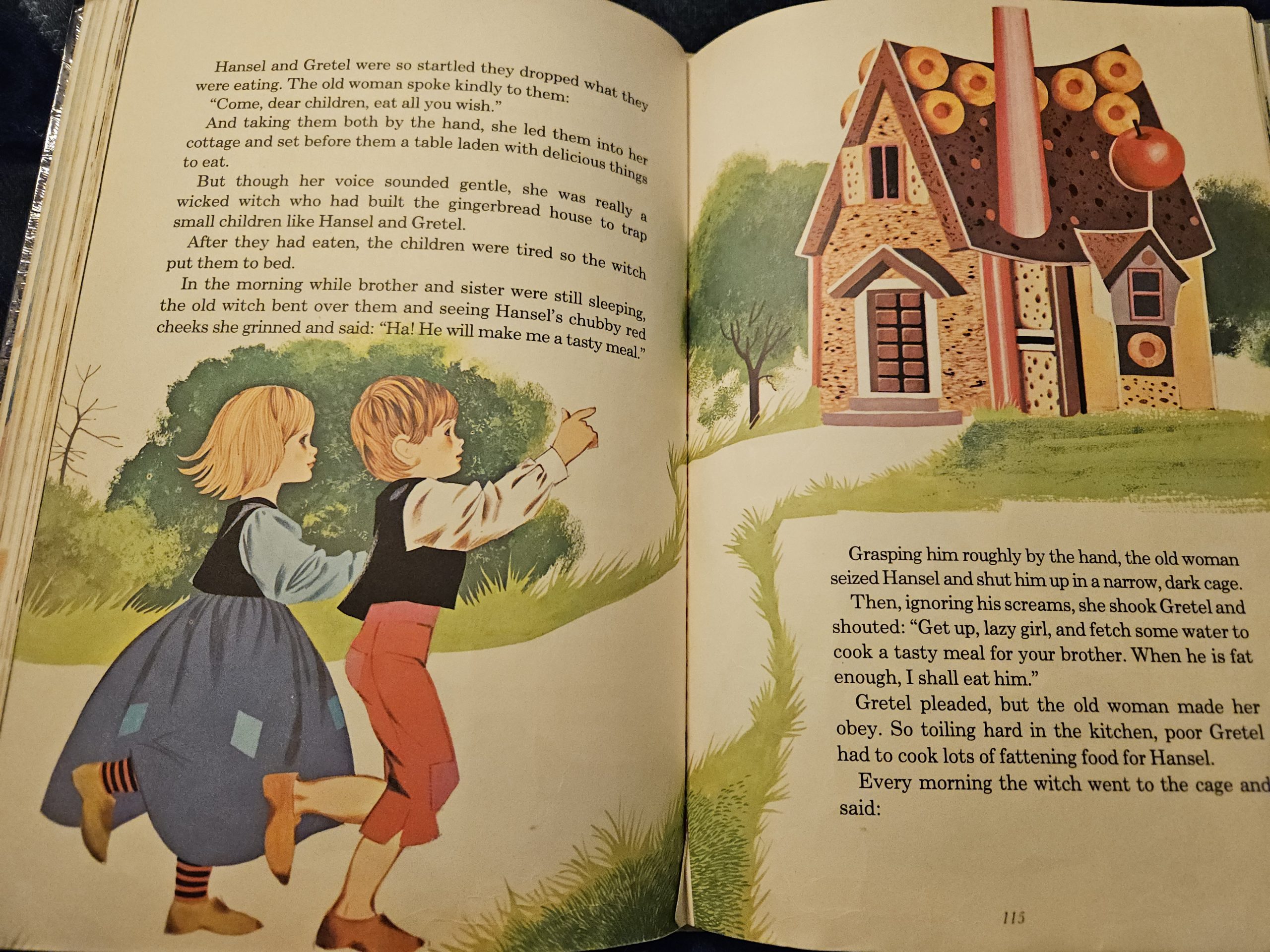
Classic Fairy Stories of the World

This book, from Cliveden Press (the 1979 edition), was the other primary fairy tale book of my childhood. As with the Childcraft book discussed below, when I think of fairy tales, a lot of the default versions in my head come from this book. And, also as with the Childcraft book, the boys didn’t spend nearly as much time with this book as I had as a child.

Authors: Many and uncredited

Illustrator: Uncredited

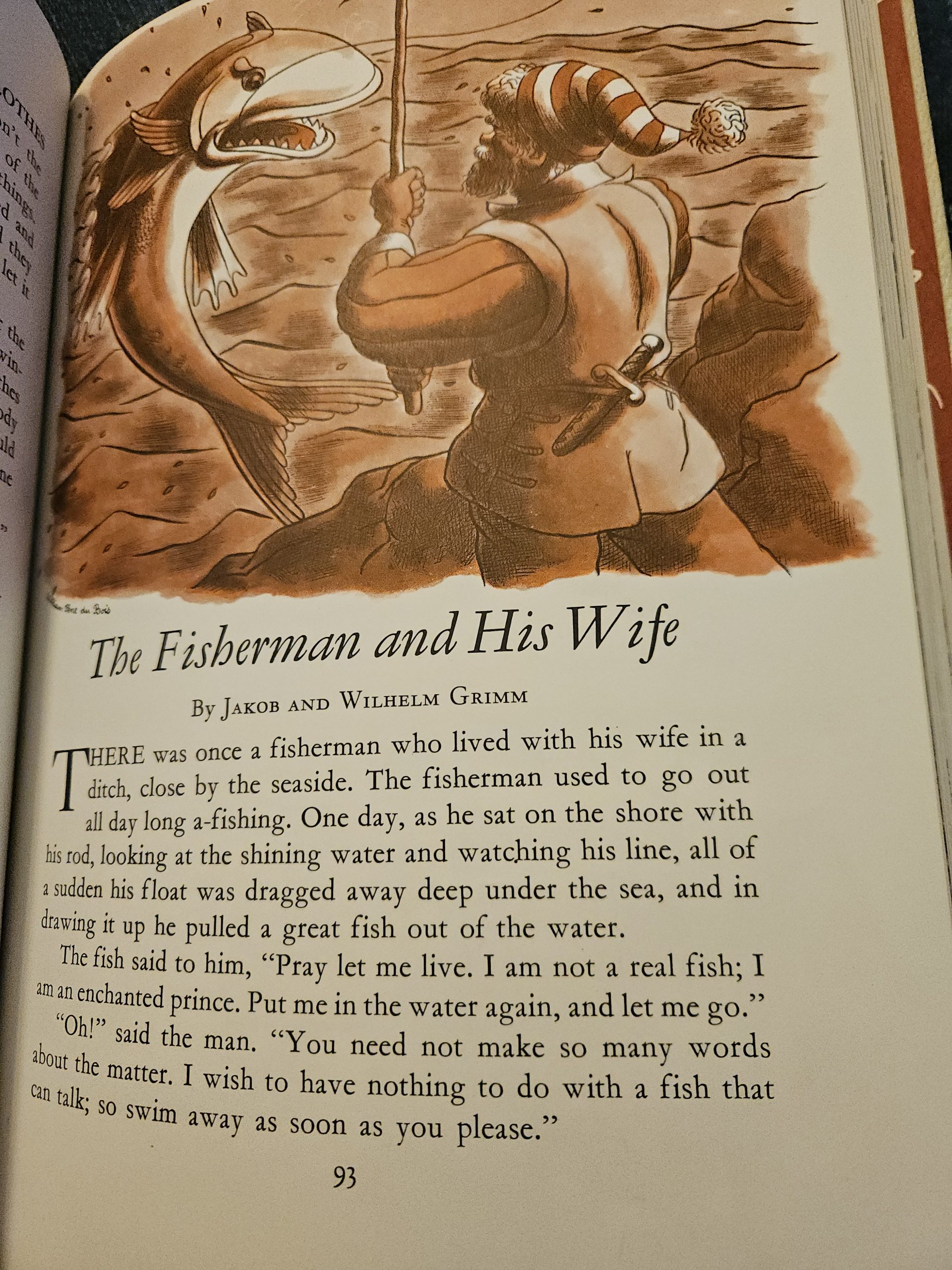
Childcraft Folk and Fairy Tales

My family of origin had the whole 15-volume Childcraft set (the 1961 edition) when I was a child, but I ignored most of them (with the exception of this volume, Storytelling and Other Poems, Animal Friends and Adventures, Life in Many Lands, and Great Men and Famous Deeds). Most of them were non-fiction, and already VERY dated. This volume, however, was a favorite. It contains a variety of (mostly European) folk and fairy tales by lots of different authors and illustrators. When I think of fairy tales, a lot of the default versions in my head come from this book.

While I read some of the stories in it to the boys (fairy tales are important for cultural literacy!), they didn’t spend nearly as much time with this book as I had as a child. (After looking at the rest of the 1961 set as an adult, I ended up donating all the other volumes).

Authors: Many

Illustrators: Many and uncredited (although some pictures are signed)

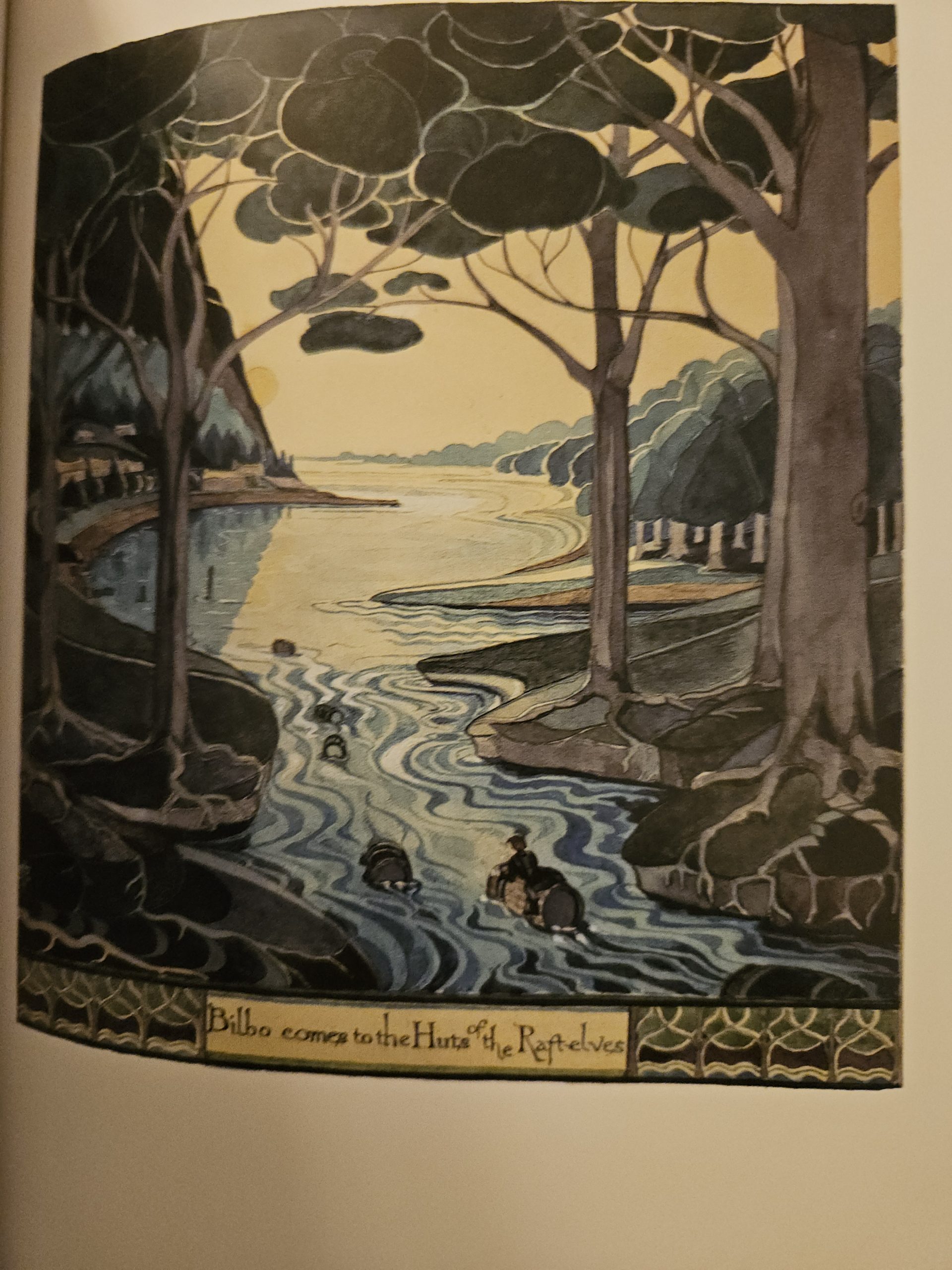
The Hobbit

This is another one that was so much fun to read aloud! If you’re reading this blog in English, you almost certainly already know the basics of this adventure. But the vibe may be unexpected. J.R.R. Tolkien told this first to his children and it really shows; there is a lightness and sense of play that largely goes by the wayside in the Lord of the Rings series that ended up following it.

Main character Bilbo Baggins is a hobbit and homebody, not a traditional heroic type. But he becomes a hero nonetheless by stepping outside his literal comfort zone and trying new things, while always maintaining his interest in creature comforts (as so lovingly described by Tolkien). It is not to be missed (and neither are the Lord of the Rings movies, which are masterpieces). Unfortunately, however, the three (!) movies made from The Hobbit should absolutely be skipped.

Author: J.R.R. Tolkien

Illustrator: J.R.R. Tolkien

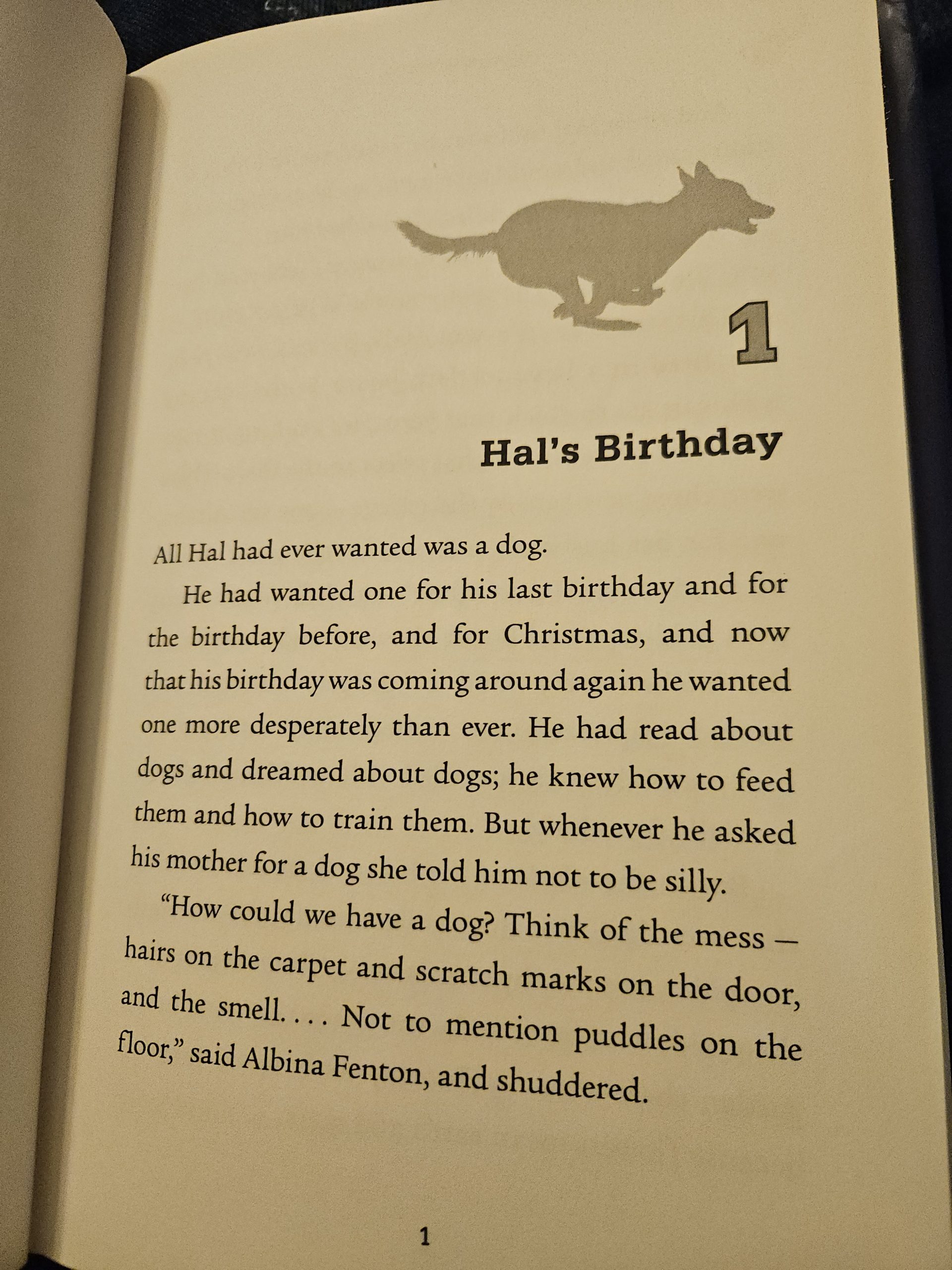
One Dog and His Boy

The dog, Speck, and boy, Hal, in this book need each other terribly and will do whatever it takes to stay together. Much of the book consists of their cross-country odyssey to Hal’s grandparents who love him (as opposed to his parents who generally treat him like a box to be checked rather than a person). Hal and Speck are initially brought together when Hal’s parents rent Speck for three days, assuming Hal will quickly lose interest in (and finally shut up about) having a dog. Other dogs in the dog rental agency end up joining Speck and Hal’s journey and their search for their proper places in the world is also an important part of the book.

This book is an interesting companion to Matilda. While Matilda’s parents are irredeemably terrible, she is a Dahl protagonist and gets on with things (to an entirely unrealistic degree, but realism isn’t Dahl’s thing). The parents in this book are also awful–materialistic and shallow, giving Hal everything except what he actually needs–but here it nearly breaks him. This book is terribly sad (dog rentals?!), funny (full of love and understanding of dogs and children), and angry (adults should not treat children or animals they way that they so often do).

While the author knows and grieves that she isn’t able to change reality, she does make sure that just about everyone in the book gets a very happy ending. This was Eva Ibbotson’s last book; it seems the book may not have made it fully through the editing process at the time of her death and I suspect if it had a few things would have been a bit more polished. And I wouldn’t have minded cutting down on some time spent with some rather villainous people that end up chasing the main characters (it’s a bit complicated). But it doesn’t really matter in the end–it’s almost impossible to put down and kept the boys riveted.

Author: Eva Ibbotson

Illustrator: N/A

James and the Giant Peach

In my opinion, this not a top-tier work of Dahl’s (Charlie and Matilda are my favorites of his, and I’m very found of Danny, the Champion of the World, although I didn’t read that one to the boys). But, as I realized when I started reading his books aloud, even his second-tier work sets a high bar. This book is odd and fun and surprising–how many authors would dare, have the hero’s parents, on the first page of the book, “suddenly . . . eaten up (in full daylight, mind you, and on a crowded street) by an enormous angry rhinoceros which had escaped the London Zoo”? Or have the hero’s companions be giant insects? (For obvious reasons, like other Dahl books, this would not be the best book for a particularly sensitive or anxious child. Things are truly terrible for James before they get much better. )

Like Charlie and the Chocolate Factory, I far prefer the original illustrations to those by Quentin Blake (who is now the default Dahl illustrator). Burkert’s pictures are very weird and atmospheric (James looks positively haunted, which makes perfect sense in the context of the book) and I love the subtle light peach color throughout the illustrations. I didn’t find its stop-motion movie very interesting and didn’t show it to the boys.

Author: Roald Dahl

Illustrator: Nancy Ekholm Burkert

The Voyage of the Dawn Treader

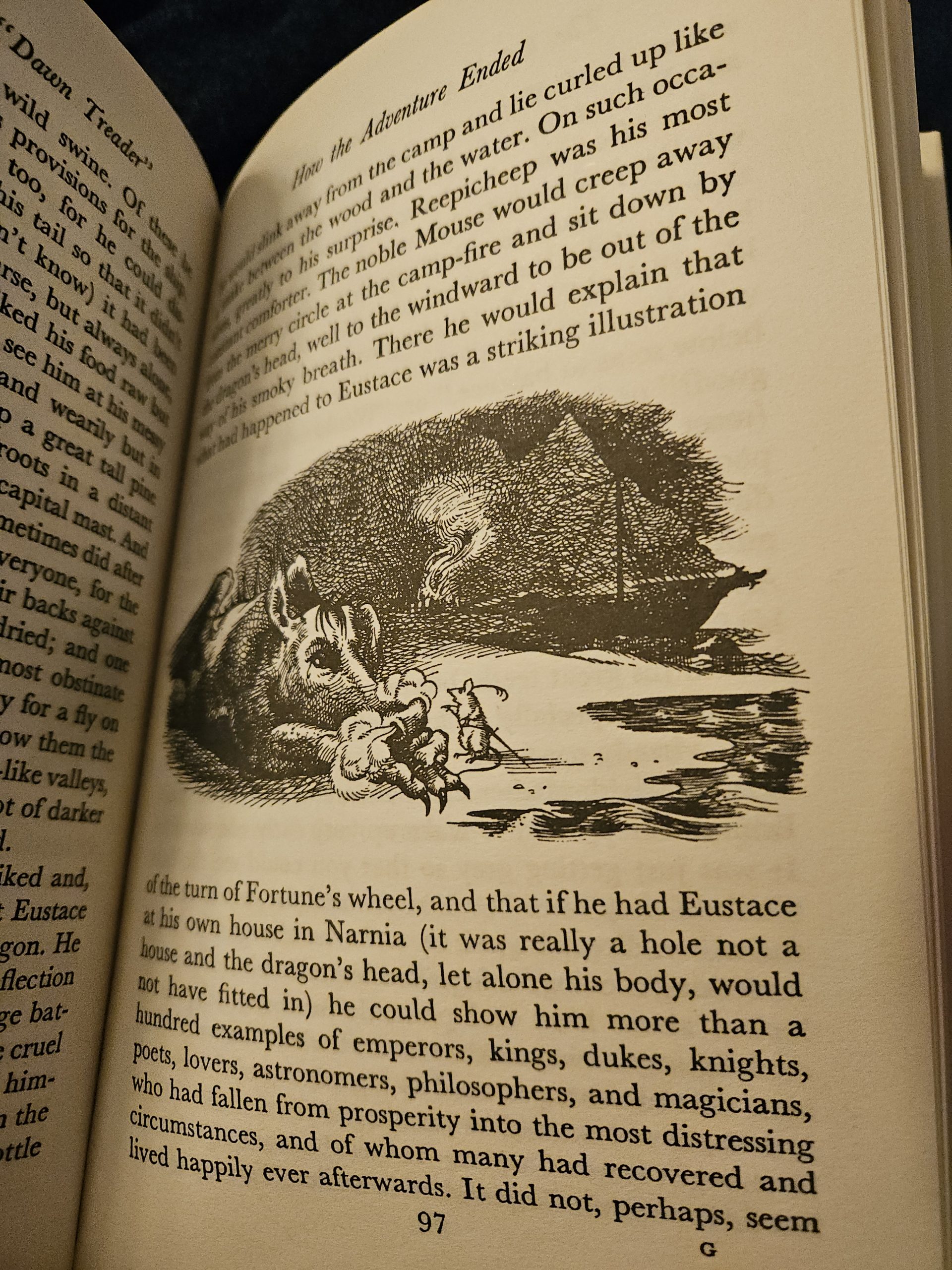
Gracious, Prince Caspian (the second published Narnia book) is boring. I didn’t miss a thing not reading that one as a kid. So, I skipped reading it to the boys, going from Wardrobe straight to The Voyage of the Dawn Treader (the third published Narnia book).  And then, well, I skipped reading them the rest of the series too (because they were dull as Caspian, even more preachy and dated than this book, and the boys never asked about them) and showing them the live-action movies.  So, as far as our family is concerned, I guess this series is a duology.  And a good one!  While Lewis is so very preachy (which I supposes makes sense in the Christian allegory context that he was working within–see my discussion of Wardrobe for more on this) and the pictures are generally awkward (as with Wardrobe), it is full of adventure and a nice change to have an antihero as a main character, someone needs a lot of personal growth rather than starting off perfect.  But the real draw in Dawn Treader, as far as I’m concerned, will always be the glorious Reepicheep.  Well, and the opening line:  “There once was a boy called Eustace Clarence Scrubb and he almost deserved it.”

Author:  C.S. Lewis

Illustrator:  Pauline Baynes   

A Little Princess

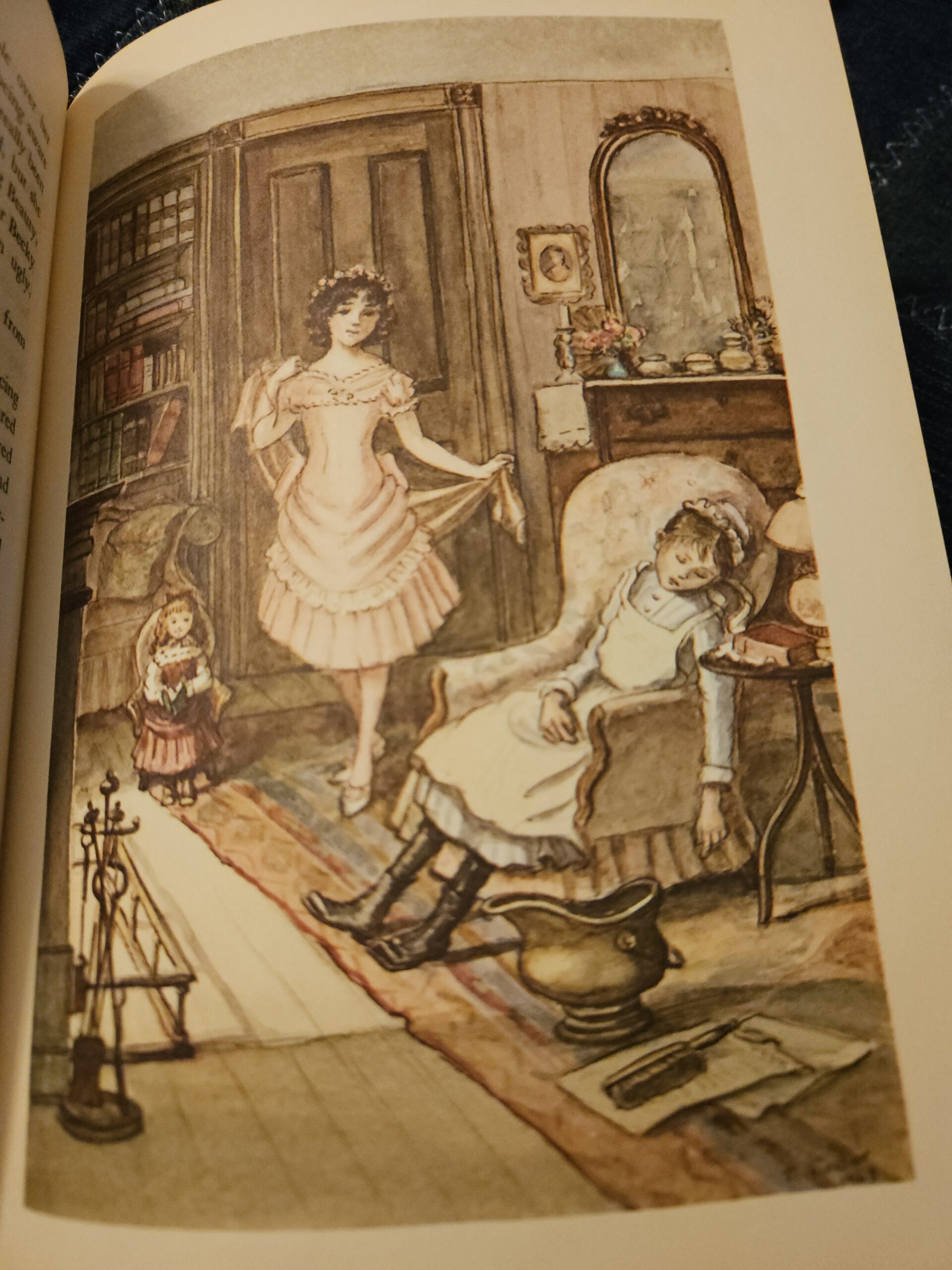
Like Matilda, this book focuses on a child escaping from awful circumstances by the power of her mind and creativity. I read it over and over as a child–Sara’s times of luxury and deprivation, love and misery, were enthralling (as was the glimpse into British boarding schools of the nineteenth century). And the sumptuous pictures! I read The Secret Garden by the same author around the same time. It never spoke to me in the same way (perhaps it would have if I’d had a copy of the edition Tasha Tudor illustrated), but it did make a a musical I hugely enjoyed as a young teen. (Avoid the movie of A Little Princess with Shirley Temple at all costs.)

Caveat: Keep in mind that both A Little Princess and The Secret Garden are about 120 years old and aspects of them have not aged well at all–read them alone first, there are a lot of things you’ll want to be ready to discuss if you read it to a child.

Author: Frances Hodgson Burnett

Illustrator: Tasha Tudor

Matilda

Oh, was there ever a better story for a book lover who doesn’t quite fit in? I knew from my childhood what a wonderful book this was to read alone, but this is another one where reading it aloud unlocks a whole new level of enjoyment. (That it has so many pranks and tricks did not hurt at all in keeping the boys attention.) That it has now been adapted into a musical is a fun bonus (although none of us loved the movie and we never have seen the non-musical live action movie).

Caveat: Like all Dahl books, this would not be the best book for a particularly sensitive or anxious child. Things are truly terrible for Matilda at home and at school for most of the book. But they do get much better!

Author: Roald Dahl

Illustrator: Quentin Blake

Architecture According to Pigeons

IMG_5391

This book purports to be written by a pigeon. And it is about architecture. (Let us accept from the beginning that it is deeply odd.) It is also jam packed with real information; while my oldest has read most (all?) of it, I have not read very much of it aloud. Instead, I’ve focused on the names of the buildings (human and pigeon) and the eye-catching pictures, which had the unexpected result of my youngest (already a huge pigeon fan) becoming sure he spoke fluent pigeon. About six months ago, he frequently approached pigeons asking them excitedly if the were going to see the Great Worm (also known as the Great Wall of China) and was very disappointed when they flew away without responding.

Author: Speck Lee Tailfeather (aided by Stella “Pigeon Whisperer” Gurney)
Illustrator: Natsko Seki