Tag Archives: Mythology

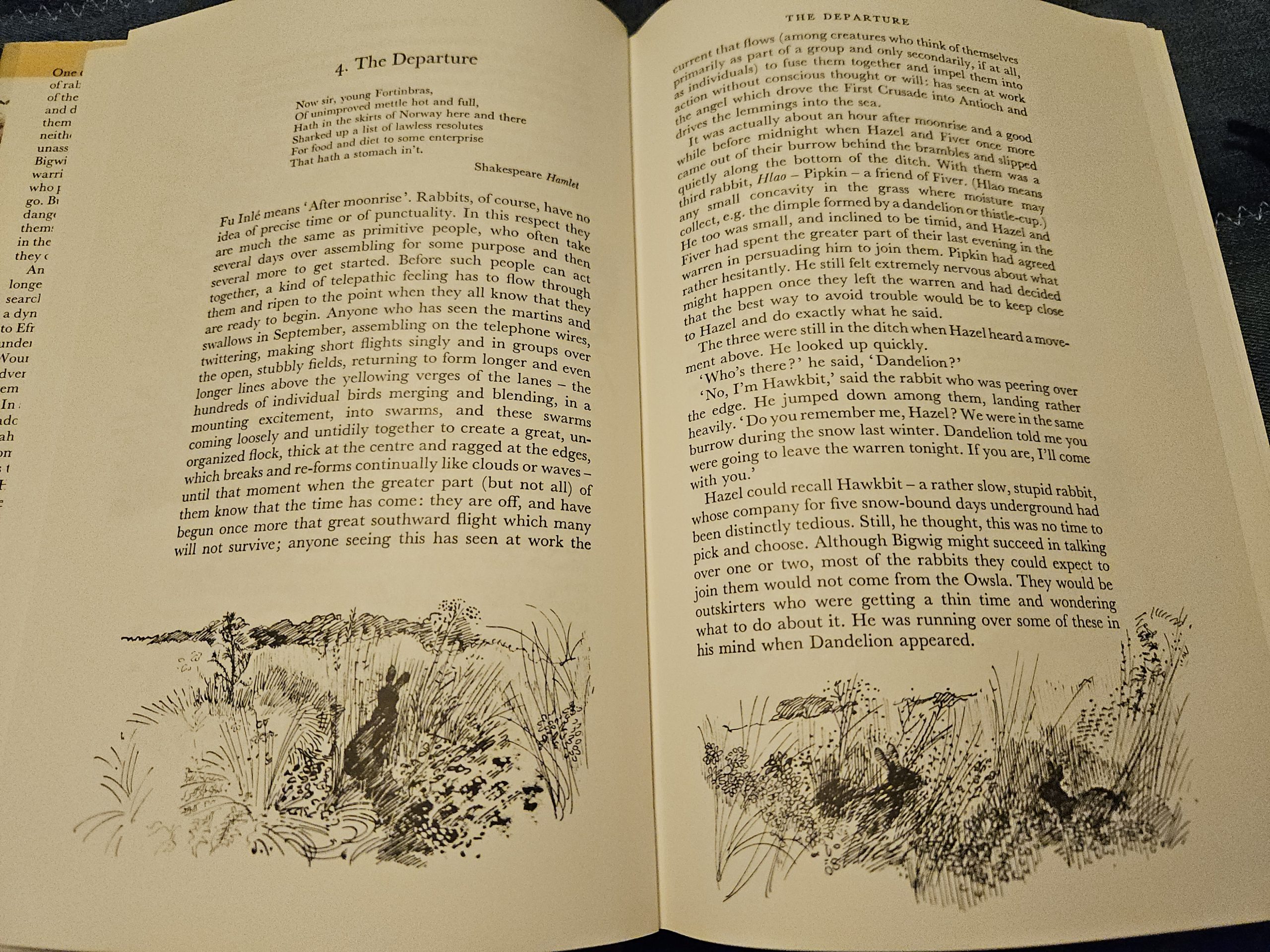
Watership Down

I still can’t believe I read this book aloud. It is huge. There are names that are very challenging to pronounce. There is a seagull character who is supposed to have a Russian accent (who I’m afraid ended up sounding like he came from the south-eastern part of the United States) And did I mention that it is huge? But the boys were getting older and they really enjoyed it, so it was all worth it.

(No, I did not show them the movie. I saw snippets of it as a child, about the same time as I saw snippets of The Last Unicorn and it terrified me–and apparently everyone else, this really is not a movie for children.)

I expect this will be the final entry for this blog. My boys are now well past the optimal age of reading aloud, which means there are no new books waiting to be added. So, although I read this to the boys using a mass market paperback, as a special treat, and commemoration of the end of this project, I purchased an illustrated version of this book from England, pictured below. It has been a true pleasure working on this blog; this time with my boys was incredibly precious and this project has brought back and preserved so many memories. All the best.

Author: Richard Adams

Illustrator: John Lawrence

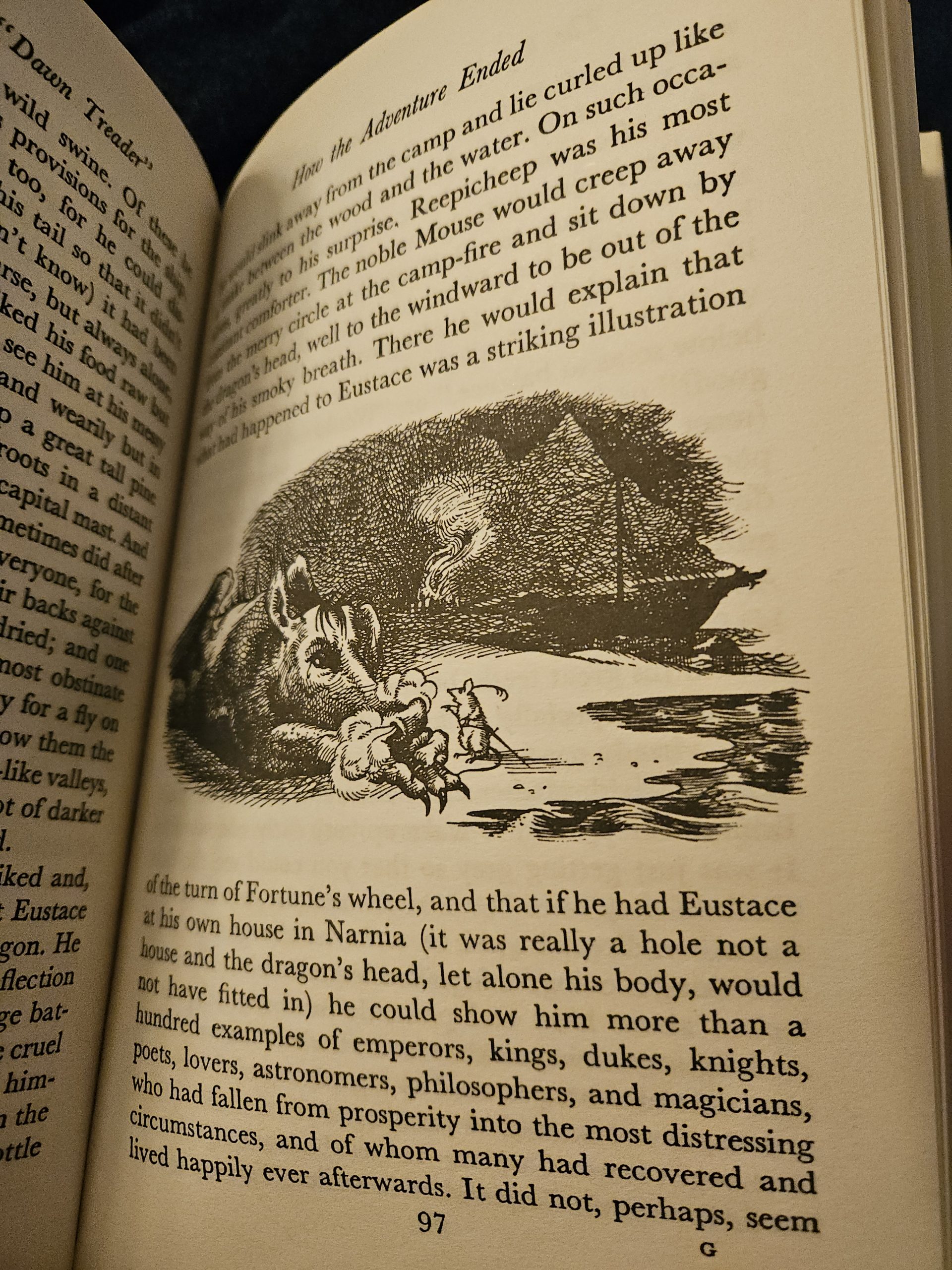
The Voyage of the Dawn Treader

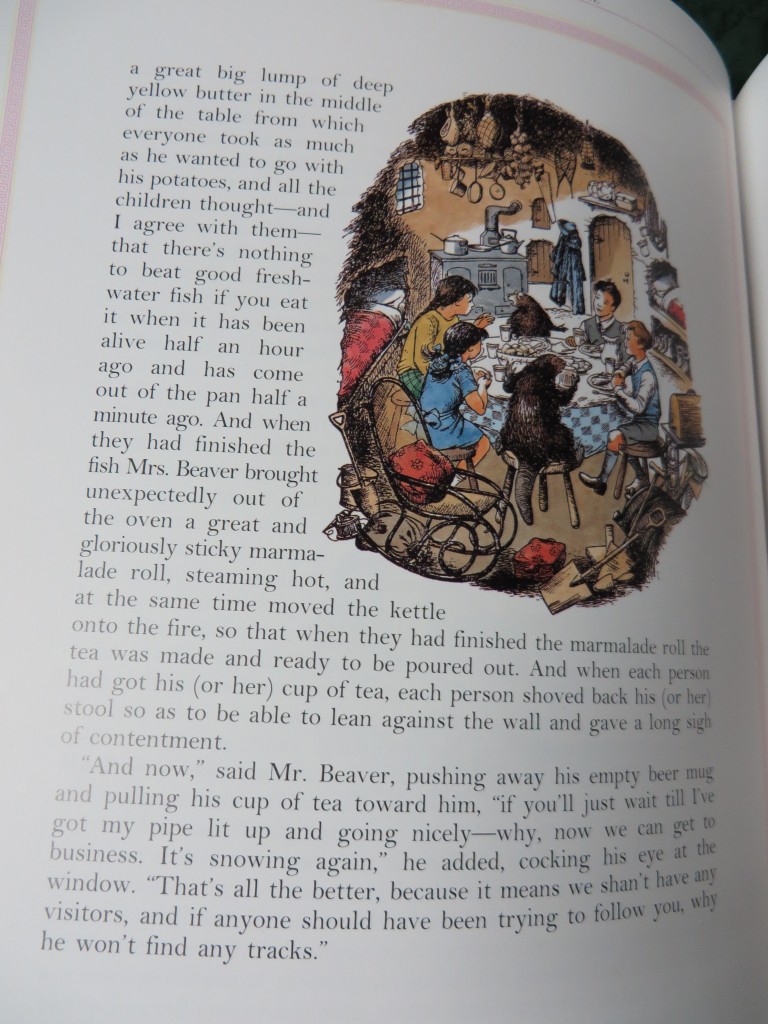
Gracious, Prince Caspian (the second published Narnia book) is boring. I didn’t miss a thing not reading that one as a kid. So, I skipped reading it to the boys, going from Wardrobe straight to The Voyage of the Dawn Treader (the third published Narnia book).  And then, well, I skipped reading them the rest of the series too (because they were dull as Caspian, even more preachy and dated than this book, and the boys never asked about them) and showing them the live-action movies.  So, as far as our family is concerned, I guess this series is a duology.  And a good one!  While Lewis is so very preachy (which I supposes makes sense in the Christian allegory context that he was working within–see my discussion of Wardrobe for more on this) and the pictures are generally awkward (as with Wardrobe), it is full of adventure and a nice change to have an antihero as a main character, someone needs a lot of personal growth rather than starting off perfect.  But the real draw in Dawn Treader, as far as I’m concerned, will always be the glorious Reepicheep.  Well, and the opening line:  “There once was a boy called Eustace Clarence Scrubb and he almost deserved it.”

Author:  C.S. Lewis

Illustrator:  Pauline Baynes   

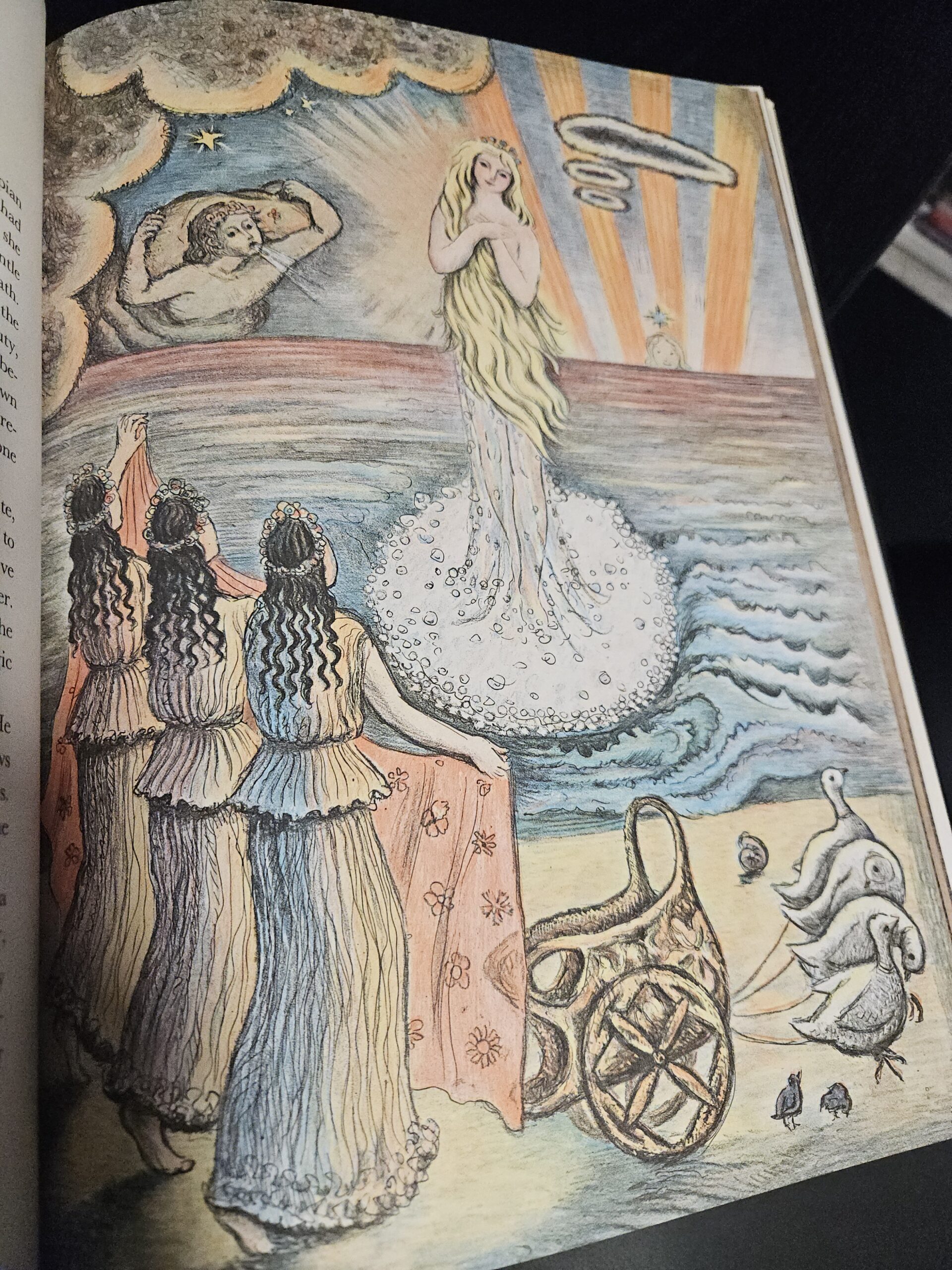
D’Aulaires’ Book of Greek Myths

This book is irresistible. Stunning, unforgettable illustrations, utterly bizarre and intriguing stories. I loved reading it over and over in my school’s library as a child and couldn’t wait to grab a copy of our own for the boys. Even better, there is also an unabridged audio version (read by Paul Newman, Sidney Poitier, Kathleen Turner, and Matthew Broderick), which means the boys know how to pronounce all the names correctly. These stories are foundational texts for Western culture, and you couldn’t ask for a better introduction. And then they discovered Percy Jackson, which they deeply loved, but I never read it to them, so I’m not sure I’ll be talking abut that here.

Authors: Ingri and Edgar Parin D’Aulaire

Illustrators: Ingri and Edgar Parin D’Aulaire

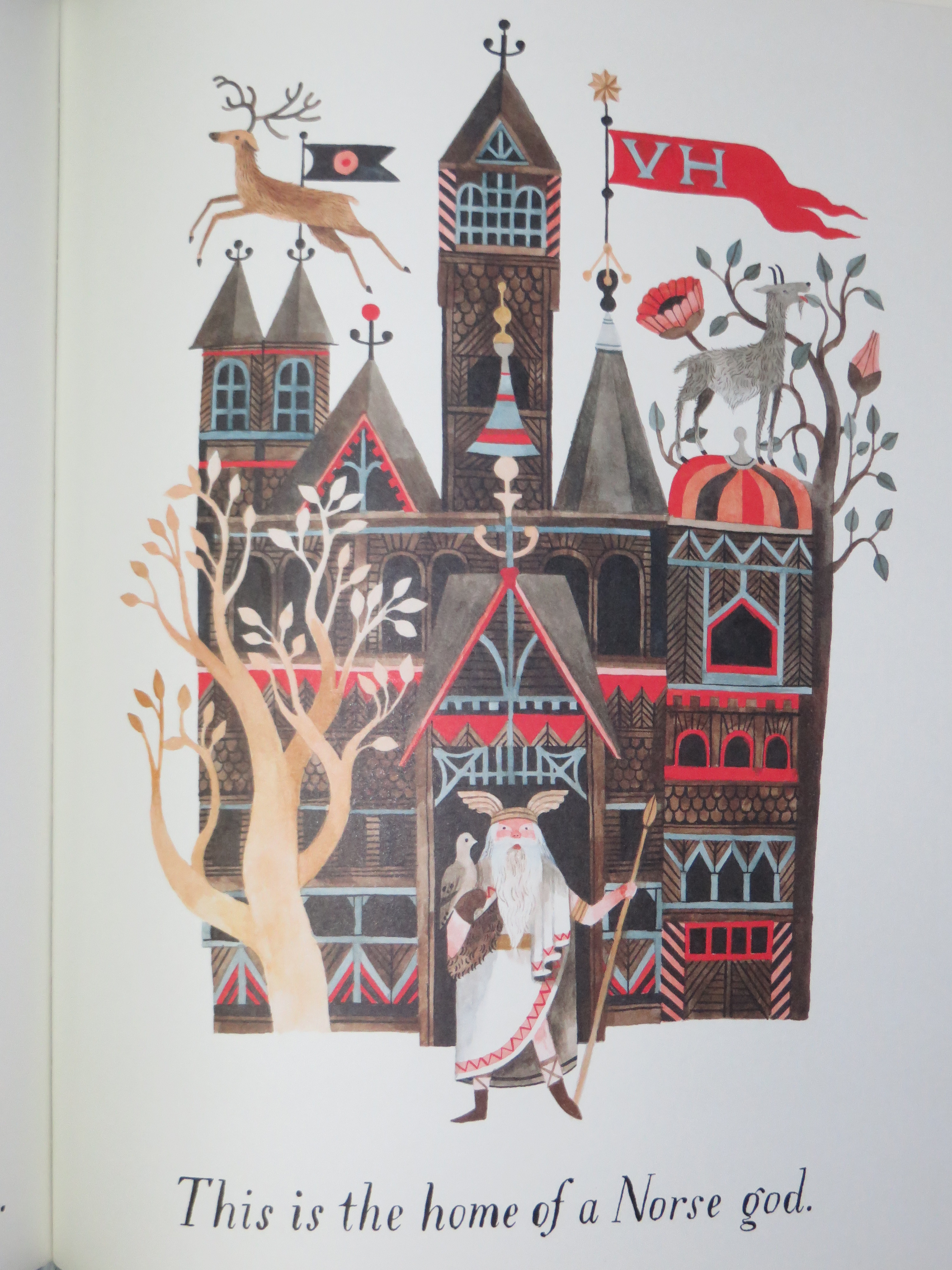
Home

IMG_5400

Where and what can a home be? Some of Ms. Ellis’ answers are conventional (for example, a nest), others are pure fantasy (see the picture above). Her drawings are deceptively-simple and peaceful–perfect for before bed. But what gives the boys the most pleasure is that every double-page spread in this book contains a dove. Sometimes the dove is easy to spot. Sometimes it is very well hidden. The boys always love finding it.

Author: Carson Ellis
Illustrator: Carson Ellis

The Lion, the Witch, and the Wardrobe

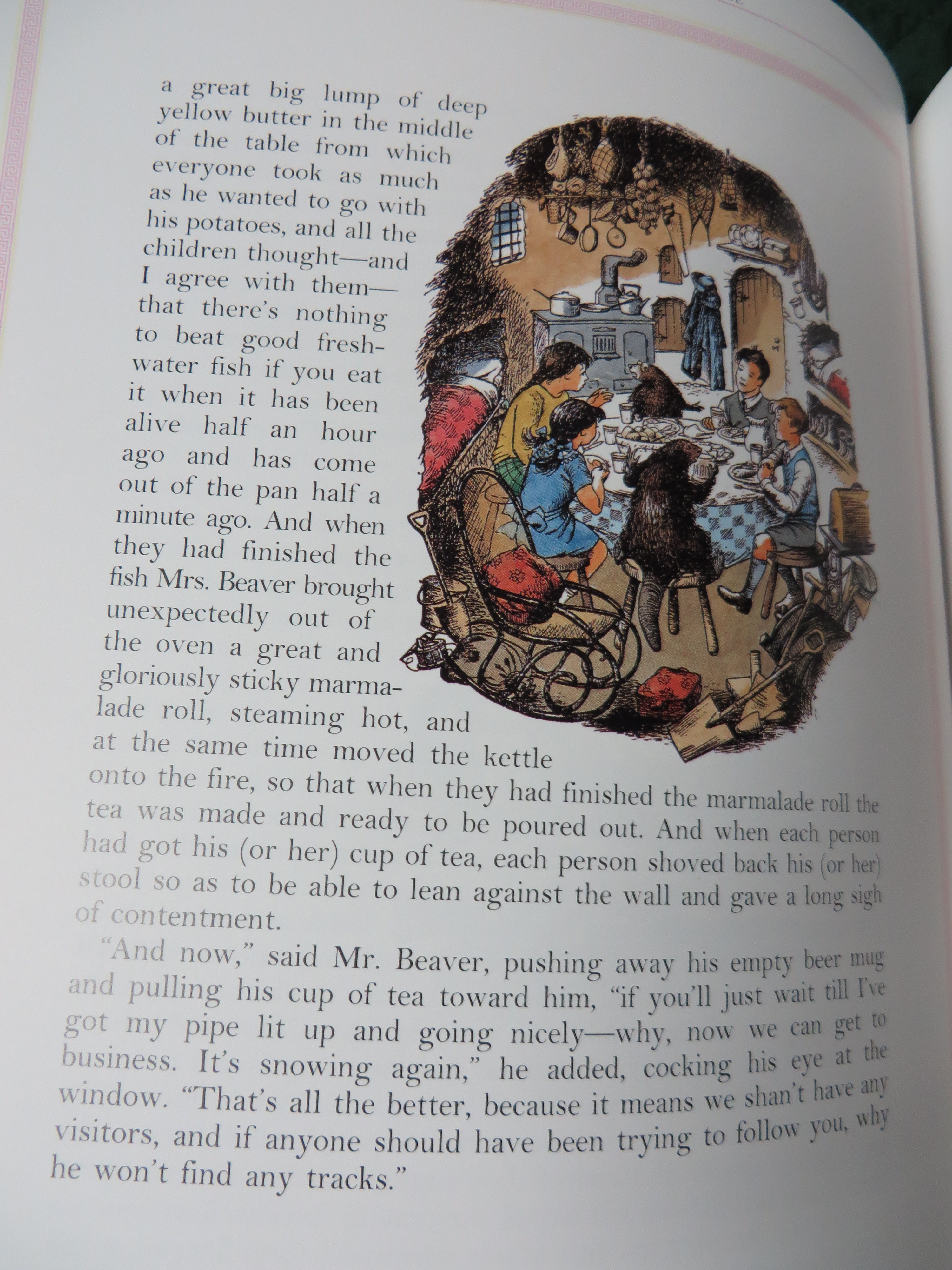
IMG_4726

I’m going to assume you know the plot of Wardrobe, given its status as an extremely widely-read, acknowledged classic of children’s literature. You may not know, however, that there is much controversy over which book in the Narnia series should be considered the first one. I started our journey to Narnia here, as Mr. Lewis did midway through the last century, because I think starting with the later-written prequel, The Magician’s Nephew, ruins the mystery and magic of Wardrobe.

I wasn’t sure how Wardrobe would work as a read-aloud and was pleasantly surprised to find it worked beautifully. Reading it aloud took much less time than I had expected and my oldest was very interested throughout.

First caveats:

Most adults know the Narnia books have a very Christian subtext, but most children (judging by my son and my childhood self) do not notice, at least with the early books in the series. A lion that dies to redeem the sins of others and then comes back to life? Carry on! It is no stranger than a magical chocolate factory staffed by oompa loompas or a father who goes out for some milk and is delayed by aliens, pirates, vampires, and space-traveling-talking dinosaurs. Whether you love that or hate the subtext, some familiarity with Narnia is is necessary for cultural literacy (for example, without Narnia, the excellent His Dark Materials trilogy wouldn’t make nearly as much sense). There is a bit of obvious sexism in this book, but it is not outrageous, particularly for the time period in which it was written.

Further caveats (with spoilers):

I’m not sure how far we’ll venture into this series together; I read Wardrobe early on as a child and really enjoyed it, but checked others in the series out of the library out of order and got deeply discouraged by The Magician’s Nephew (which I thought explained things that needed no explanation and just wasn’t terribly interesting) and then The Last Battle (which, among many other issues, has the Problem of Susan; nearly universally unsympathetic and one-dimensional characters; and an apocalypse, in every sense of the word, that destroys Narnia) and gave up on the series. But I recently read the third book in the series, The Voyage of the Dawn Treader (which was sent to me through a shipping error), and think my oldest would love it (although it comes with some caveats of its own, which I’ll detail if it ever gets its own entry) so I’ve ordered Prince Caspian to see if we should read it before Dawn Treader.

Final caveat:

Make sure your child is old enough for this book and this series; when good and evil battle things out in Narnia (and they do at least once in each of the Narnia books I have read) the details are vivid and the outcomes can be very, very grim.

Author: C.S. Lewis
Illustrator: Pauline Baynes

The Reluctant Dragon

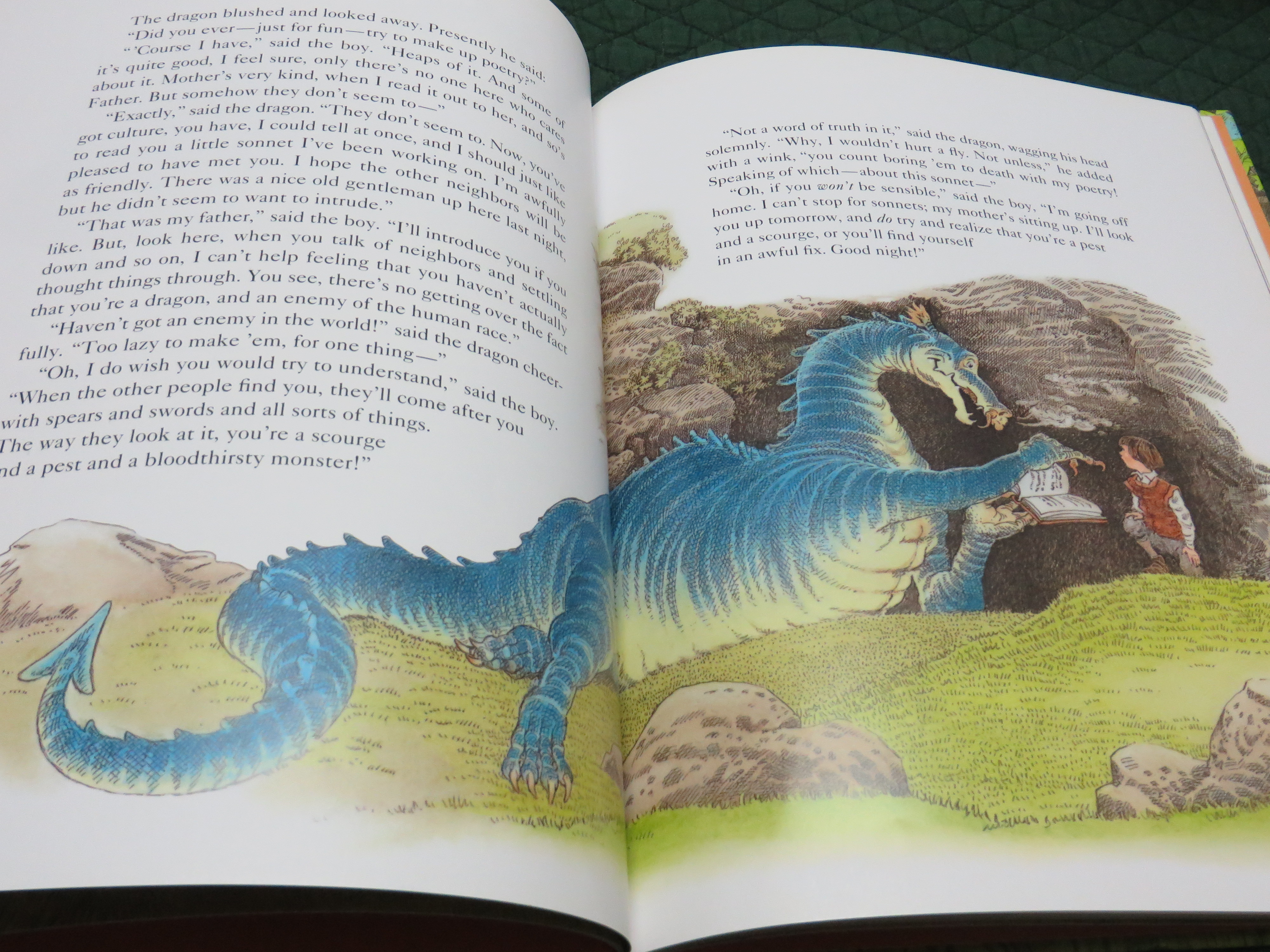
IMG_3523

“Don’t worry, Father. It’s only a dragon.”
“Only a dragon?” cried his father. “What do you mean,
only
a dragon? And how do
you know so much about it?”
“I just do,” replied the boy. “You know about sheep, and
weather, and things.
I know about dragons. I always said that
that was a dragon cave. I always said it ought to have a dragon.
In fact, I would have been surprised if you told me it
hadn’t
got a dragon. Now, please, just leave all this to me. I’ll stroll
up tomorrow evening and have a talk with him.”

Stories of dragons rarely fail us; although this story is quite long (albeit slightly edited in this version), it is very charming and my youngest frequently requests it.

Author: Kenneth Grahame
Illustrator: Inga Moore


Saint George and the Dragon

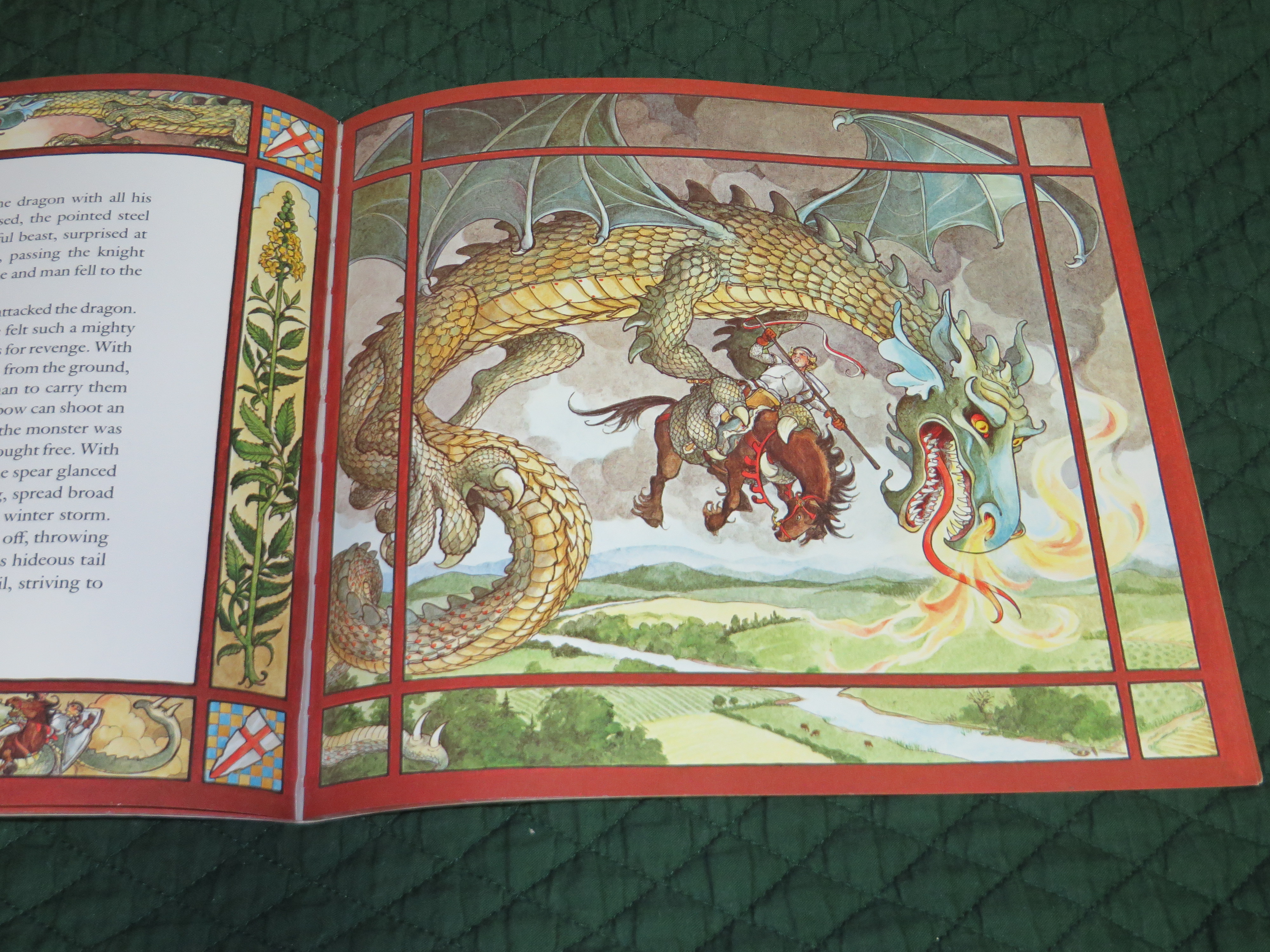
IMG_4082

In the days when monsters and giants and fairy folk lived in
England, a noble knight was riding across a plain. He wore heavy
armor and carried an ancient silver shield marked with a red cross. It
was dented with the blows of many battles fought long ago by other
brave knights.

The Red Cross Knight had never yet faced a foe, and did not even
know his name or where he had been born. But now he was bound on
a great adventure, sent by the Queen of the Fairies to try his young
strength against a deadly enemy, a dragon grim and horrible.

This is not a short read aloud and it is (unsurprisingly) quite gory. But it is interesting and strange and has dragons. The boys love it.

Author: Margaret Hodges/Edmund Spenser
Illustrator: Trina Schart Hyman

Cupid and Psyche

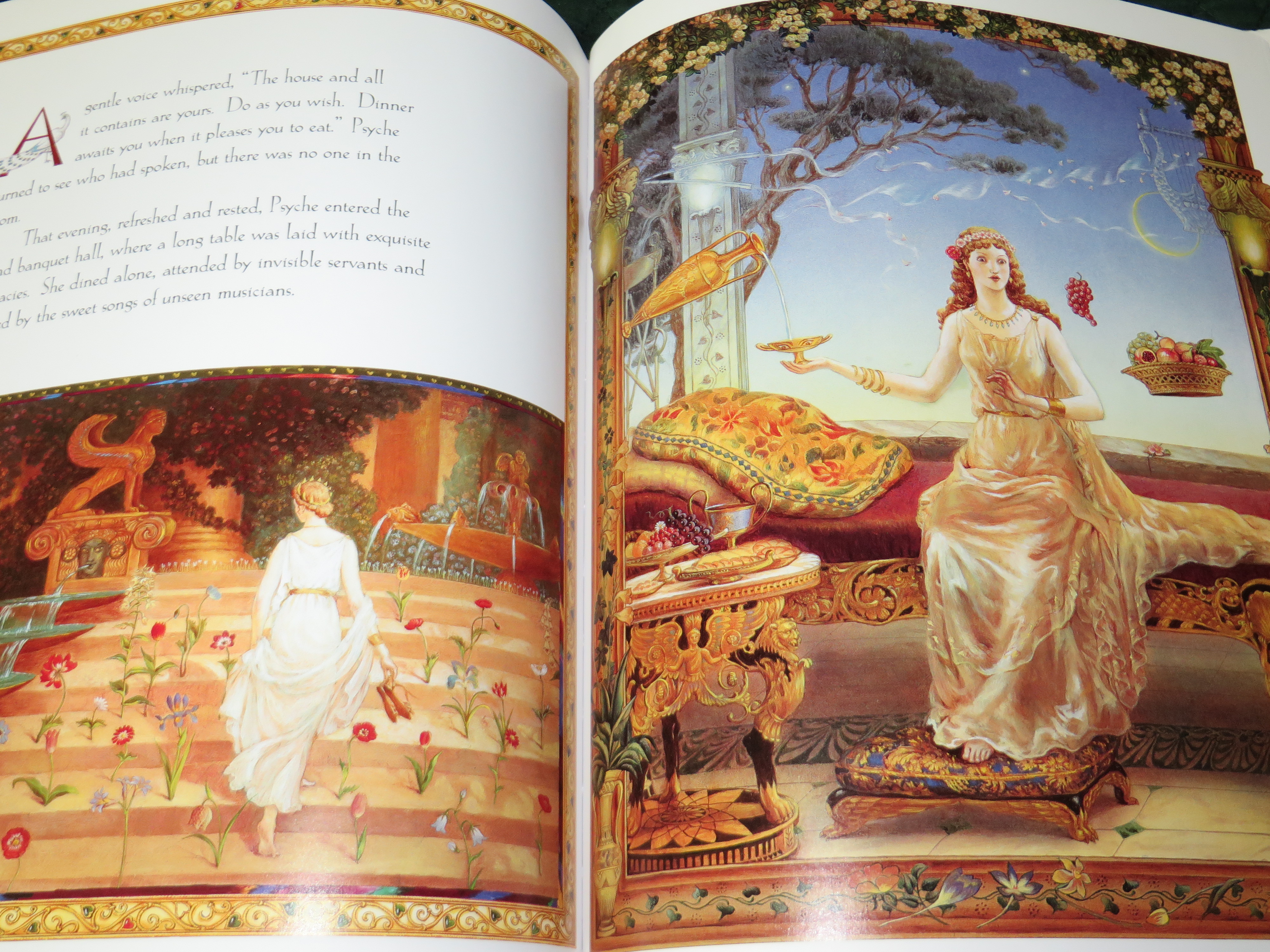
IMG_3903

Several fairy tale archetypes originate with the Greek myth Cupid and Psyche (including, especially, Beauty and the Beast). This beautiful version by a mother-daughter team (don’t judge this book by its cover; it is much more compelling inside) draws from the best parts of several ancient variants and retains the darkness and interest of the myth. The boys are fascinated with it.

Author: Charlotte Craft/Thomas Bulfinch/Lucius Apuleius
Illustrator: Kinuko Y. Craft

Odd and the Frost Giants

IMG_2266

There was a boy called Odd, and there was
nothing strange or unusual about that, not in
that time or place. Odd meant
the tip of a blade
and it was a lucky name.

He was odd though. At least, the other villagers
thought so. But if there was one thing that he
wasn’t, it was lucky.

This book has humans, gods, and giants. It has trickery, empathy, and friendship. There are talking animals, visions, eternal winter, and art. And it all goes by in a flash and my only wish is that this book was longer. (Gaiman had to keep it short, because it was written for World Book Day, but he plans to write about Odd again someday. I hope that it is someday soon.)

Author: Neil Gaiman
Illustrator: Brett Helquist

The Chocolate Touch

IMG_2271

“Don’t you think there’s such a thing as
enough?” Mr. Midas persisted. “Don’t you
think that things are best in their places? I
mean, don’t you think there’s a time for
spaghetti and a time for roast beef and even a
time for pickled herring and garlic toast, as
well as a time for chocolate? Or would you
rather have chocolate all the time?”

“Chocolate all the time,” John replied
emphatically. “Chocolate’s best, that’s all.
Other things are just food. But chocolate’s
chocolate. Chocolate–”

“I think I understand,” Mr. Midas broke in
sharply.

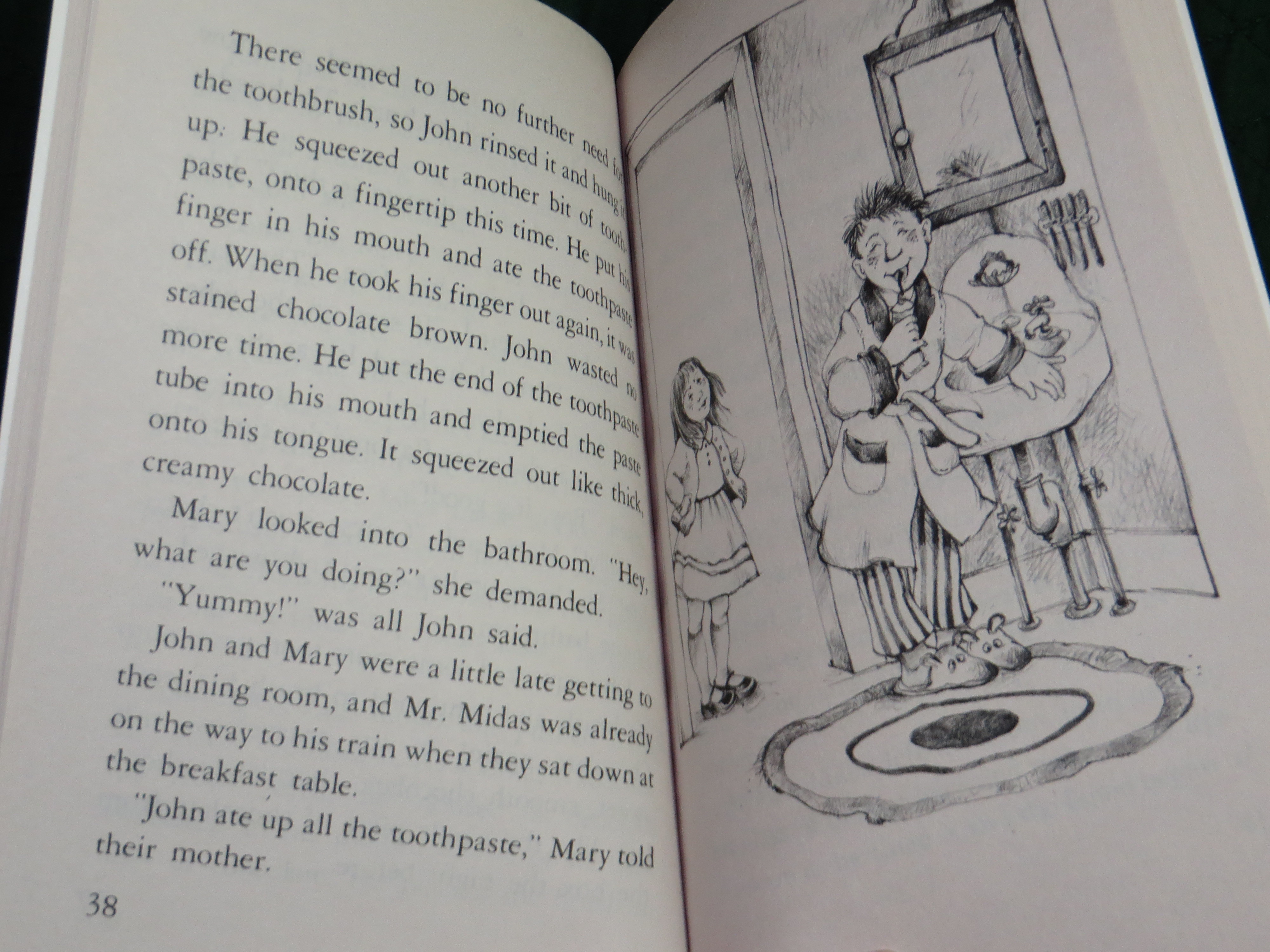
You’ve heard of King Midas’s golden touch? This book is a fun (relatively) contemporary update, the story of a schoolboy (John Midas) who has the bad luck of actually getting what he most wishes for.

If you’re looking for the original, golden, version of the story, we quite like the picture book by Charlotte and Kinuko Y. Craft.

Author: Patrick Skene Catling
Illustrator: Margot Apple