Tag Archives: fairy tale

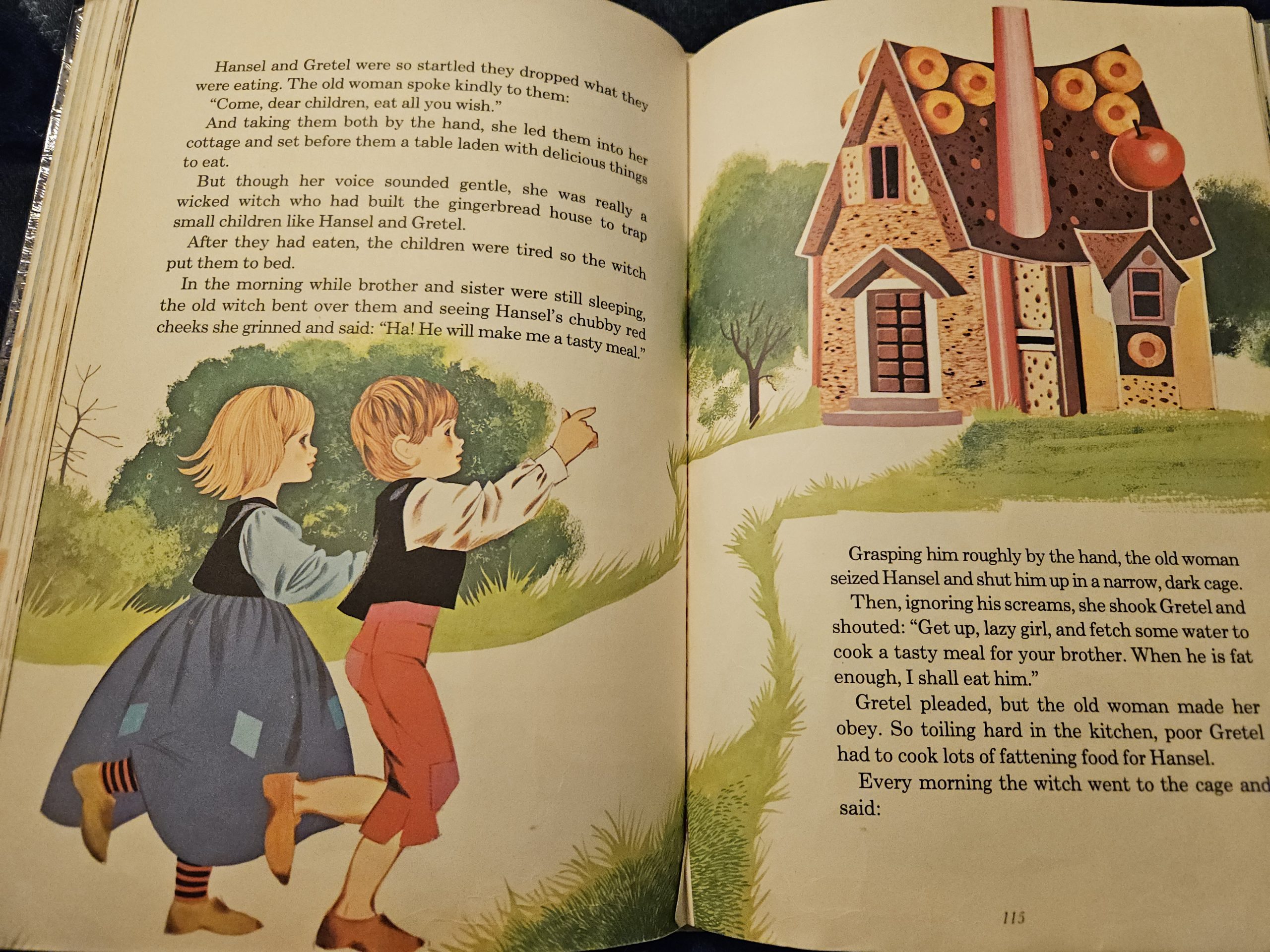
Classic Fairy Stories of the World

This book, from Cliveden Press (the 1979 edition), was the other primary fairy tale book of my childhood. As with the Childcraft book discussed below, when I think of fairy tales, a lot of the default versions in my head come from this book. And, also as with the Childcraft book, the boys didn’t spend nearly as much time with this book as I had as a child.

Authors: Many and uncredited

Illustrator: Uncredited

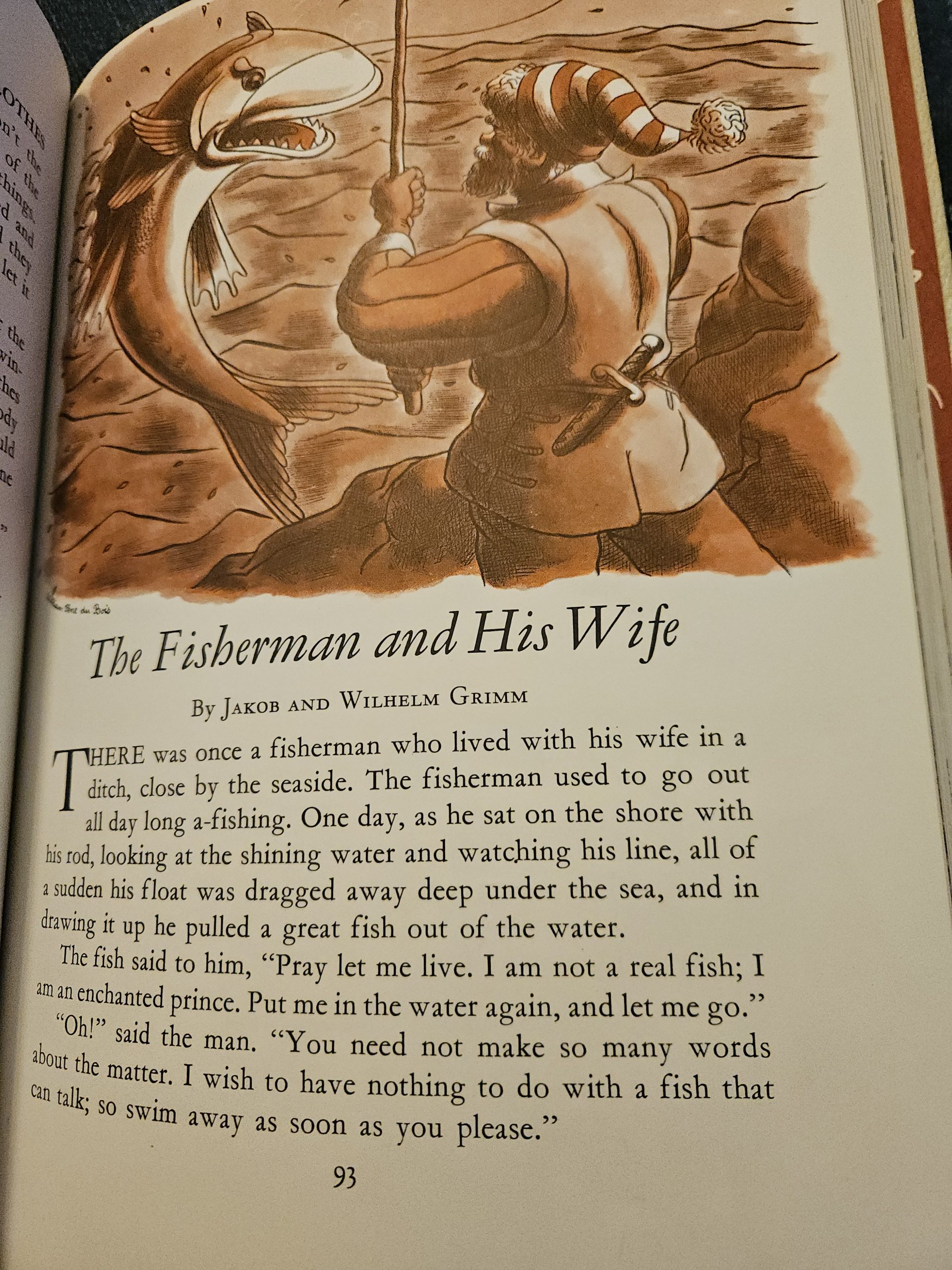
Childcraft Folk and Fairy Tales

My family of origin had the whole 15-volume Childcraft set (the 1961 edition) when I was a child, but I ignored most of them (with the exception of this volume, Storytelling and Other Poems, Animal Friends and Adventures, Life in Many Lands, and Great Men and Famous Deeds). Most of them were non-fiction, and already VERY dated. This volume, however, was a favorite. It contains a variety of (mostly European) folk and fairy tales by lots of different authors and illustrators. When I think of fairy tales, a lot of the default versions in my head come from this book.

While I read some of the stories in it to the boys (fairy tales are important for cultural literacy!), they didn’t spend nearly as much time with this book as I had as a child. (After looking at the rest of the 1961 set as an adult, I ended up donating all the other volumes).

Authors: Many

Illustrators: Many and uncredited (although some pictures are signed)

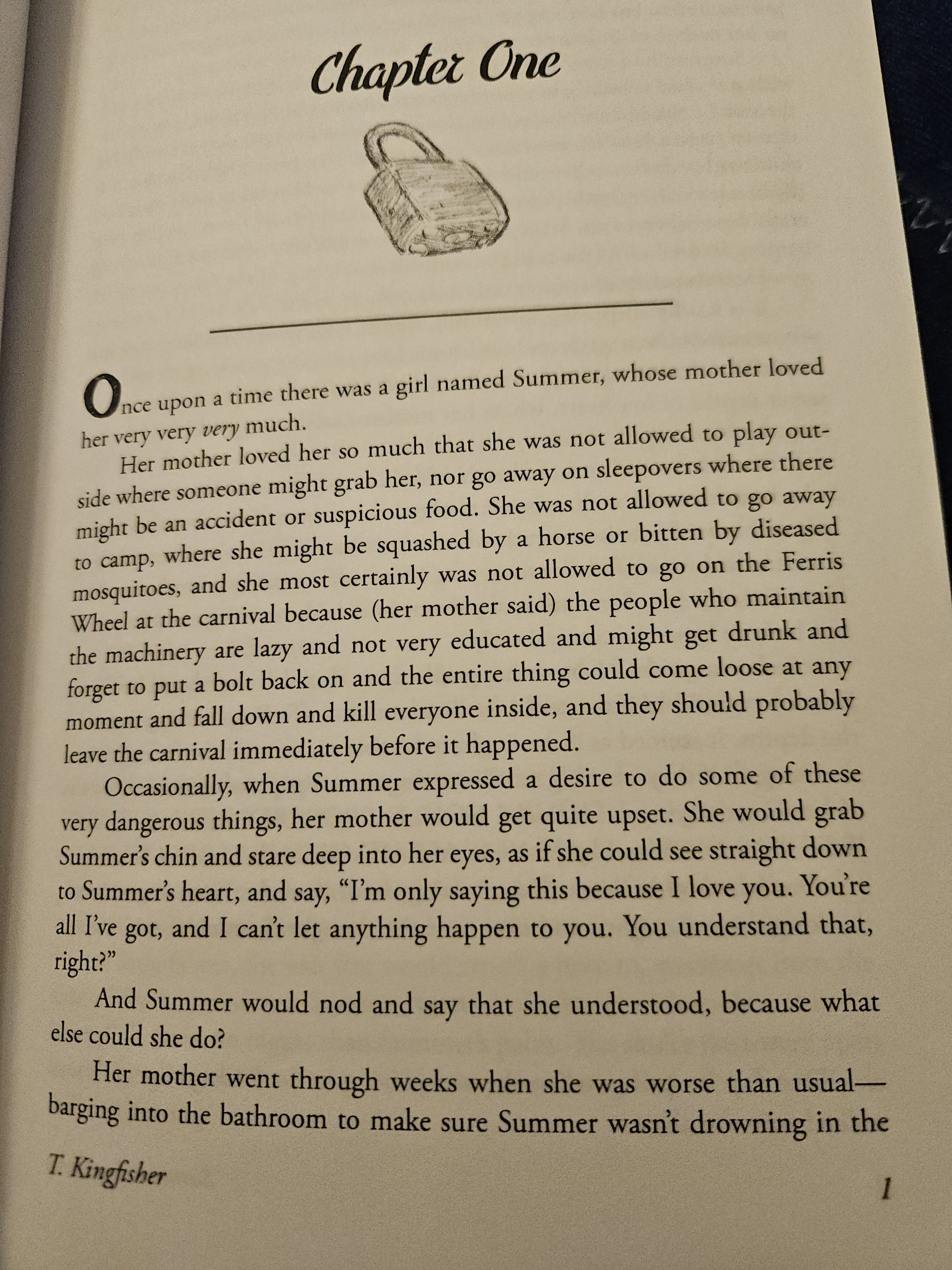
Summer in Orcus

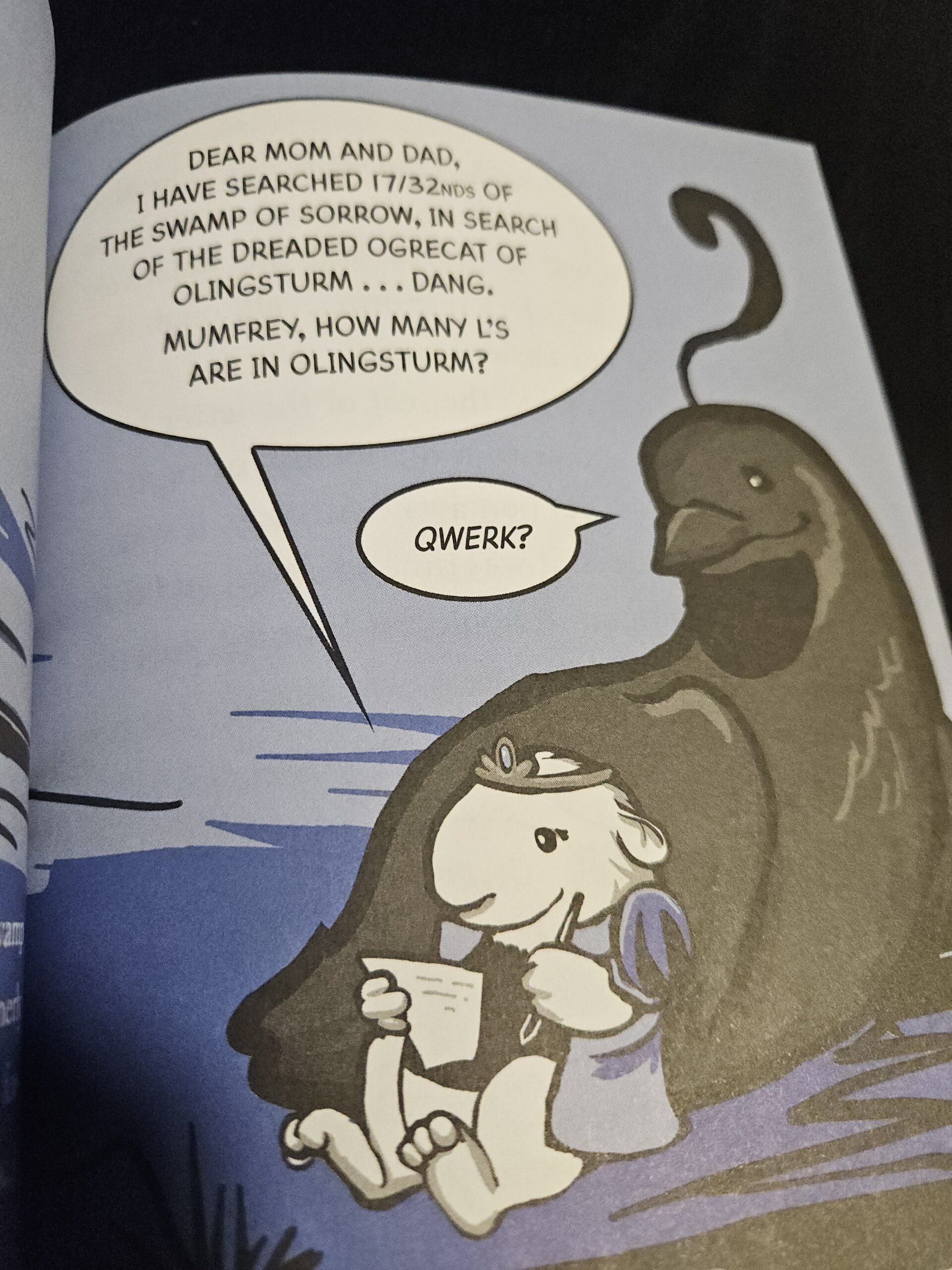
Oh, I love this book so much. I was hooked from the first page (see below) and it just got better and better until the sheer perfection of the ending. I don’t want to spoil anything for anyone who hasn’t read it yet, so suffice it to say than it is a very unusual, beautiful, funny, and touching portal fantasy. Orcus and The Last Unicorn are the two books on this entire blog that I would implore you to read as soon as possible, regardless of whether you have a child to read them to. And if you do have a child to read them to, you’re all in for a great treat.

A tiny tangential note: I wonder what it would have looked like if Ursula Vernon (aka T. Kingfisher) had done her own illustrations for this book. I love her art work and Lauren Henderson’s illustrations of the main character come across as very young and delicate to me in a way that doesn’t quite jibe with my vision of her. But reasonable minds can differ and it isn’t a flaw in the glorious book.

Author: T. Kingfisher

Illustrator: Lauren Henderson

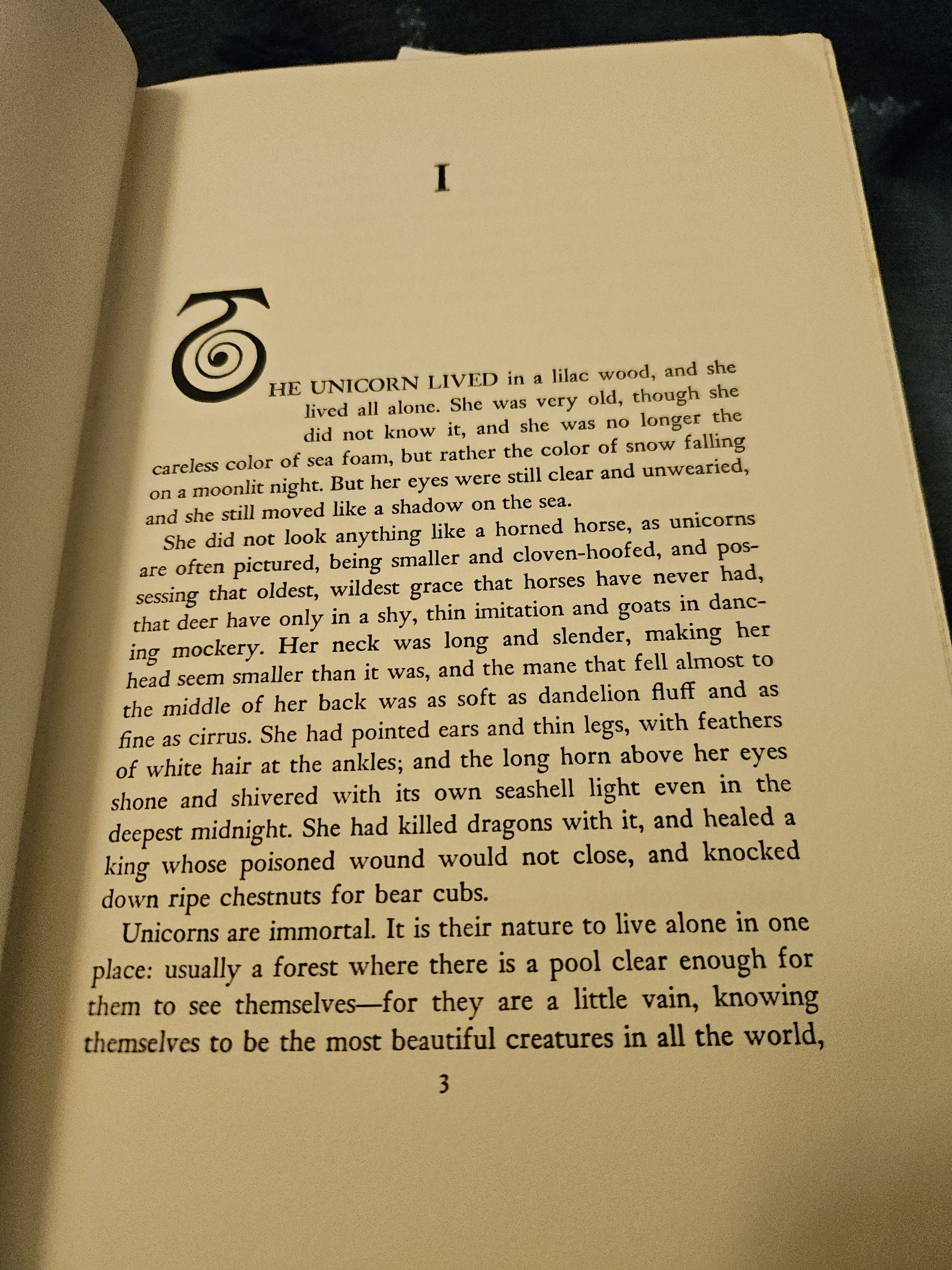
The Last Unicorn

I have very little to say about this book because it speaks for itself so beautifully. It is my absolute favorite book and has been since I stumbled on it in a used bookstore as a young teen. (The snippets of the movie I had somehow seen pieces of terrified and confused me as a young child, but I got over that with time. Beagle himself wrote the screenplay, and the studio who made it later later split and became Studio Ghibli, all of which is very cool.) I loved reading it to the boys and they each have a signed first edition that the absolutely lovely Peter Beagle inscribed to them (for more on that encounter, see my entry on The Sneetches and Other Stories).

I’m not alone in loving this book; over and over again I’ve seen authors pay tribute to it. For example, Ursula Vernon (aka T. Kingfisher), another especial favorite of mine (and of the boys), notes:

It is made of spun glass and fairytales and iron knives and there are individual lines that I would give my lungs to have written.

She’s right. I mean, my goodness, just look at the first page below.

Author: Peter S. Beagle

Illustrator: N/A

The Voyage of the Dawn Treader

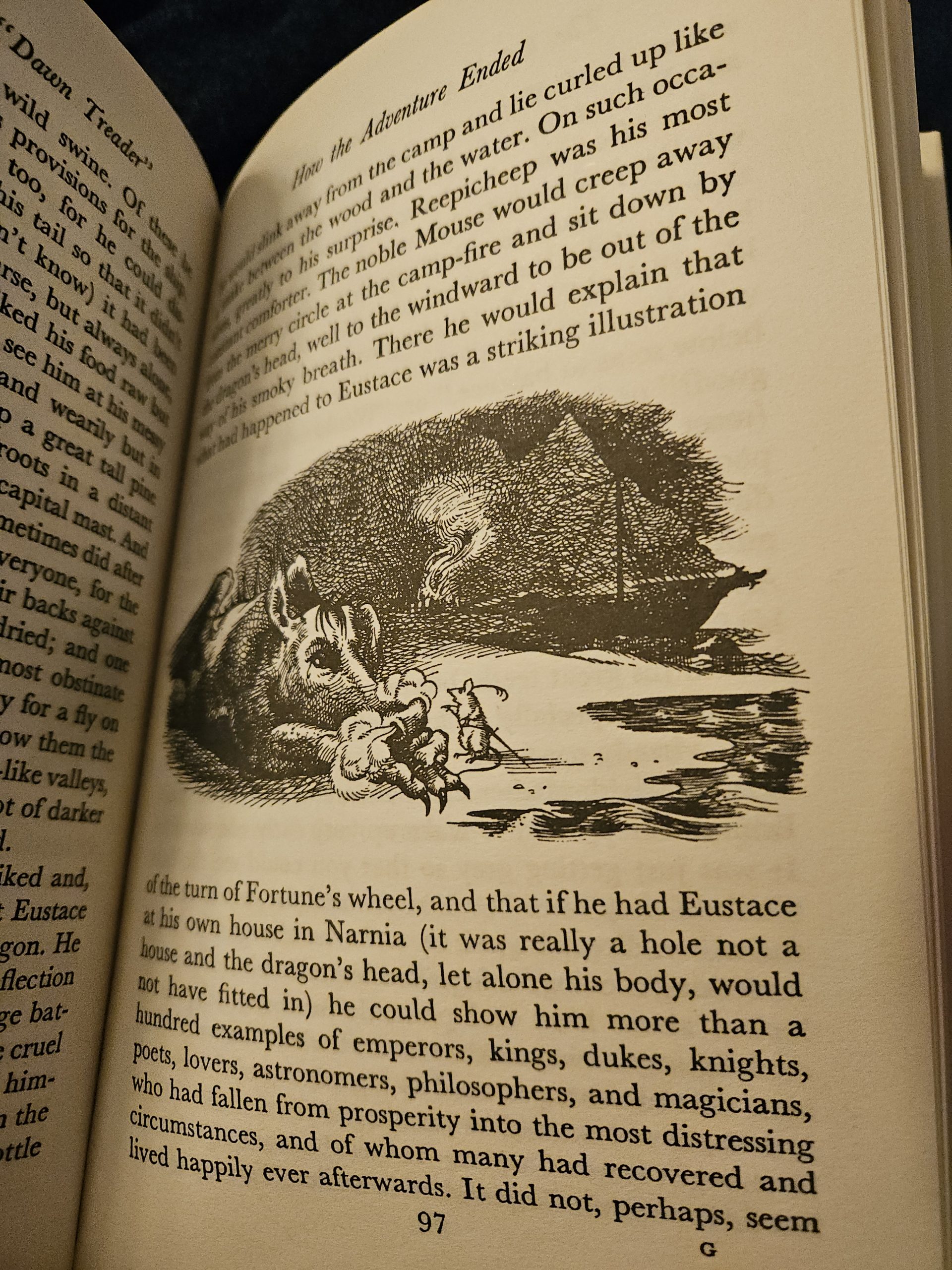
Gracious, Prince Caspian (the second published Narnia book) is boring. I didn’t miss a thing not reading that one as a kid. So, I skipped reading it to the boys, going from Wardrobe straight to The Voyage of the Dawn Treader (the third published Narnia book).  And then, well, I skipped reading them the rest of the series too (because they were dull as Caspian, even more preachy and dated than this book, and the boys never asked about them) and showing them the live-action movies.  So, as far as our family is concerned, I guess this series is a duology.  And a good one!  While Lewis is so very preachy (which I supposes makes sense in the Christian allegory context that he was working within–see my discussion of Wardrobe for more on this) and the pictures are generally awkward (as with Wardrobe), it is full of adventure and a nice change to have an antihero as a main character, someone needs a lot of personal growth rather than starting off perfect.  But the real draw in Dawn Treader, as far as I’m concerned, will always be the glorious Reepicheep.  Well, and the opening line:  “There once was a boy called Eustace Clarence Scrubb and he almost deserved it.”

Author:  C.S. Lewis

Illustrator:  Pauline Baynes   

Hamster Princess: Harriet the Invincible

[I wrote almost all of this entry (gulp) 10 years ago.]

I never, ever expected a princess book to be this popular. I picked it up because I enjoyed Ursula Vernon’s graphic novel for adults, Digger, and was curious about her writing for kids. Once I started reading it to the boys, they were completely hooked.
Roars of uproarious laughter kind of hooked.
They thought they knew where the story was going. It turns out that they didn’t. And they loved that.

Ursula Vernon is also T. Kingfisher and I’d happily recommend anything she’s written under either name (an entry on Summer in Orcus is long overdue).  Just keep in mind many of her books are decidedly not for children.  Of this series, this first entry was definitely our favorite, although we did enjoy the others that followed.

Author: Ursula Vernon
Illustrator: Ursula Vernon

Home

IMG_5400

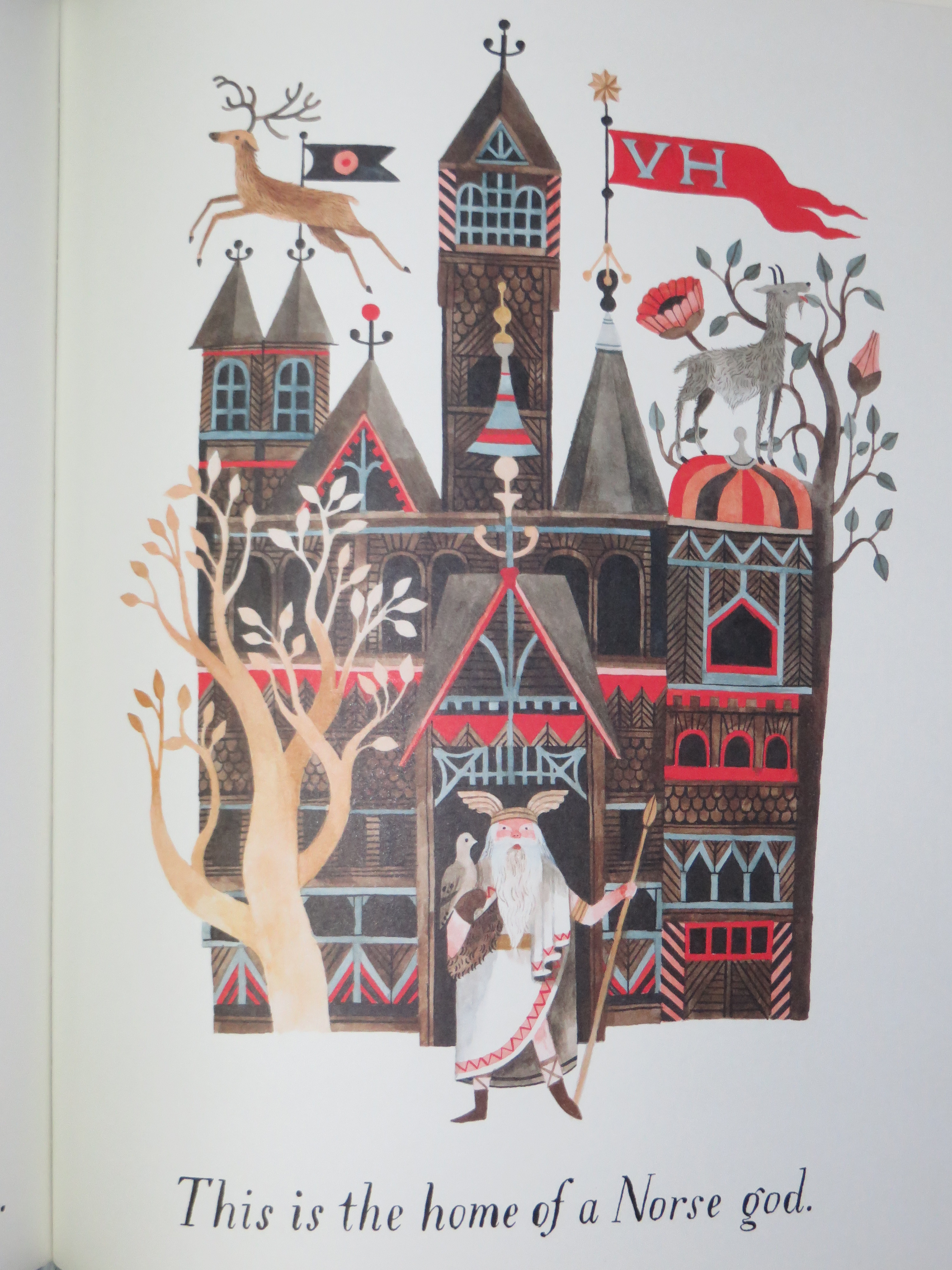
Where and what can a home be? Some of Ms. Ellis’ answers are conventional (for example, a nest), others are pure fantasy (see the picture above). Her drawings are deceptively-simple and peaceful–perfect for before bed. But what gives the boys the most pleasure is that every double-page spread in this book contains a dove. Sometimes the dove is easy to spot. Sometimes it is very well hidden. The boys always love finding it.

Author: Carson Ellis
Illustrator: Carson Ellis

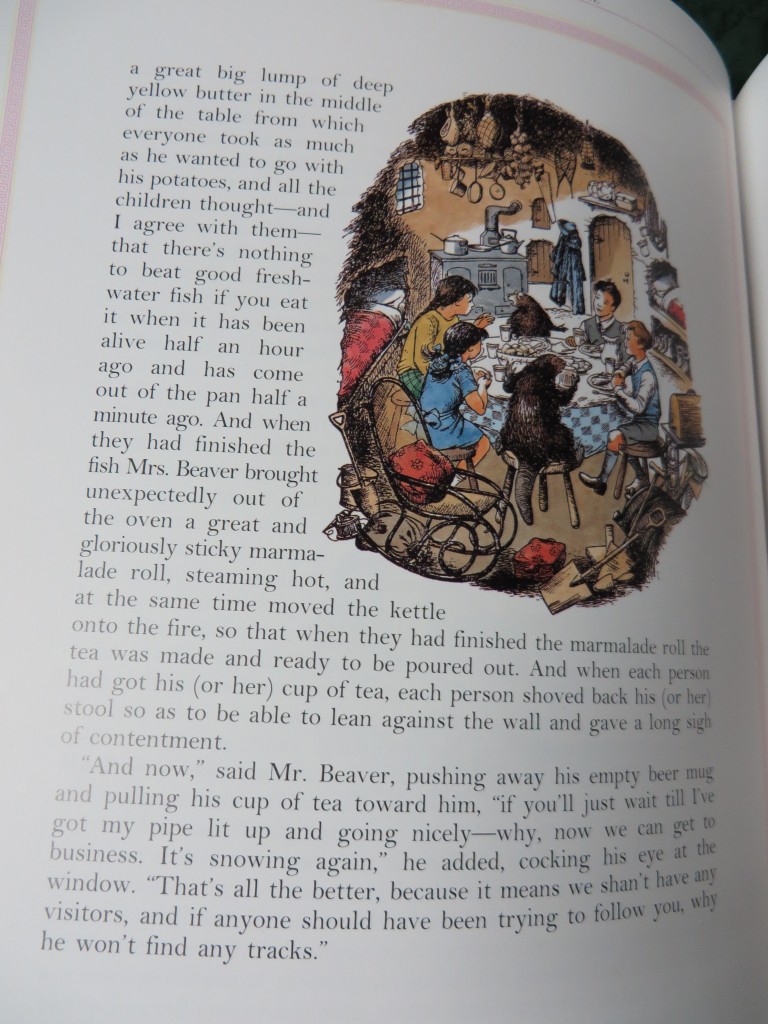
The Lion, the Witch, and the Wardrobe

IMG_4726

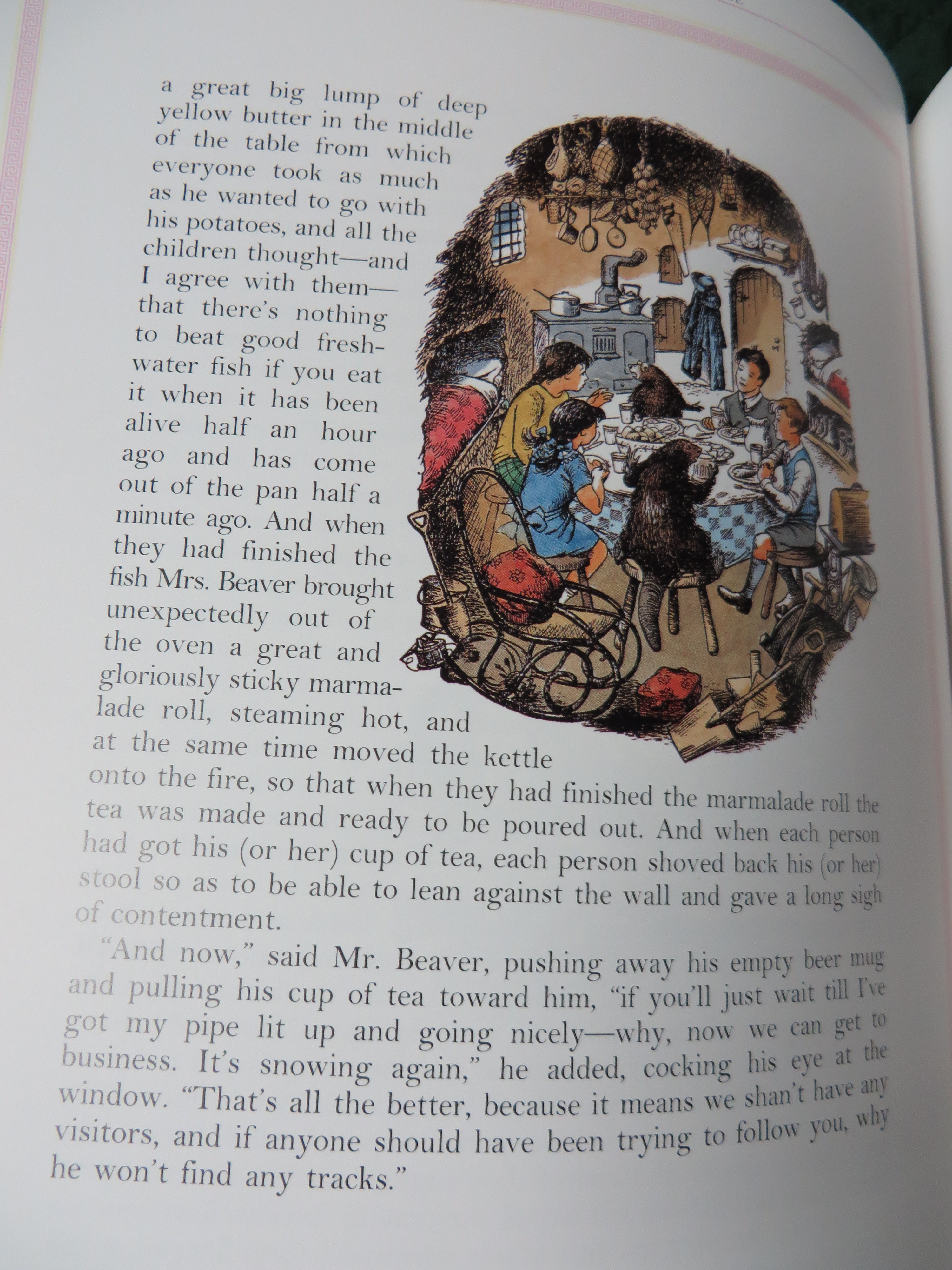
I’m going to assume you know the plot of Wardrobe, given its status as an extremely widely-read, acknowledged classic of children’s literature. You may not know, however, that there is much controversy over which book in the Narnia series should be considered the first one. I started our journey to Narnia here, as Mr. Lewis did midway through the last century, because I think starting with the later-written prequel, The Magician’s Nephew, ruins the mystery and magic of Wardrobe.

I wasn’t sure how Wardrobe would work as a read-aloud and was pleasantly surprised to find it worked beautifully. Reading it aloud took much less time than I had expected and my oldest was very interested throughout.

First caveats:

Most adults know the Narnia books have a very Christian subtext, but most children (judging by my son and my childhood self) do not notice, at least with the early books in the series. A lion that dies to redeem the sins of others and then comes back to life? Carry on! It is no stranger than a magical chocolate factory staffed by oompa loompas or a father who goes out for some milk and is delayed by aliens, pirates, vampires, and space-traveling-talking dinosaurs. Whether you love that or hate the subtext, some familiarity with Narnia is is necessary for cultural literacy (for example, without Narnia, the excellent His Dark Materials trilogy wouldn’t make nearly as much sense). There is a bit of obvious sexism in this book, but it is not outrageous, particularly for the time period in which it was written.

Further caveats (with spoilers):

I’m not sure how far we’ll venture into this series together; I read Wardrobe early on as a child and really enjoyed it, but checked others in the series out of the library out of order and got deeply discouraged by The Magician’s Nephew (which I thought explained things that needed no explanation and just wasn’t terribly interesting) and then The Last Battle (which, among many other issues, has the Problem of Susan; nearly universally unsympathetic and one-dimensional characters; and an apocalypse, in every sense of the word, that destroys Narnia) and gave up on the series. But I recently read the third book in the series, The Voyage of the Dawn Treader (which was sent to me through a shipping error), and think my oldest would love it (although it comes with some caveats of its own, which I’ll detail if it ever gets its own entry) so I’ve ordered Prince Caspian to see if we should read it before Dawn Treader.

Final caveat:

Make sure your child is old enough for this book and this series; when good and evil battle things out in Narnia (and they do at least once in each of the Narnia books I have read) the details are vivid and the outcomes can be very, very grim.

Author: C.S. Lewis
Illustrator: Pauline Baynes

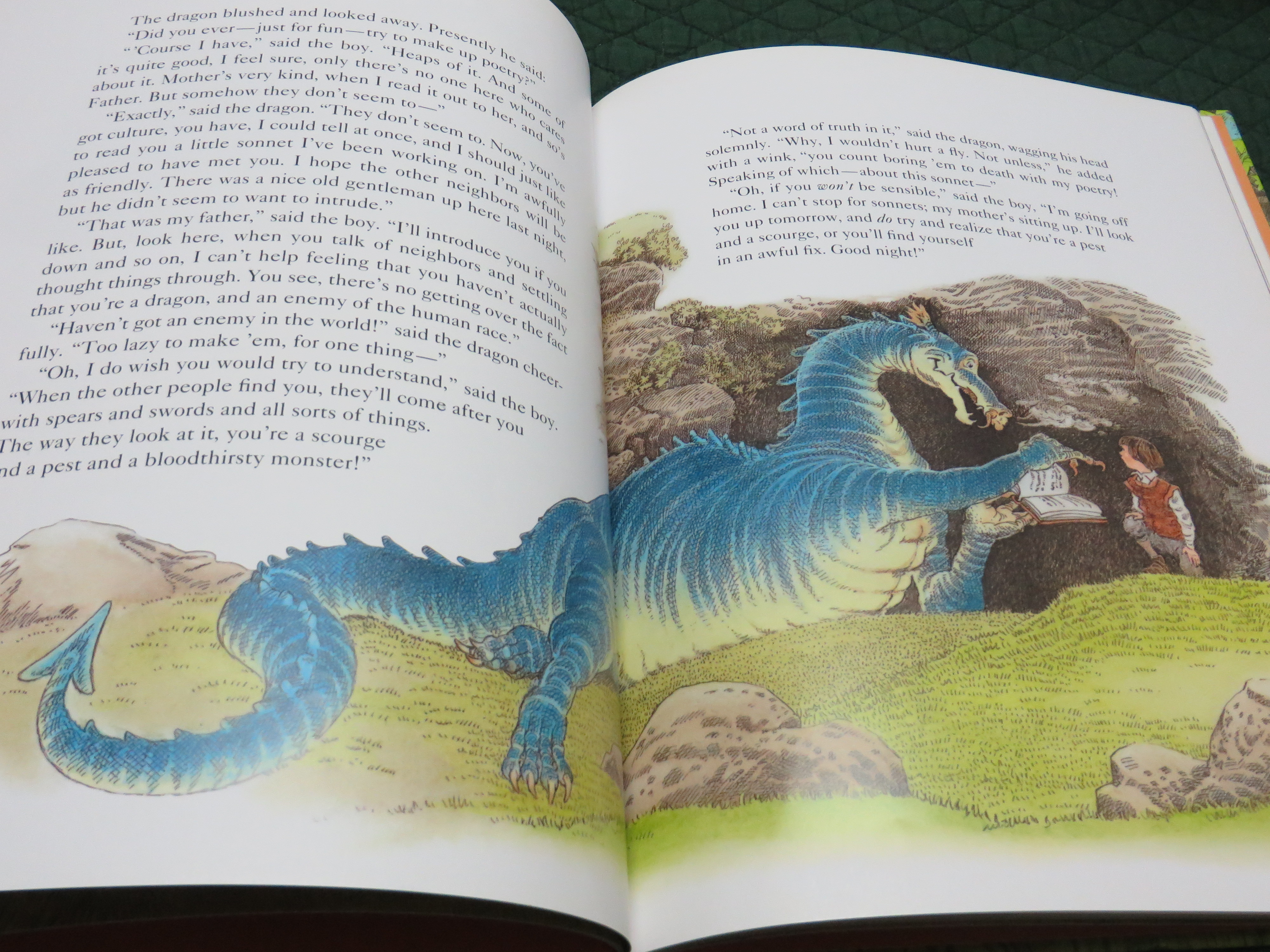
The Reluctant Dragon

IMG_3523

“Don’t worry, Father. It’s only a dragon.”
“Only a dragon?” cried his father. “What do you mean,
only
a dragon? And how do
you know so much about it?”
“I just do,” replied the boy. “You know about sheep, and
weather, and things.
I know about dragons. I always said that
that was a dragon cave. I always said it ought to have a dragon.
In fact, I would have been surprised if you told me it
hadn’t
got a dragon. Now, please, just leave all this to me. I’ll stroll
up tomorrow evening and have a talk with him.”

Stories of dragons rarely fail us; although this story is quite long (albeit slightly edited in this version), it is very charming and my youngest frequently requests it.

Author: Kenneth Grahame
Illustrator: Inga Moore


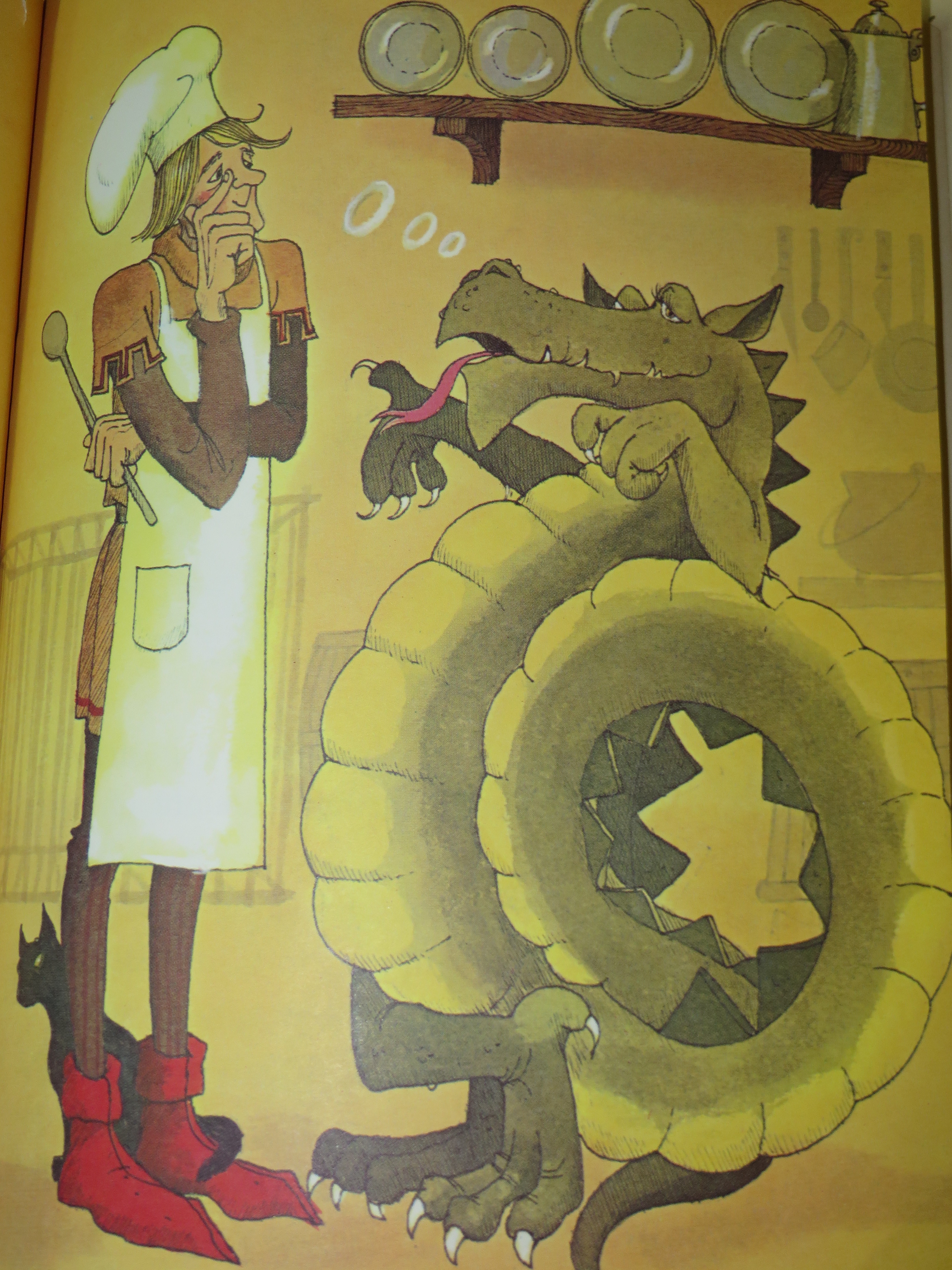
Dragon Stew

IMG_4452

. . . a shabby young
man came trudging up the road toward the
castle. He had patched knees and elbows, and
the feather in his worn hat was bedraggled,
but he had a merry grin, and he was whistling
a gay tune. When he saw the long line of people,
he asked a soldier, “What’s going on?”

“The king’s looking for a new royal cook,”
the soldier replied. “The cook with the most
unusual recipe will get the job and will live in
the palace off the best of the land!”

“Wouldn’t that be wonderful!”

“Well, I don’t know,” said the soldier.
“Cooks don’t get along with the king. He tells
’em what to do, puts things in their pots–he
all but does the cooking himself.”

“You don’t say?” said the young man, and
he got into line.

Much like The King of Pizza, this book begins with a monarch that loves food but is never satisfied with it. And once again, after some twists and turns, everyone ends up happy (including the kids it is read to). The illustrations, by Ms. Hyman, are very good and particularly interesting when you compare them to her later (much more detailed) illustrations for Saint George and the Dragon.

Author: Tom McGowen
Illustrator: Trina Schart Hyman