Tag Archives: fable

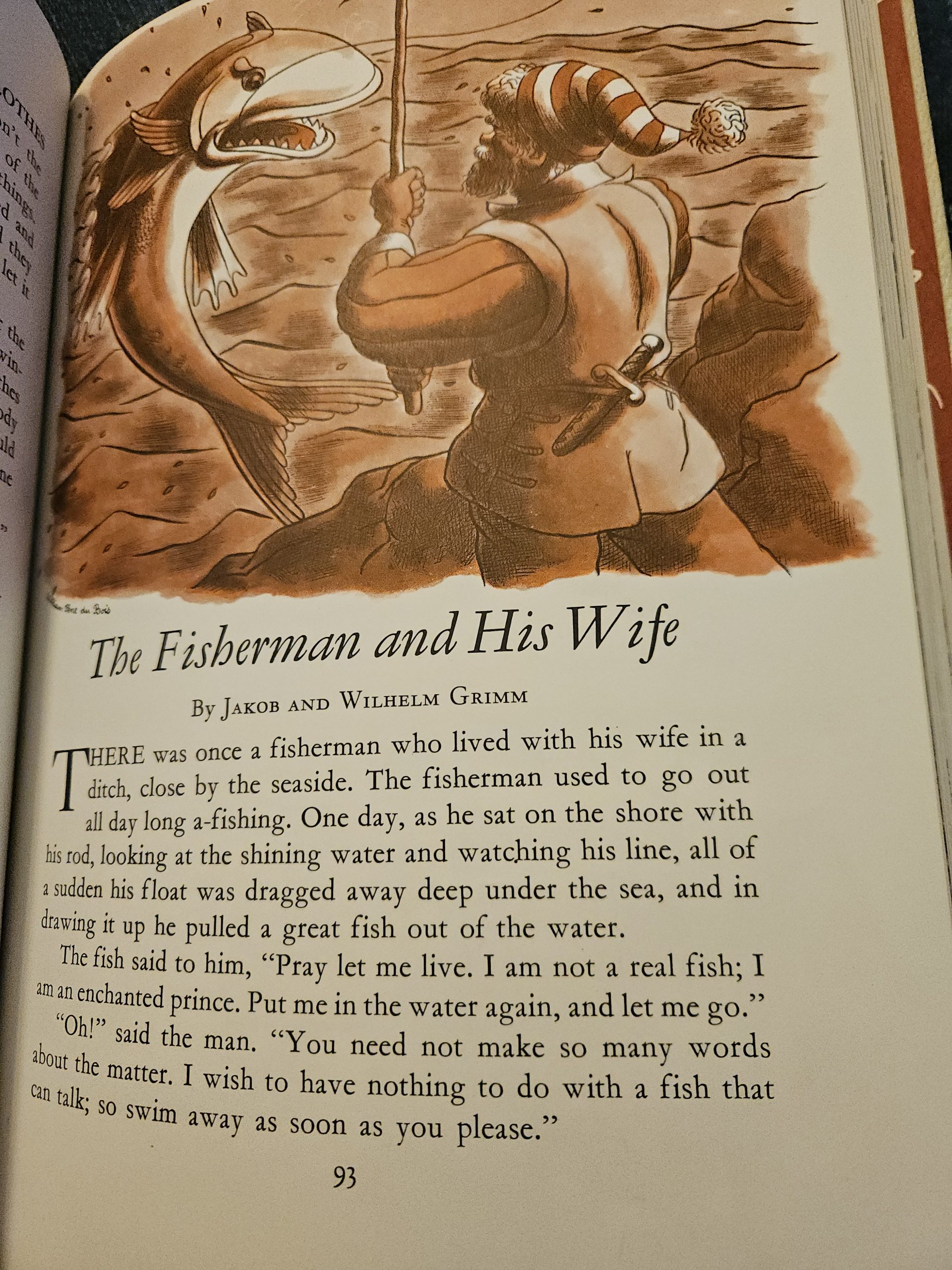
Childcraft Folk and Fairy Tales

My family of origin had the whole 15-volume Childcraft set (the 1961 edition) when I was a child, but I ignored most of them (with the exception of this volume, Storytelling and Other Poems, Animal Friends and Adventures, Life in Many Lands, and Great Men and Famous Deeds). Most of them were non-fiction, and already VERY dated. This volume, however, was a favorite. It contains a variety of (mostly European) folk and fairy tales by lots of different authors and illustrators. When I think of fairy tales, a lot of the default versions in my head come from this book.

While I read some of the stories in it to the boys (fairy tales are important for cultural literacy!), they didn’t spend nearly as much time with this book as I had as a child. (After looking at the rest of the 1961 set as an adult, I ended up donating all the other volumes).

Authors: Many

Illustrators: Many and uncredited (although some pictures are signed)

The Voyage of the Dawn Treader

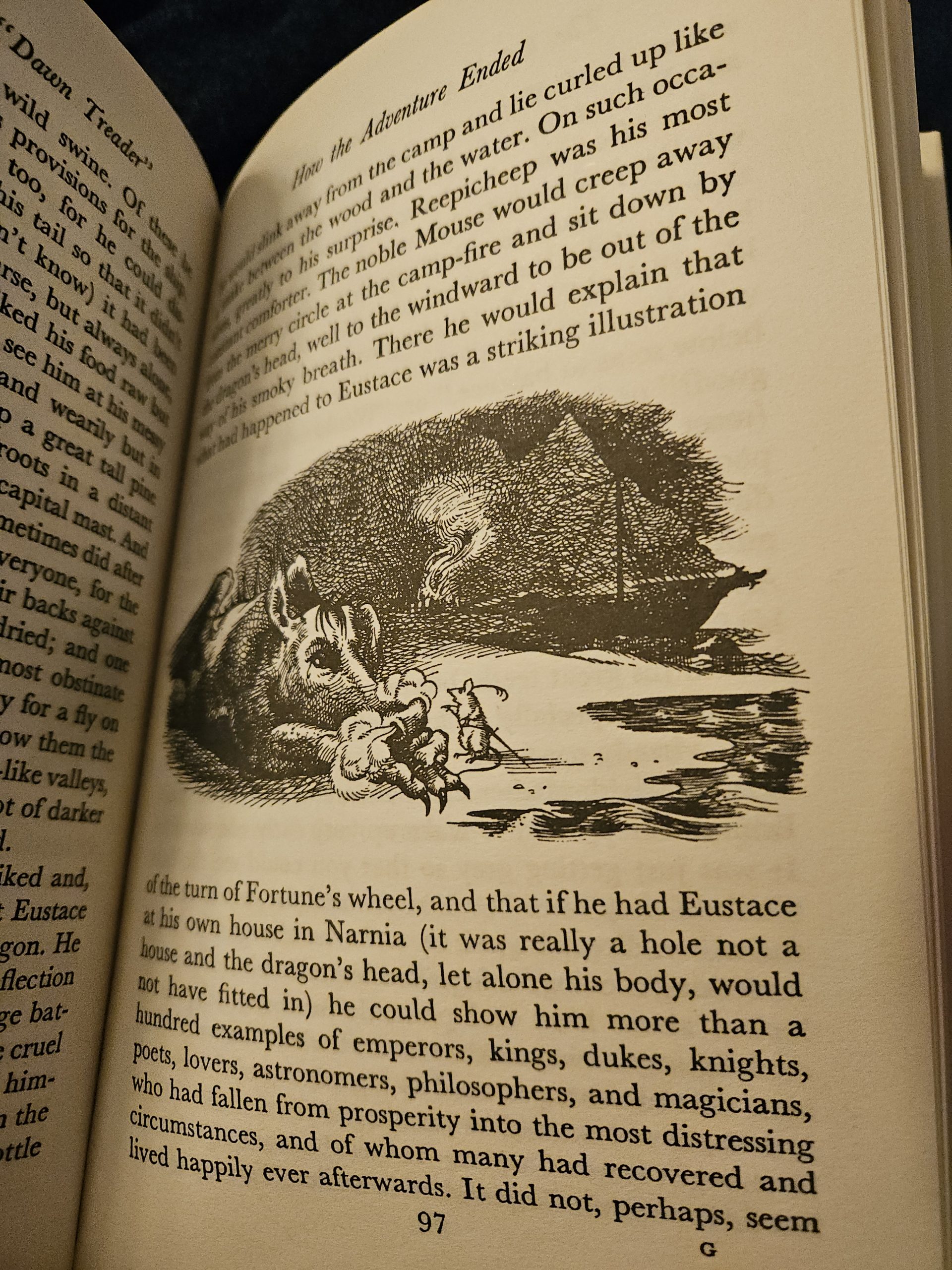
Gracious, Prince Caspian (the second published Narnia book) is boring. I didn’t miss a thing not reading that one as a kid. So, I skipped reading it to the boys, going from Wardrobe straight to The Voyage of the Dawn Treader (the third published Narnia book).  And then, well, I skipped reading them the rest of the series too (because they were dull as Caspian, even more preachy and dated than this book, and the boys never asked about them) and showing them the live-action movies.  So, as far as our family is concerned, I guess this series is a duology.  And a good one!  While Lewis is so very preachy (which I supposes makes sense in the Christian allegory context that he was working within–see my discussion of Wardrobe for more on this) and the pictures are generally awkward (as with Wardrobe), it is full of adventure and a nice change to have an antihero as a main character, someone needs a lot of personal growth rather than starting off perfect.  But the real draw in Dawn Treader, as far as I’m concerned, will always be the glorious Reepicheep.  Well, and the opening line:  “There once was a boy called Eustace Clarence Scrubb and he almost deserved it.”

Author:  C.S. Lewis

Illustrator:  Pauline Baynes   

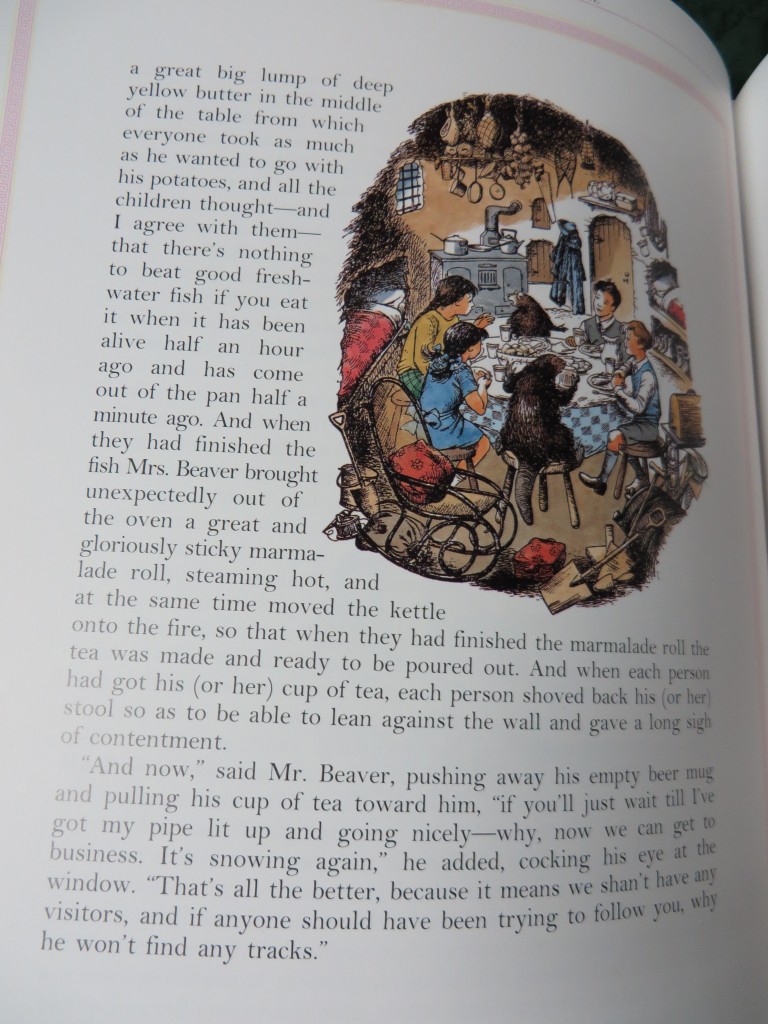
The Lion, the Witch, and the Wardrobe

IMG_4726

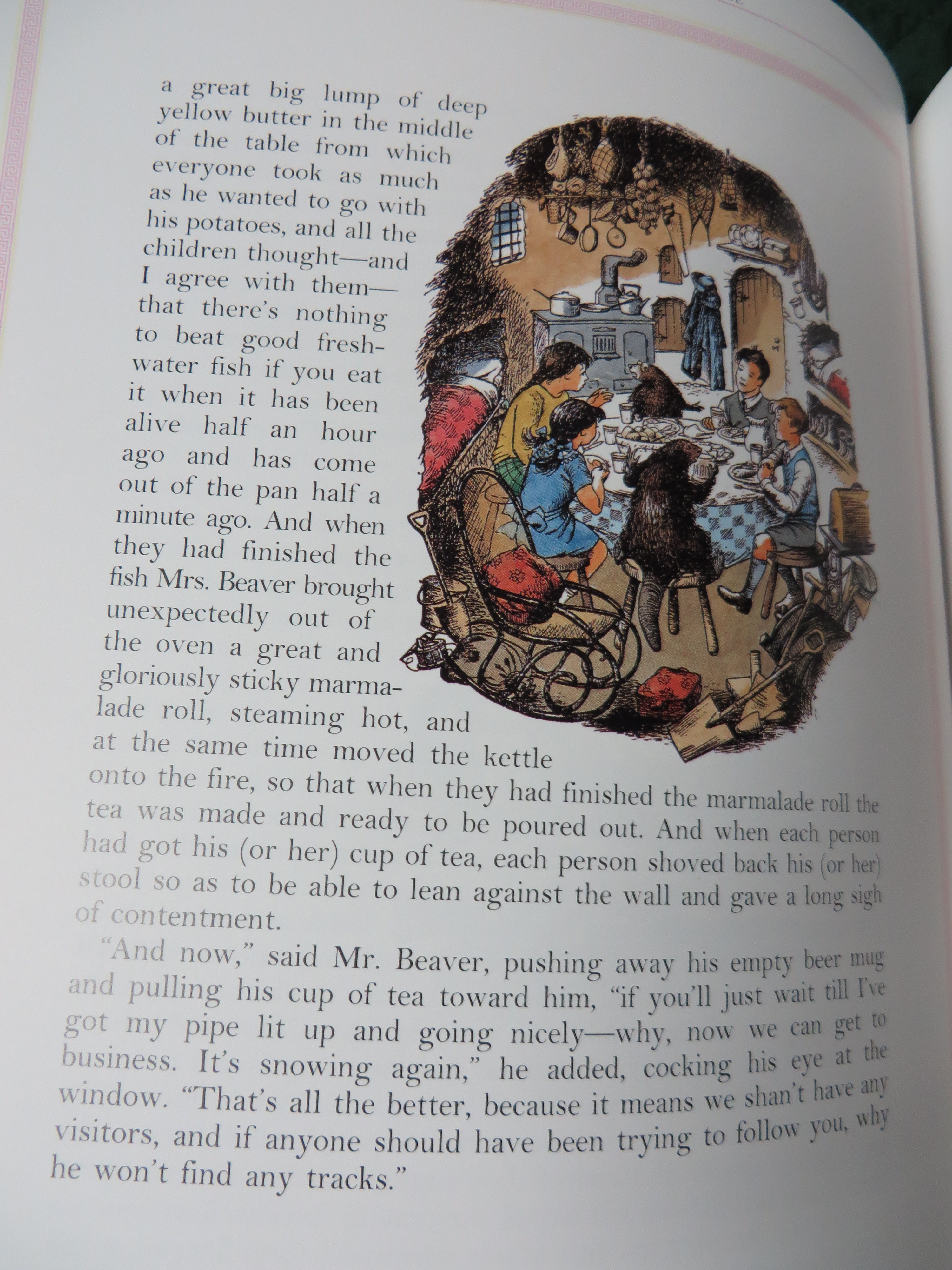
I’m going to assume you know the plot of Wardrobe, given its status as an extremely widely-read, acknowledged classic of children’s literature. You may not know, however, that there is much controversy over which book in the Narnia series should be considered the first one. I started our journey to Narnia here, as Mr. Lewis did midway through the last century, because I think starting with the later-written prequel, The Magician’s Nephew, ruins the mystery and magic of Wardrobe.

I wasn’t sure how Wardrobe would work as a read-aloud and was pleasantly surprised to find it worked beautifully. Reading it aloud took much less time than I had expected and my oldest was very interested throughout.

First caveats:

Most adults know the Narnia books have a very Christian subtext, but most children (judging by my son and my childhood self) do not notice, at least with the early books in the series. A lion that dies to redeem the sins of others and then comes back to life? Carry on! It is no stranger than a magical chocolate factory staffed by oompa loompas or a father who goes out for some milk and is delayed by aliens, pirates, vampires, and space-traveling-talking dinosaurs. Whether you love that or hate the subtext, some familiarity with Narnia is is necessary for cultural literacy (for example, without Narnia, the excellent His Dark Materials trilogy wouldn’t make nearly as much sense). There is a bit of obvious sexism in this book, but it is not outrageous, particularly for the time period in which it was written.

Further caveats (with spoilers):

I’m not sure how far we’ll venture into this series together; I read Wardrobe early on as a child and really enjoyed it, but checked others in the series out of the library out of order and got deeply discouraged by The Magician’s Nephew (which I thought explained things that needed no explanation and just wasn’t terribly interesting) and then The Last Battle (which, among many other issues, has the Problem of Susan; nearly universally unsympathetic and one-dimensional characters; and an apocalypse, in every sense of the word, that destroys Narnia) and gave up on the series. But I recently read the third book in the series, The Voyage of the Dawn Treader (which was sent to me through a shipping error), and think my oldest would love it (although it comes with some caveats of its own, which I’ll detail if it ever gets its own entry) so I’ve ordered Prince Caspian to see if we should read it before Dawn Treader.

Final caveat:

Make sure your child is old enough for this book and this series; when good and evil battle things out in Narnia (and they do at least once in each of the Narnia books I have read) the details are vivid and the outcomes can be very, very grim.

Author: C.S. Lewis
Illustrator: Pauline Baynes

The Wizard of Wallaby Wallow

IMG_4695

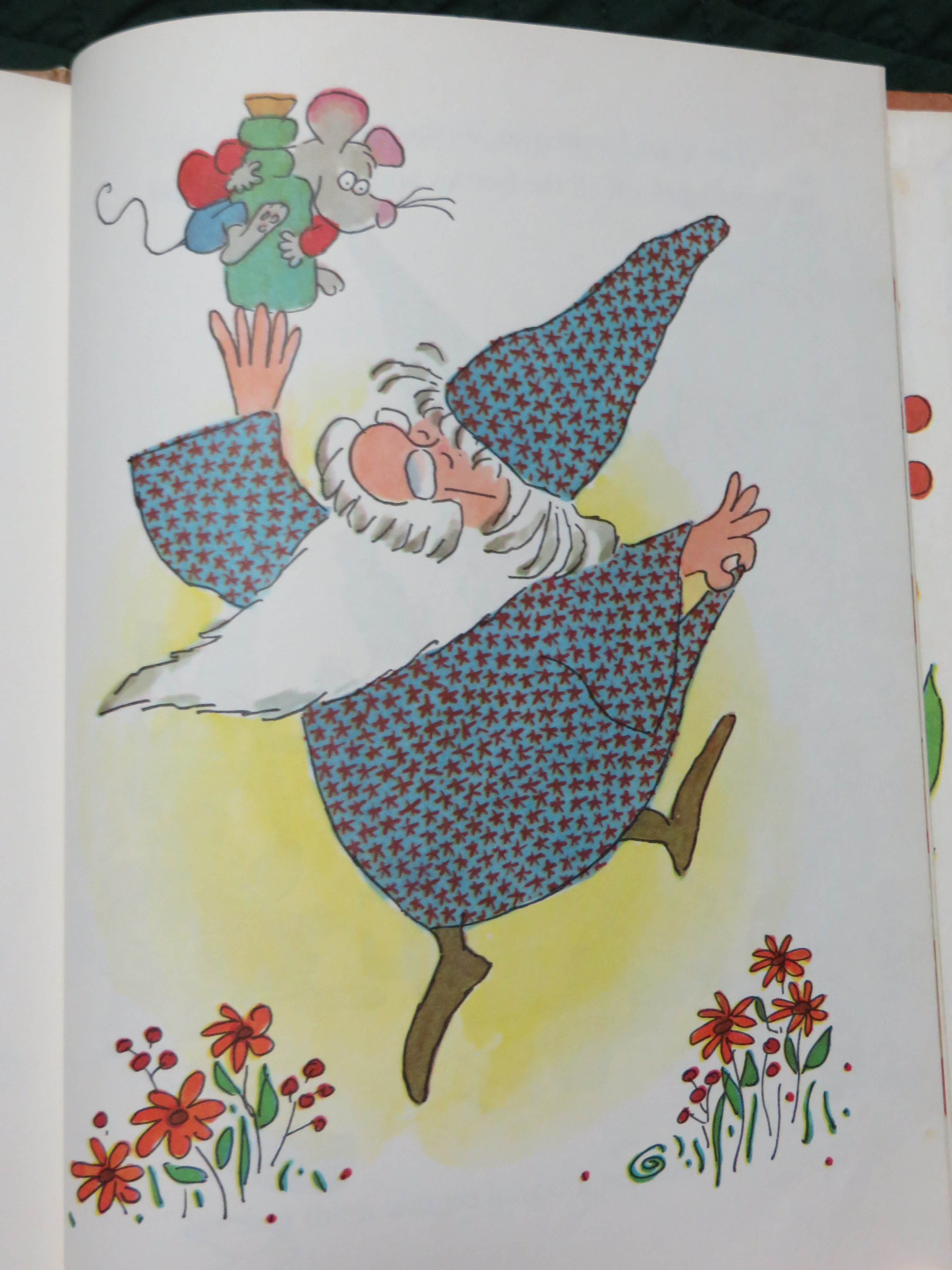
Once upon a time, there was a wizard who didn’t like organizing his spell bottles and a mouse who didn’t like being a mouse. When the mouse asks the wizard for a spell to make him “something else,” the wizard gives him an unlabeled bottle that (effectively, if not magically) ends up solving both of their problems.

Jack Kent’s distinctive drawings and strong sense of humor make this book very popular with the boys (and I like the message of self acceptance).

Author: Jack Kent
Illustrator: Jack Kent

Miss Maple’s Seeds

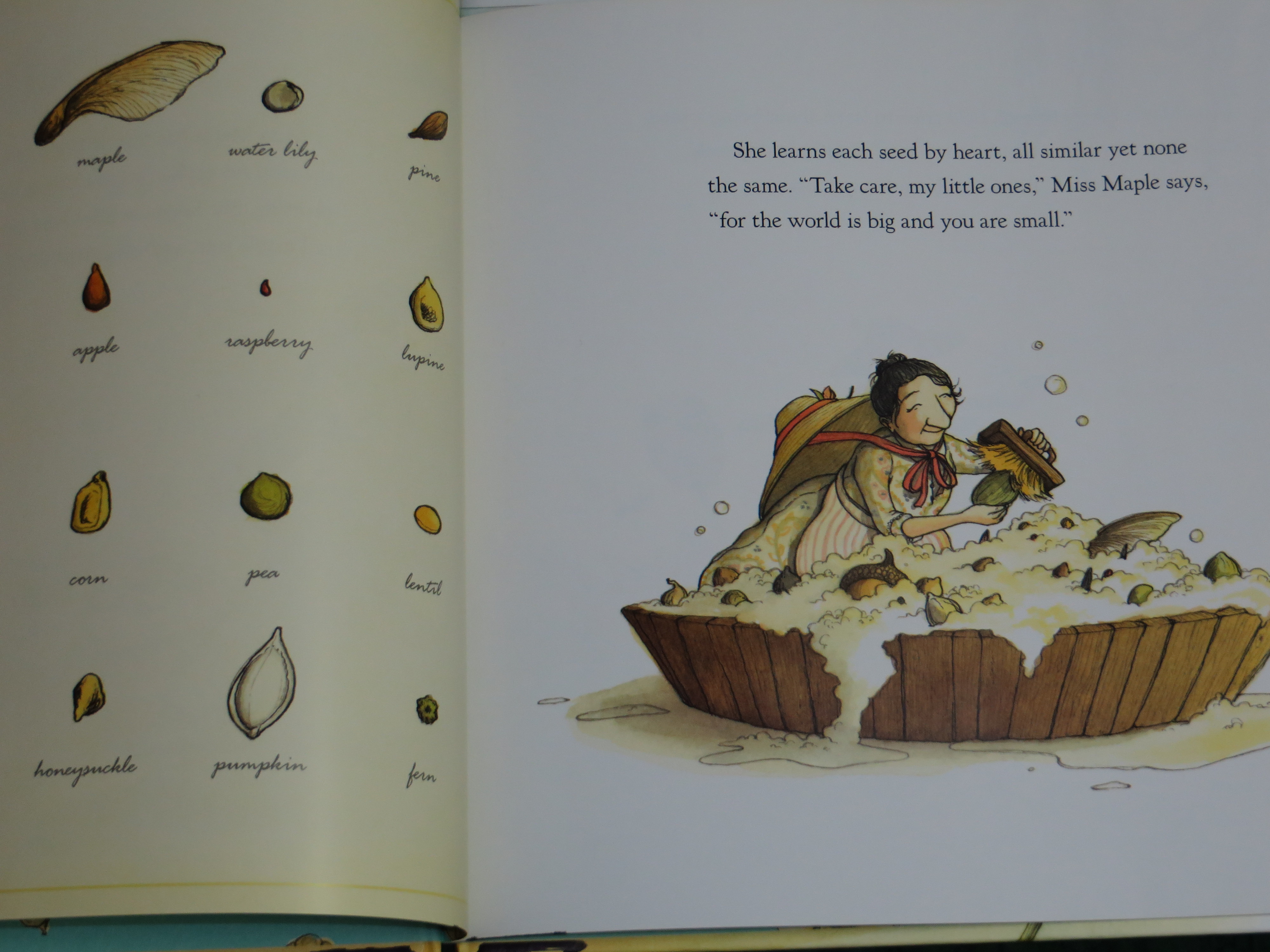
IMG_2262

Spry Miss Maple (who is small enough to travel on the back of a bluebird) cares for seeds “lost during the spring planting.” She brings them to her cozy home (inside a tree), takes them on field trips (by water and by air), reads them bedtime stories (by firefly light), and (when the Spring comes round again) sends them “off to find roots of their own” with the reminder to:

“Take care, my little ones, for the
world is big and you are small. But never forget…
… even the grandest of trees once had to grow up
from the smallest of seeds.”

If you enjoy this book (or would like more of a sneak peek), check out the activity sheets and coloring pages on the author/illustrator’s website.

Author: Eliza Wheeler
Illustrator: Eliza Wheeler

The Bat-Poet

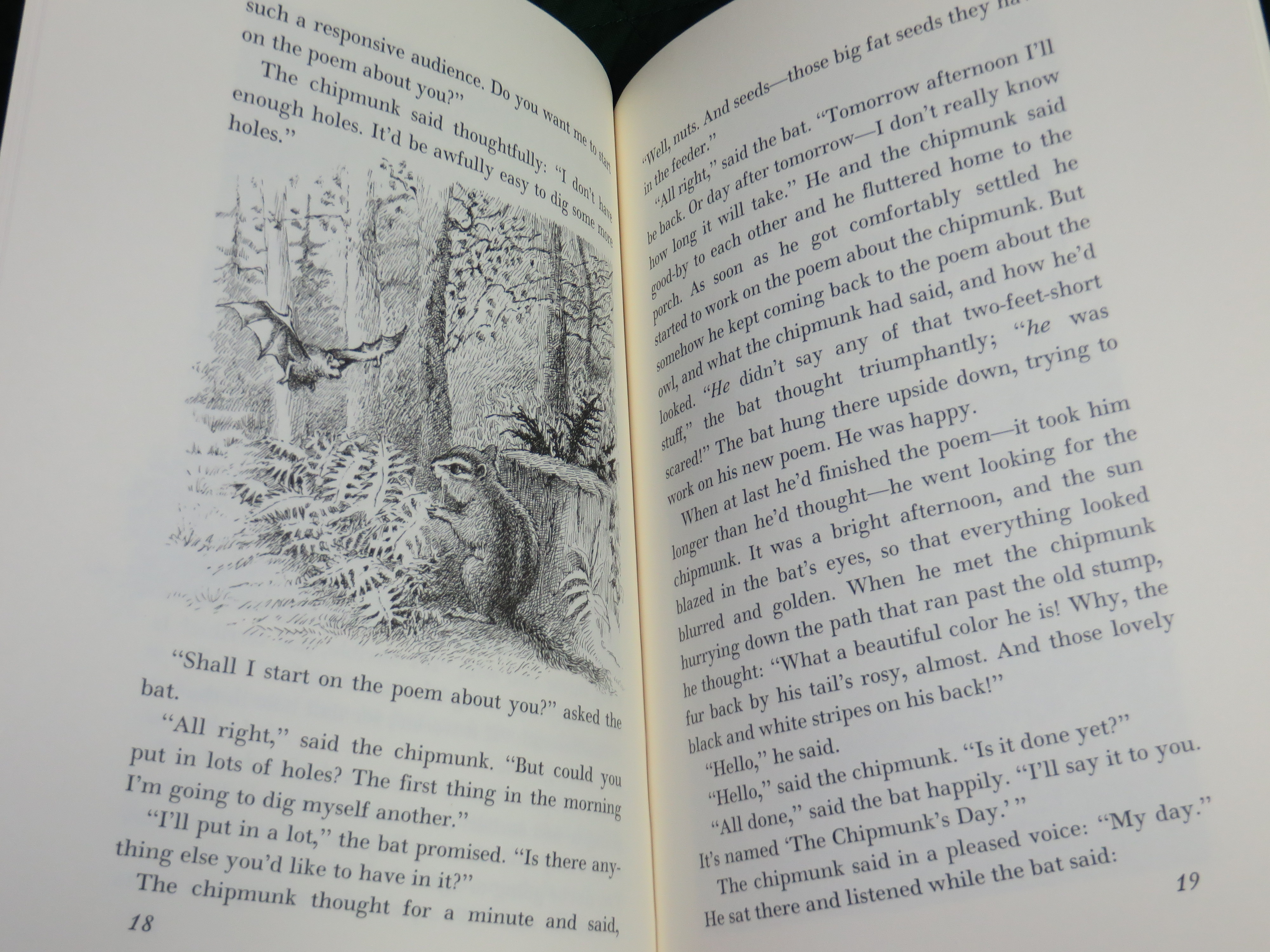
IMG_2282

Once upon a time there was a bat–a little light
brown bat, the color of coffee with cream in it.

In this quiet little book, a bat-poet strives to develop and share his art and to connect with others. It is soft, beautiful, cozy, and just right for reading before bed.

Author: Randall Jarrell
Illustrator: Maurice Sendak

The Lorax

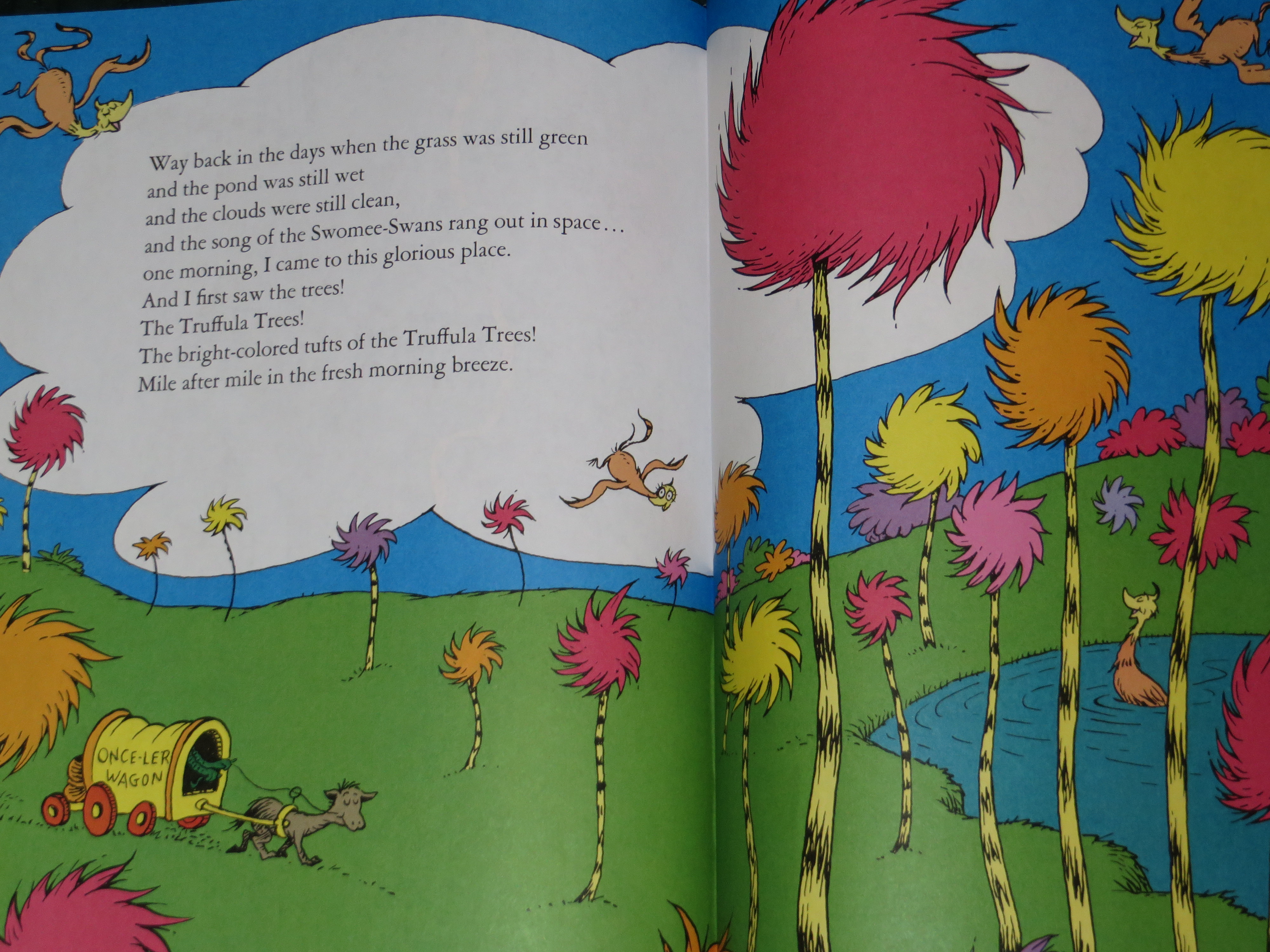
IMG_1900

This classic story is beautiful, disturbing, and hopeful. It is also, unsurprisingly, a great read aloud and not to be missed.

“But now,” says the Once-ler,
“Now that
you’re here,
the word of the Lorax seems perfectly clear.
UNLESS someone like you
cares a whole awful lot,
nothing is going to get better.
It’s not.

Author:  Dr. Seuss
Illustrator:  Dr. Seuss


The Country Bunny and the Little Gold Shoes

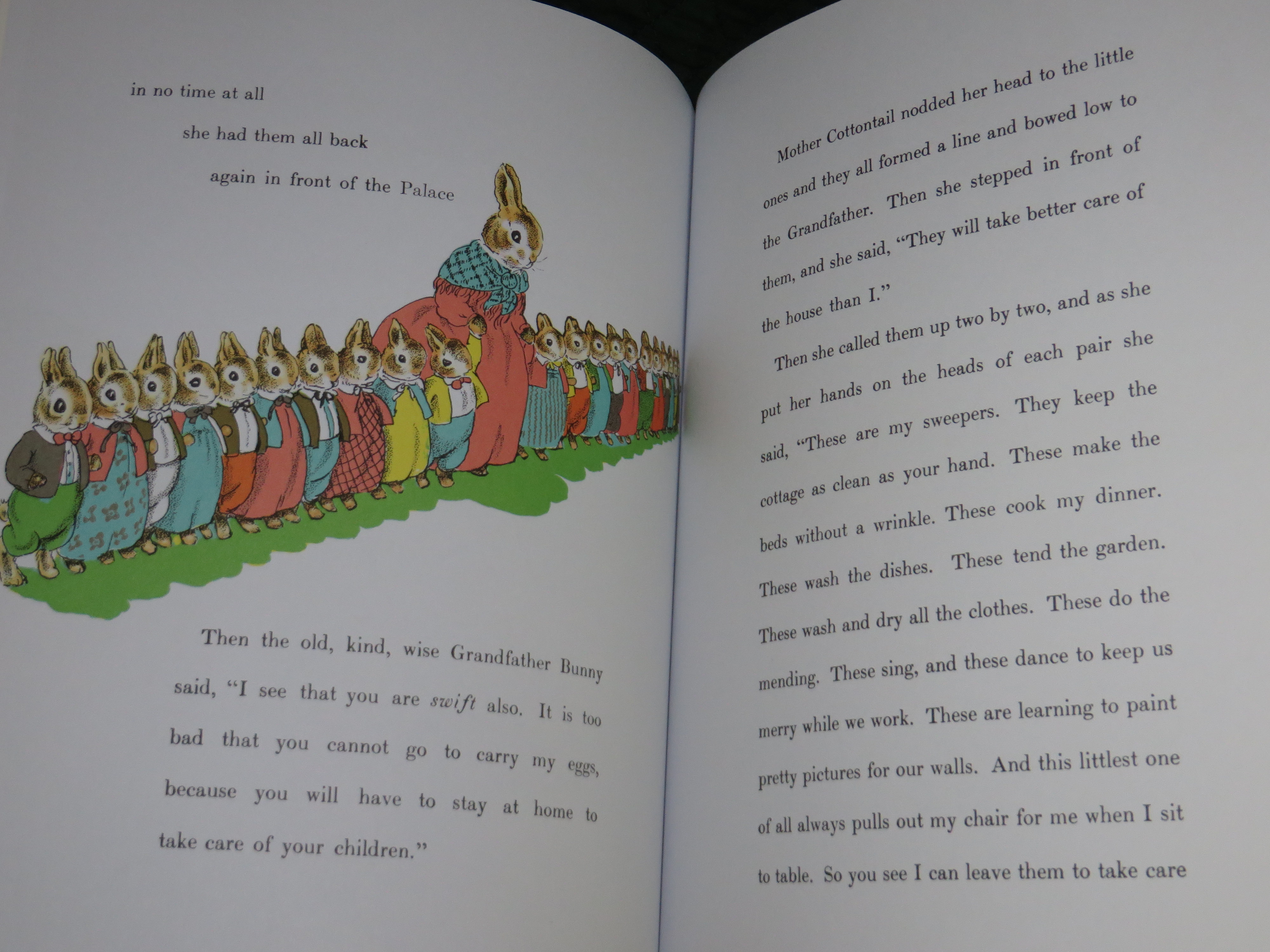
IMG_1666

One day a little country girl bunny with a brown
skin and a little cotton-ball of a tail said, “Some
day I shall grow up to be an Easter Bunny:–you
wait and see!”

Then all of the big white bunnies
who lived in
fine houses,

and the Jack Rabbits with long legs who can run so fast,
laughed at the little Cottontail and told her to go back to
the country and eat a carrot. But she said, “Wait and see!”

The little cottontail grows up into a wise, kind mama bunny who teaches her twenty-one (!) children to be self sufficient.  When a spot on the Easter Bunny roster comes open, she is ready to fulfill her lifelong dream.

It is hard to believe this book was published in 1939. (It is the only children’s book by the author of Porgy and primary lyricist of Porgy and Bess; he wrote it for his daughter.) This charming take on the Easter bunny story (the Palace of Easter Eggs is always popular) and its demonstration of work/life balance feels very contemporary.

Author: DuBose Heyward
Illustrator: Marjorie Flack

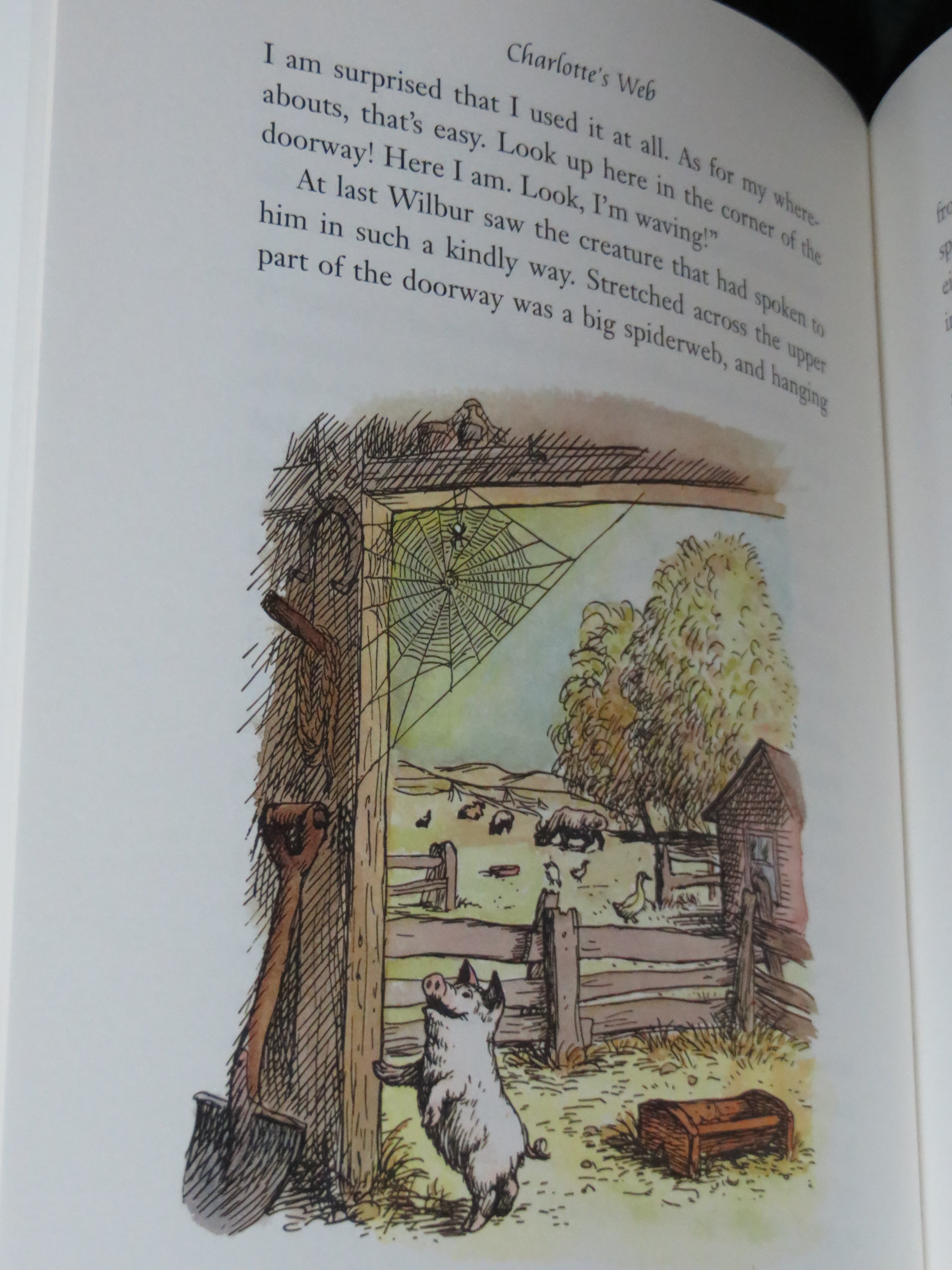
Charlotte’s Web

IMG_1644

This classic is one of the very best books to read aloud to children. (I’ve been known to read it to babies.) Our edition has gently colorized pictures that gild the lily a bit but please the boys. It called the Signature Edition and is out of print but fairly simple to find.

We also enjoy the (much less beautiful) animated movie now and then (mostly for the songs).

 Author: E.B. White
Illustrator: Garth Williams, with watercoloring by Rosemary Wells

Bread and Jam for Frances

IMG_1549

Jam on biscuits, jam on toast,
Jam is the thing that I like most.
Jam is sticky, jam is sweet,
Jam is tasty, jam’s a treat–

Raspberry, strawberry, gooseberry, I’m very
FOND… OF… JAM!

This book is a treat and a hoot, with a charming main character, a supportive (yet firm) family, and lots of lovingly described food.  The useful morals (that some variety really is a good thing and you won’t know if you like something until you try it) are just the icing on the cake.

Author:  Russell Hoban
Illustrator:  Lillian Hoban