Tag Archives: food

The Lion, the Witch, and the Wardrobe

IMG_4726

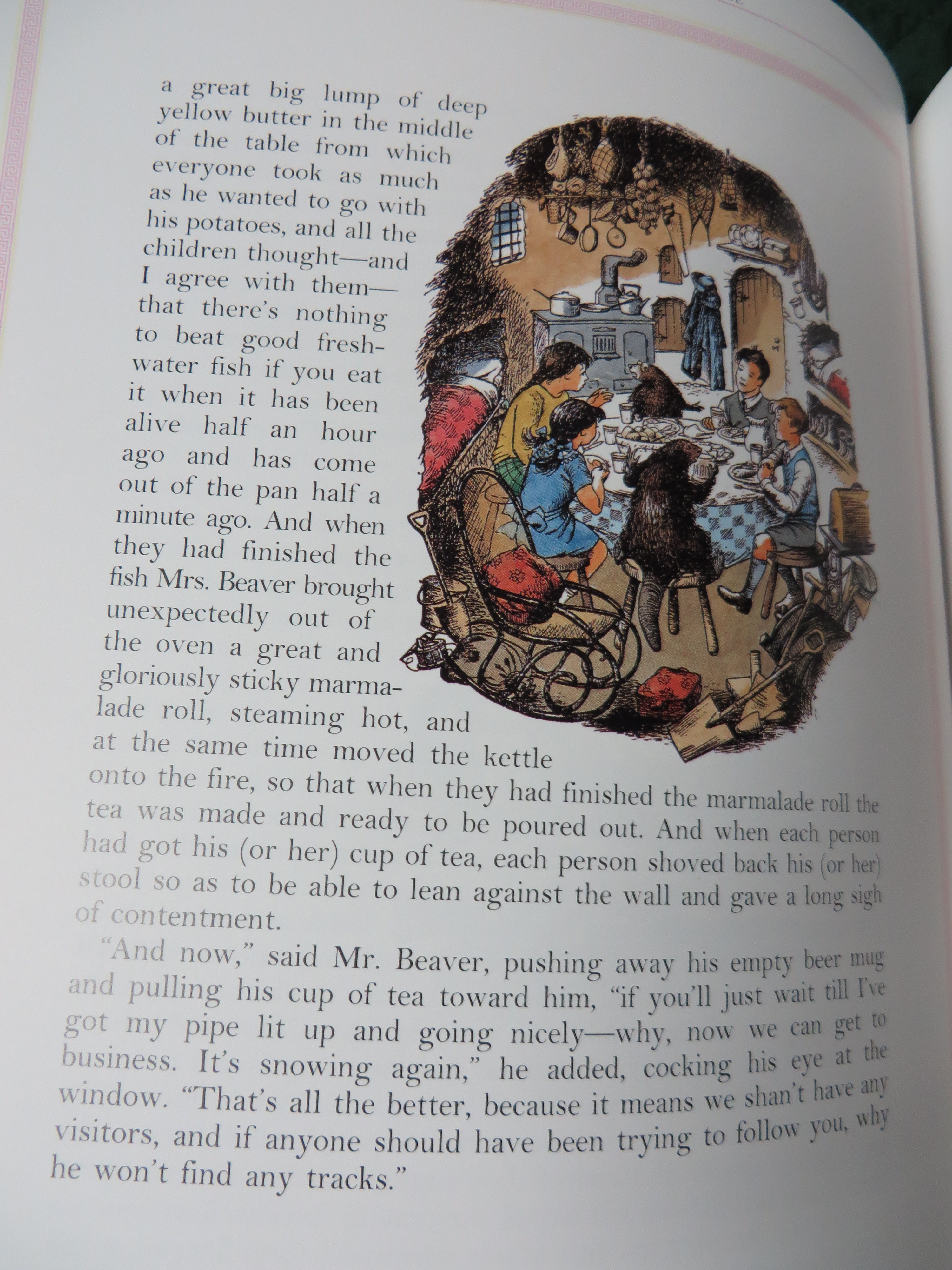
I’m going to assume you know the plot of Wardrobe, given its status as an extremely widely-read, acknowledged classic of children’s literature. You may not know, however, that there is much controversy over which book in the Narnia series should be considered the first one. I started our journey to Narnia here, as Mr. Lewis did midway through the last century, because I think starting with the later-written prequel, The Magician’s Nephew, ruins the mystery and magic of Wardrobe.

I wasn’t sure how Wardrobe would work as a read-aloud and was pleasantly surprised to find it worked beautifully. Reading it aloud took much less time than I had expected and my oldest was very interested throughout.

First caveats:

Most adults know the Narnia books have a very Christian subtext, but most children (judging by my son and my childhood self) do not notice, at least with the early books in the series. A lion that dies to redeem the sins of others and then comes back to life? Carry on! It is no stranger than a magical chocolate factory staffed by oompa loompas or a father who goes out for some milk and is delayed by aliens, pirates, vampires, and space-traveling-talking dinosaurs. Whether you love that or hate the subtext, some familiarity with Narnia is is necessary for cultural literacy (for example, without Narnia, the excellent His Dark Materials trilogy wouldn’t make nearly as much sense). There is a bit of obvious sexism in this book, but it is not outrageous, particularly for the time period in which it was written.

Further caveats (with spoilers):

I’m not sure how far we’ll venture into this series together; I read Wardrobe early on as a child and really enjoyed it, but checked others in the series out of the library out of order and got deeply discouraged by The Magician’s Nephew (which I thought explained things that needed no explanation and just wasn’t terribly interesting) and then The Last Battle (which, among many other issues, has the Problem of Susan; nearly universally unsympathetic and one-dimensional characters; and an apocalypse, in every sense of the word, that destroys Narnia) and gave up on the series. But I recently read the third book in the series, The Voyage of the Dawn Treader (which was sent to me through a shipping error), and think my oldest would love it (although it comes with some caveats of its own, which I’ll detail if it ever gets its own entry) so I’ve ordered Prince Caspian to see if we should read it before Dawn Treader.

Final caveat:

Make sure your child is old enough for this book and this series; when good and evil battle things out in Narnia (and they do at least once in each of the Narnia books I have read) the details are vivid and the outcomes can be very, very grim.

Author: C.S. Lewis
Illustrator: Pauline Baynes
Farm Anatomy: The Curious Parts & Pieces of Country Life

IMG_4699

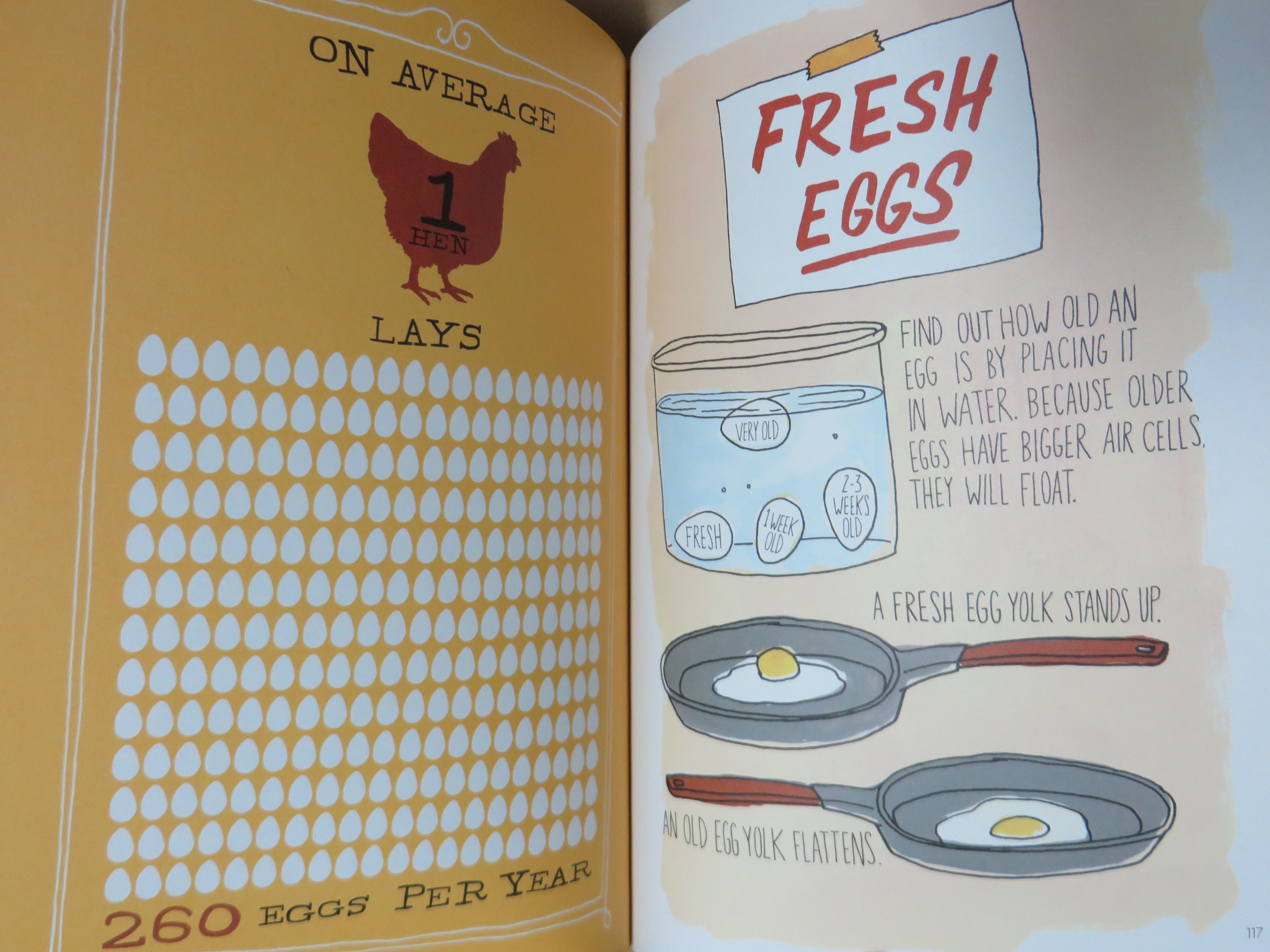
Unlike most of the books I feature here, this is not a book for reading aloud from cover to cover. Instead, this is a book for dipping in and out of, admiring the extensive illustrations and learning myriad new things. Chapters on land, barns, tools, planting, animals, food, and crafts provide an entry point for just about any range of interests and this book would make a wonderful present for just about anyone of any age.

Randomly opening the book to a section on poultry, in four pages we learned: the anatomy of an egg, how to identify (by their footprints) predators that could attack the flock, the average number of eggs one hen lays each year, two ways to tell how old an egg is, and the type of duck my mother had as a girl (a Call duck).

My oldest loves to read through this book on his own and is lobbying for us to try some of the recipes (especially the maple fudge).

Author: Julia Rothman
Illustrator: Julia Rothman

Bring Me Some Apples and I’ll Make You a Pie: A Story About Edna Lewis

IMG_4685

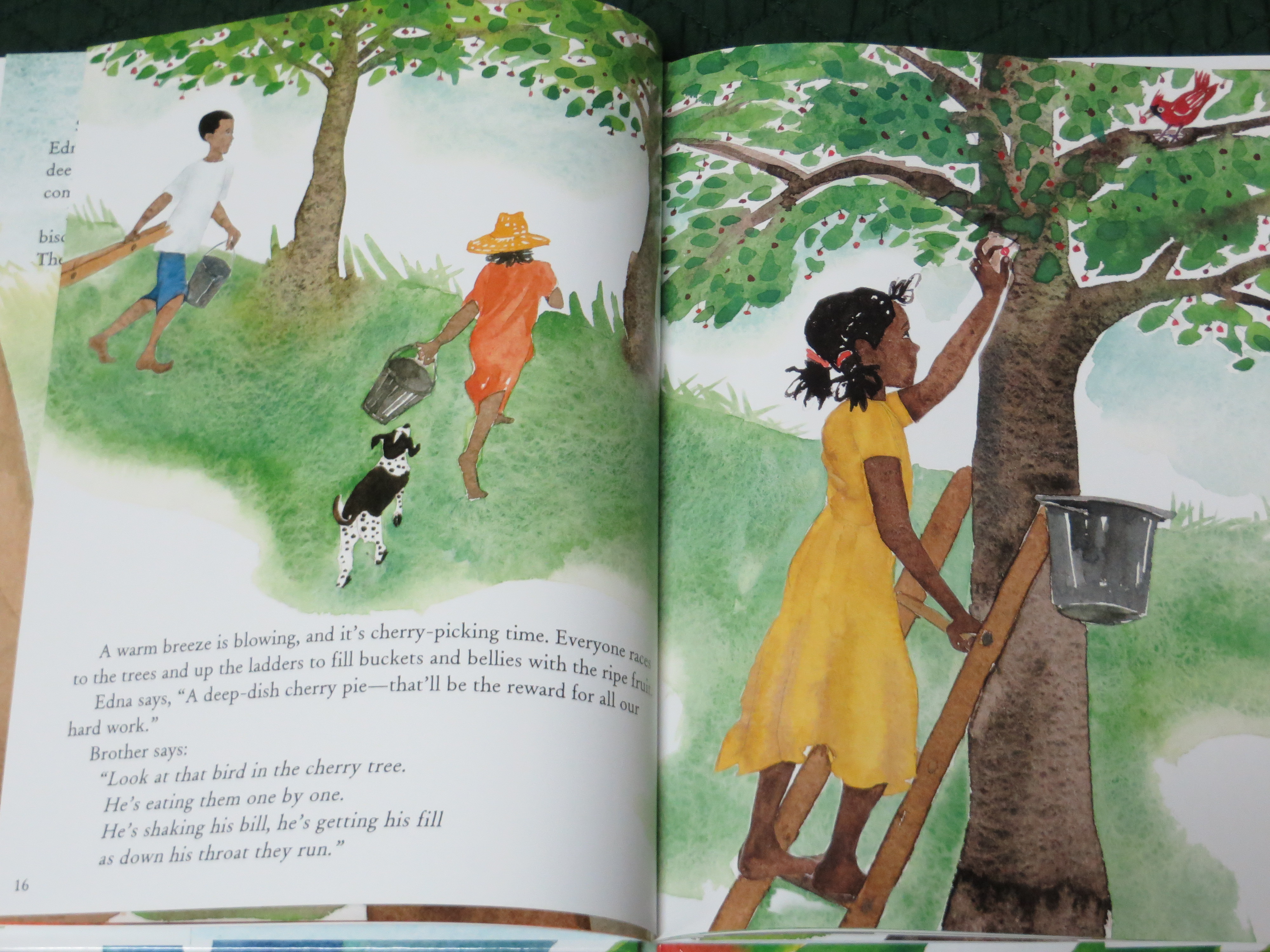
In a 1989 interview with The New York Times, celebrated chef and author Edna Lewis said: “As a child in Virginia, I thought all food tasted delicious. After growing up, I didn’t think food tasted the same, so it has been my lifelong effort to try and recapture those good flavors of the past.” This book focuses on that childhood, those good flavors, and how the rhythms of growing and gathering food affected the day-to-day life of Ms. Lewis’ family.

The boys love this book; the pictures and lovingly-described foods keep them spellbound. I do have a few small caveats: the recipes included at the end of the book are inspired by Ms. Lewis, but are not her own; the speech of the characters is highly stylized (old poetry and rhymes about food make up much of the dialogue, which may take some getting used to); and we all agree the author of this book likely has never actually heard a whippoorwill (we have learned from camping that its call is anything but melodious–instead it is a dead ringer for an hours-long car alarm).

Author: Robbin Gourley
Illustrator: Robbin Gourley


Those Darn Squirrels Fly South

IMG_4490

Genius squirrels follow wintering birds to a tropical paradise. Will their grumpy friend Old Man Fookwire be far behind?

Like the first book in this series, Those Darn Squirrels!, it is difficult to read this book once; as soon as it is done, the boys ask me to read it again. Since they are laughing their heads off for much of the book (no matter how many times we read it), I’m happy to comply.

Author: Adam Rubin
Illustrator: Daniel Salmieri


Tap-Tap

IMG_4465

It was early on market day when Sasifi and her mama
started down the path to the main road. The sky was still
gray. Mama carried a big basket of oranges on her head.
Sasifi carried a smaller one.
“Will we ride in the tap-tap today?” Sasifi asked.
“No,” said Mama. “We will walk to market, the same as
always.”

Sasifi has just turned eight and is very proud that she is now big enough to help Mama on market day. But she would love to try traveling in a tap-tap (a brightly painted share taxi) instead of walking. This engaging book deftly portrays a way of life very different than our own (the boys wondered why Sasifi’s family did not just buy a car, which lead to an interesting discussion) and is gently humorous. My youngest especially enjoys it.

Author: Karen Lynn Williams
Illustrator: Catherine Stock

Dragon Stew

IMG_4452

. . . a shabby young
man came trudging up the road toward the
castle. He had patched knees and elbows, and
the feather in his worn hat was bedraggled,
but he had a merry grin, and he was whistling
a gay tune. When he saw the long line of people,
he asked a soldier, “What’s going on?”

“The king’s looking for a new royal cook,”
the soldier replied. “The cook with the most
unusual recipe will get the job and will live in
the palace off the best of the land!”

“Wouldn’t that be wonderful!”

“Well, I don’t know,” said the soldier.
“Cooks don’t get along with the king. He tells
’em what to do, puts things in their pots–he
all but does the cooking himself.”

“You don’t say?” said the young man, and
he got into line.

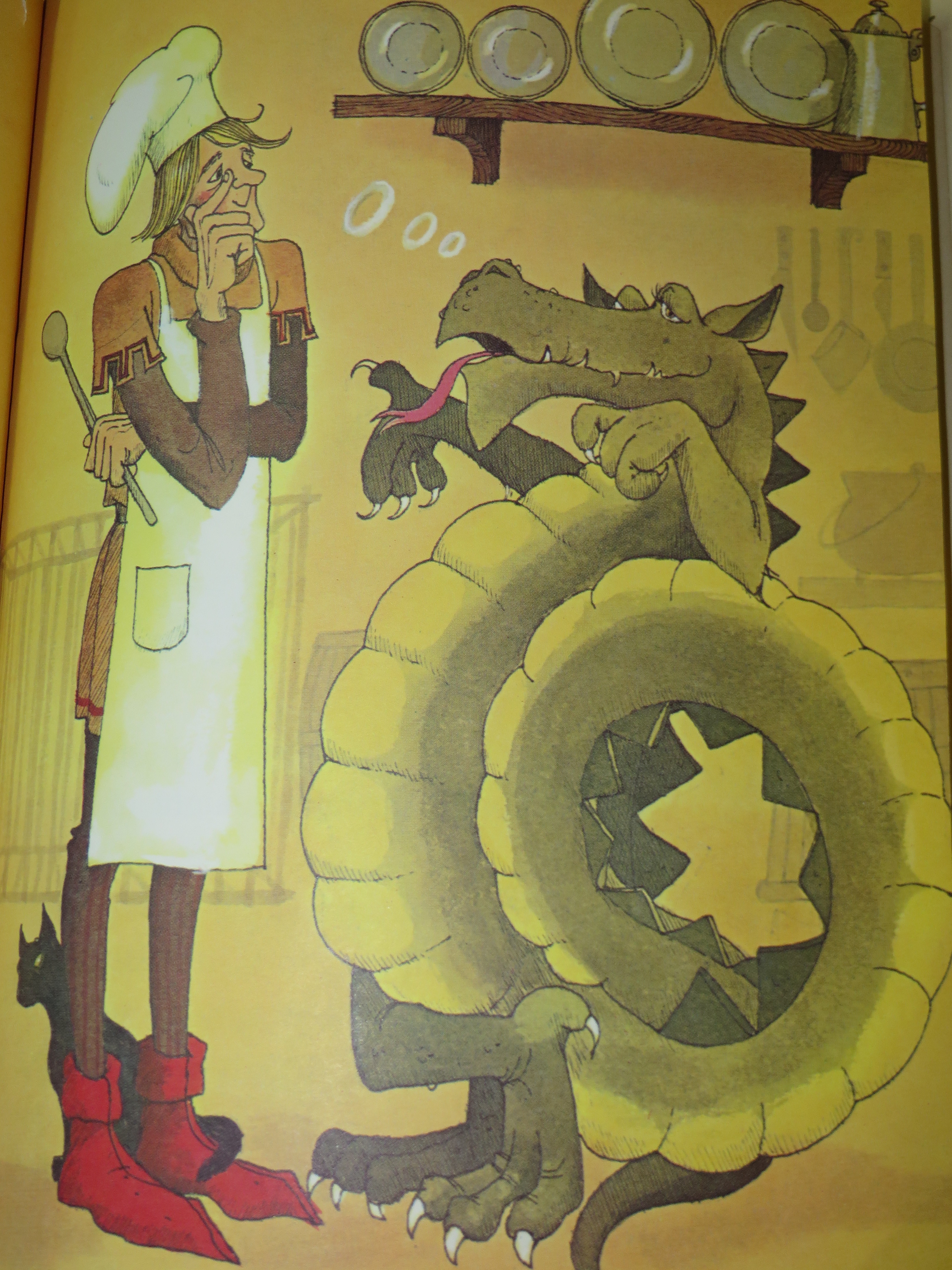
Much like The King of Pizza, this book begins with a monarch that loves food but is never satisfied with it. And once again, after some twists and turns, everyone ends up happy (including the kids it is read to). The illustrations, by Ms. Hyman, are very good and particularly interesting when you compare them to her later (much more detailed) illustrations for Saint George and the Dragon.

Author: Tom McGowen
Illustrator: Trina Schart Hyman

On Market Street

IMG_4179

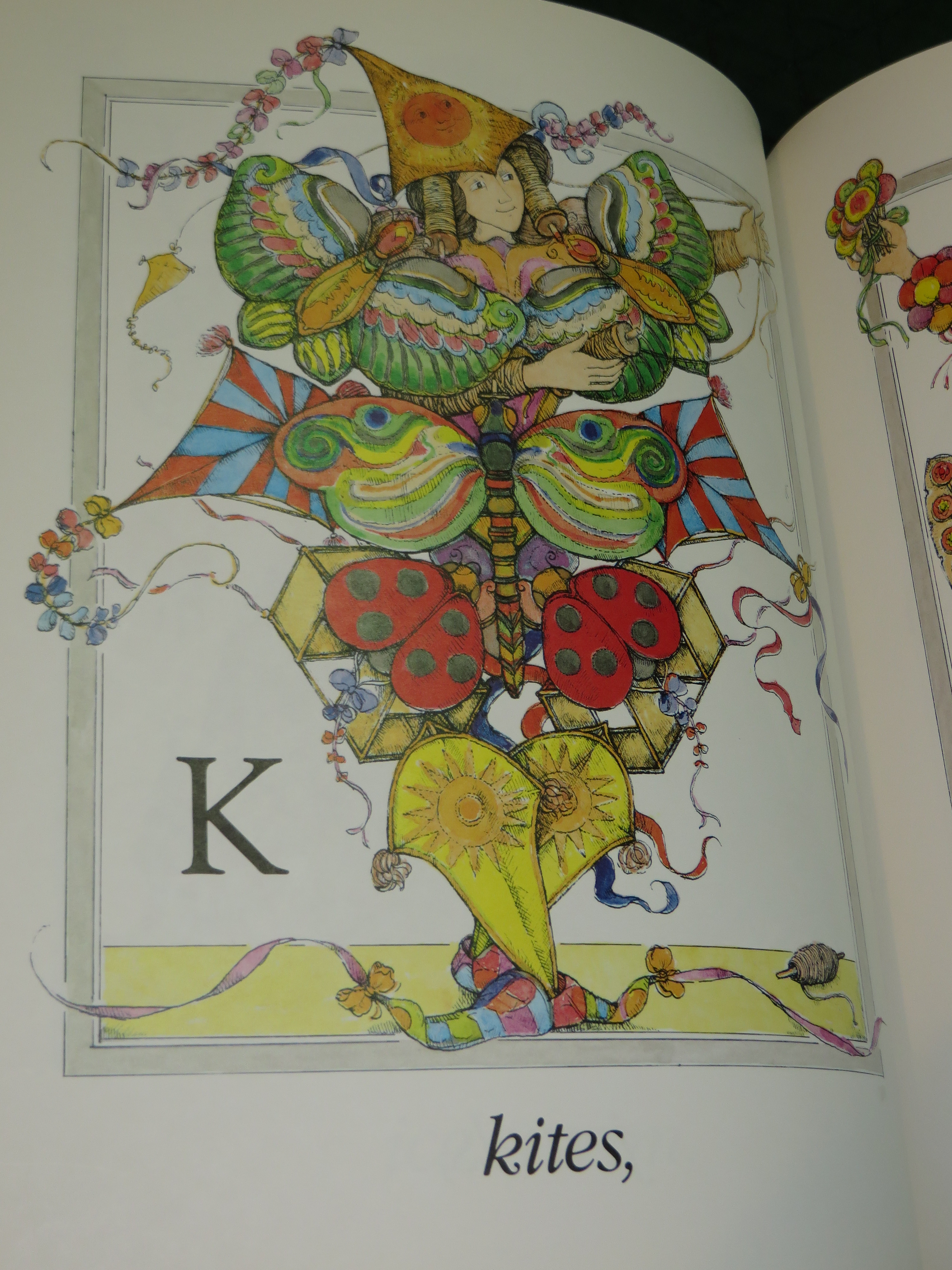
On Market Street, vendors of items from apples to zippers all wear (or are made of) their wares. I’ve loved this beautiful alphabet book from the first time I saw it as a child. The boys prefer The Racecar Alphabet, but this is the week when I share some of the books that I currently enjoy more than they do, in honor of Mother’s Day.

Author: Arnold Lobel
Illustrator: Anita Lobel


Morris Goes to School

IMG_4085

Morris looked at the candy.
He liked the gumdrops.
He said, “Give me some of those.”
The man said,
“They are one for a penny.
How much money do you have?”
Morris looked. He had six pennies.
“I have four pennies,” he said.
The man laughed. “You have six!
Can’t you count? Don’t you go to school?”
Morris asked, “What is school?”

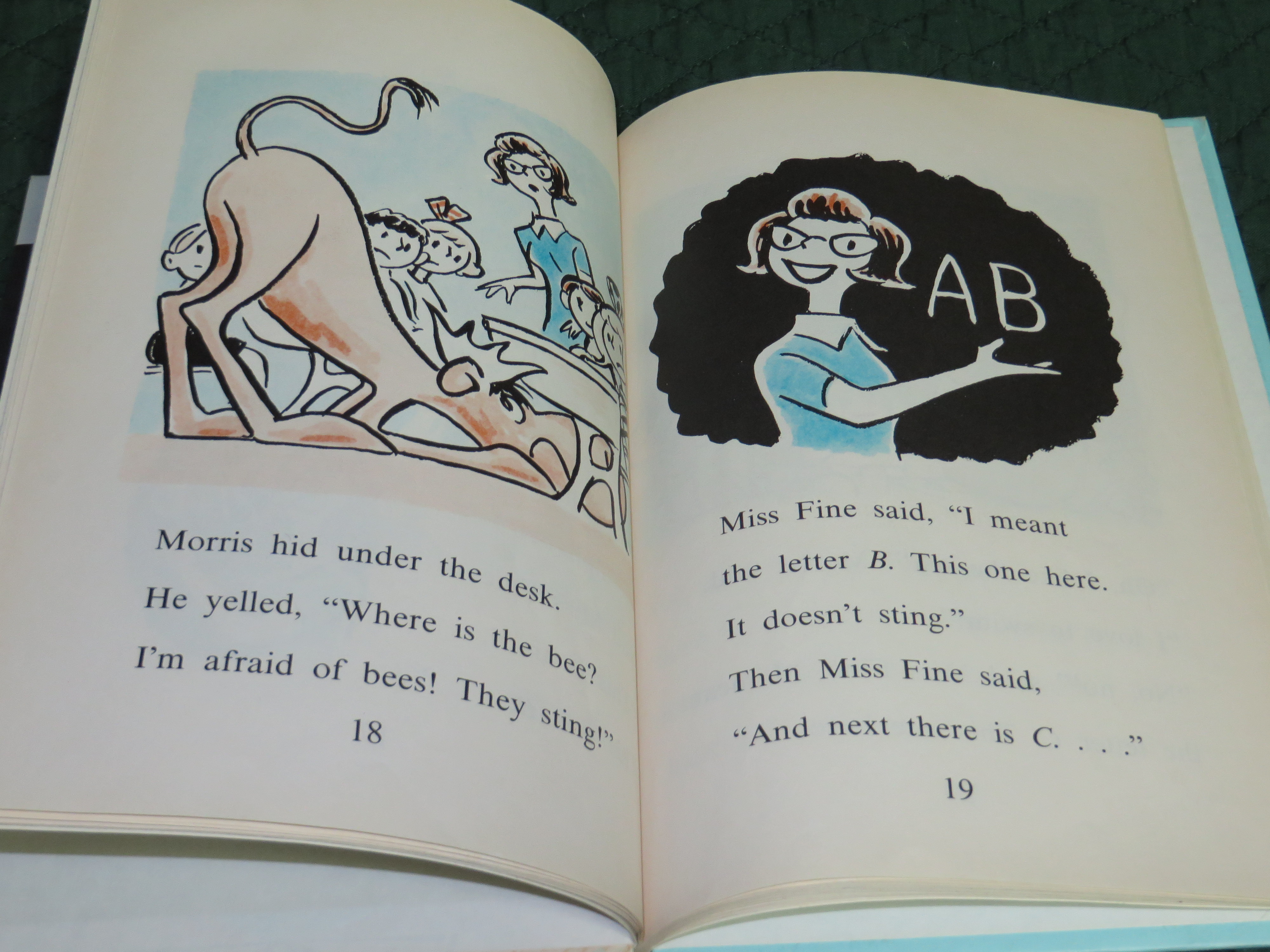
The rest of the book answers this question, as Morris immediately heads off to school and learns lots of new things. Perhaps most importantly, by the end of the day he knows how to purchase the right amount of gumdrops.

Morris takes things very literally, and the resulting misunderstandings (like in the picture above) really tickle my youngest (who is getting ready to start school himself). This book also presents many opportunities for him to participate in the reading (for example, by counting Morris’ pennies).

Author: B. Wiseman
Illustrator: B. Wiseman

Rechenka’s Eggs

IMG_4033

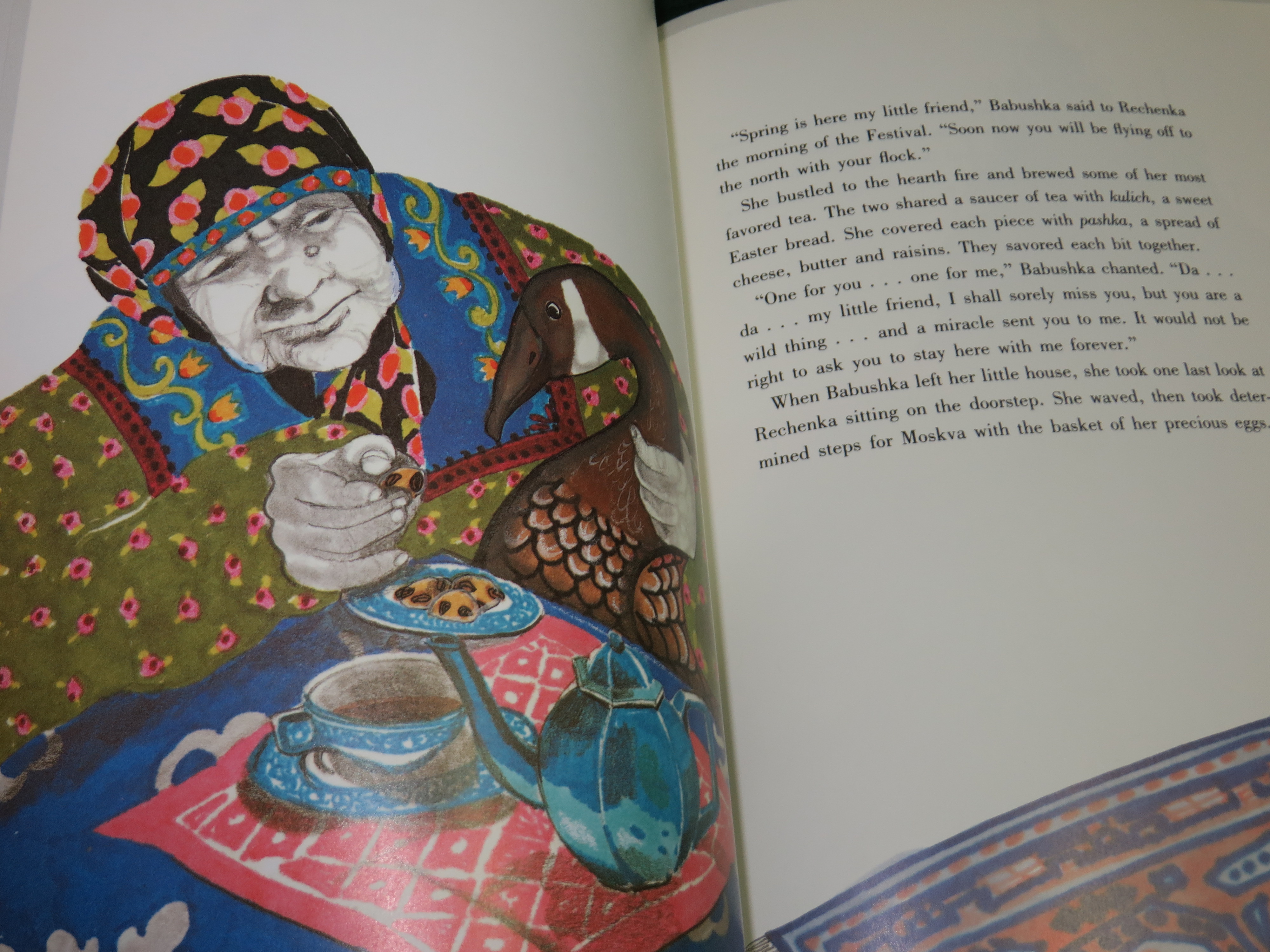
Babushka lived alone in a dacha, a
little house in the country, but she
was known far and wide for the fine eggs
that she lovingly painted. Her eggs were so
beautiful that she always won first prize at
the Easter Festival in Moskva.

One day, Babushka rescues a wounded goose and names her Rechenka. As Rechenka returns to health, she lays an egg each morning for Babushka’s breakfast. And eventually, after Babushka’s lovingly painted eggs are destroyed in a (goose-related) accident, Rechenka’s daily eggs become increasingly miraculous.

This is one of our very favorite Easter stories. The pictures are strikingly beautiful, as is Babushka’s quiet, constant appreciation of the miracles all around her (large and small).

Author: Patricia Polacco
Illustrator: Patricia Polacco

Little Elliot, Big City

IMG_3985

Elliot is a tiny, pastel-spotted, New-York-City-dwelling elephant. He generally works around his size limitations, but often goes unnoticed and is nearly overcome by loneliness (and cupcake cravings) until he finds “someone even littler than himself, who had an even bigger problem.” In helping this someone (an adorable white mouse), Elliot’s problems are solved. This deeply cute book manages to stop short of being saccharine and is very popular.

Author: Mike Curato
Illustrator: Mike Curato