Tag Archives: Caveat

And to Think that I Saw it on Mulberry Street

This book is such fun. The words nearly sing as you read them aloud. The illustrations leap off the page. It’s hard to believe that this was Dr. Seuss’ first book–he really had his voice fully in place from the beginning. And I wish that was all I had to say, but this one has a serious caveat.

As mentioned, this book was Seuss’ first. That means it is close to 100 years old. And it shows–it is dated to the point where Seuss edited it in 1978 and his estate took it out of print altogether in 2021 (long after my boys’ picture book days were past). The copy that we have is an edited one, as was the copy I read as a child. I’ve looked up the original version now and… yikes. And knowing Dr. Seuss’ background creating political cartoons during World War II targeting Japanese Americans does not help matters at all. I’m honestly not sure I would read it to a child today. Read this one to yourself first before sharing it.

Author: Dr. Seuss

Illustrator: Dr. Seuss

James and the Giant Peach

In my opinion, this not a top-tier work of Dahl’s (Charlie and Matilda are my favorites of his, and I’m very found of Danny, the Champion of the World, although I didn’t read that one to the boys). But, as I realized when I started reading his books aloud, even his second-tier work sets a high bar. This book is odd and fun and surprising–how many authors would dare, have the hero’s parents, on the first page of the book, “suddenly . . . eaten up (in full daylight, mind you, and on a crowded street) by an enormous angry rhinoceros which had escaped the London Zoo”? Or have the hero’s companions be giant insects? (For obvious reasons, like other Dahl books, this would not be the best book for a particularly sensitive or anxious child. Things are truly terrible for James before they get much better. )

Like Charlie and the Chocolate Factory, I far prefer the original illustrations to those by Quentin Blake (who is now the default Dahl illustrator). Burkert’s pictures are very weird and atmospheric (James looks positively haunted, which makes perfect sense in the context of the book) and I love the subtle light peach color throughout the illustrations. I didn’t find its stop-motion movie very interesting and didn’t show it to the boys.

Author: Roald Dahl

Illustrator: Nancy Ekholm Burkert

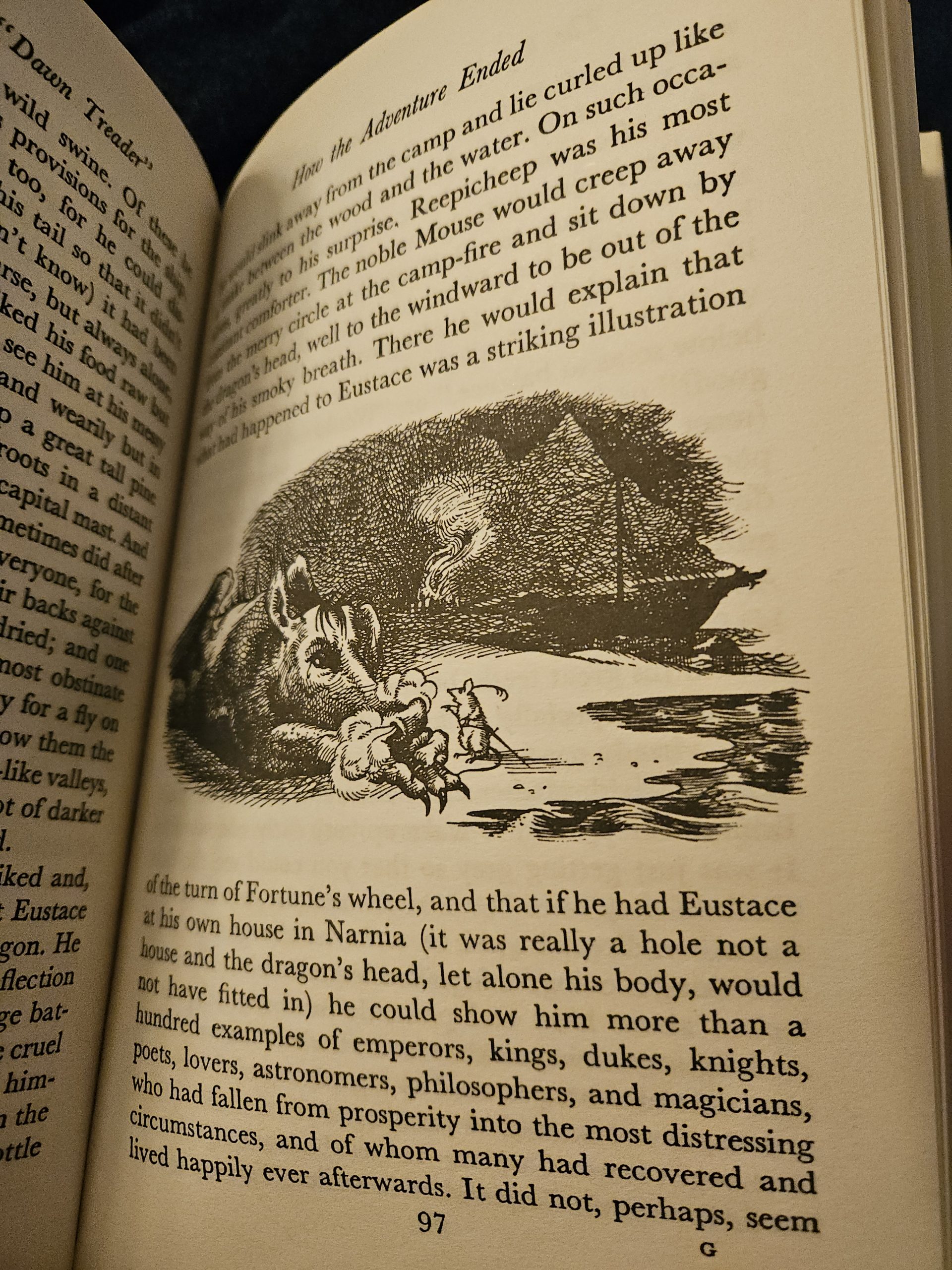
The Voyage of the Dawn Treader

Gracious, Prince Caspian (the second published Narnia book) is boring. I didn’t miss a thing not reading that one as a kid. So, I skipped reading it to the boys, going from Wardrobe straight to The Voyage of the Dawn Treader (the third published Narnia book).  And then, well, I skipped reading them the rest of the series too (because they were dull as Caspian, even more preachy and dated than this book, and the boys never asked about them) and showing them the live-action movies.  So, as far as our family is concerned, I guess this series is a duology.  And a good one!  While Lewis is so very preachy (which I supposes makes sense in the Christian allegory context that he was working within–see my discussion of Wardrobe for more on this) and the pictures are generally awkward (as with Wardrobe), it is full of adventure and a nice change to have an antihero as a main character, someone needs a lot of personal growth rather than starting off perfect.  But the real draw in Dawn Treader, as far as I’m concerned, will always be the glorious Reepicheep.  Well, and the opening line:  “There once was a boy called Eustace Clarence Scrubb and he almost deserved it.”

Author:  C.S. Lewis

Illustrator:  Pauline Baynes   

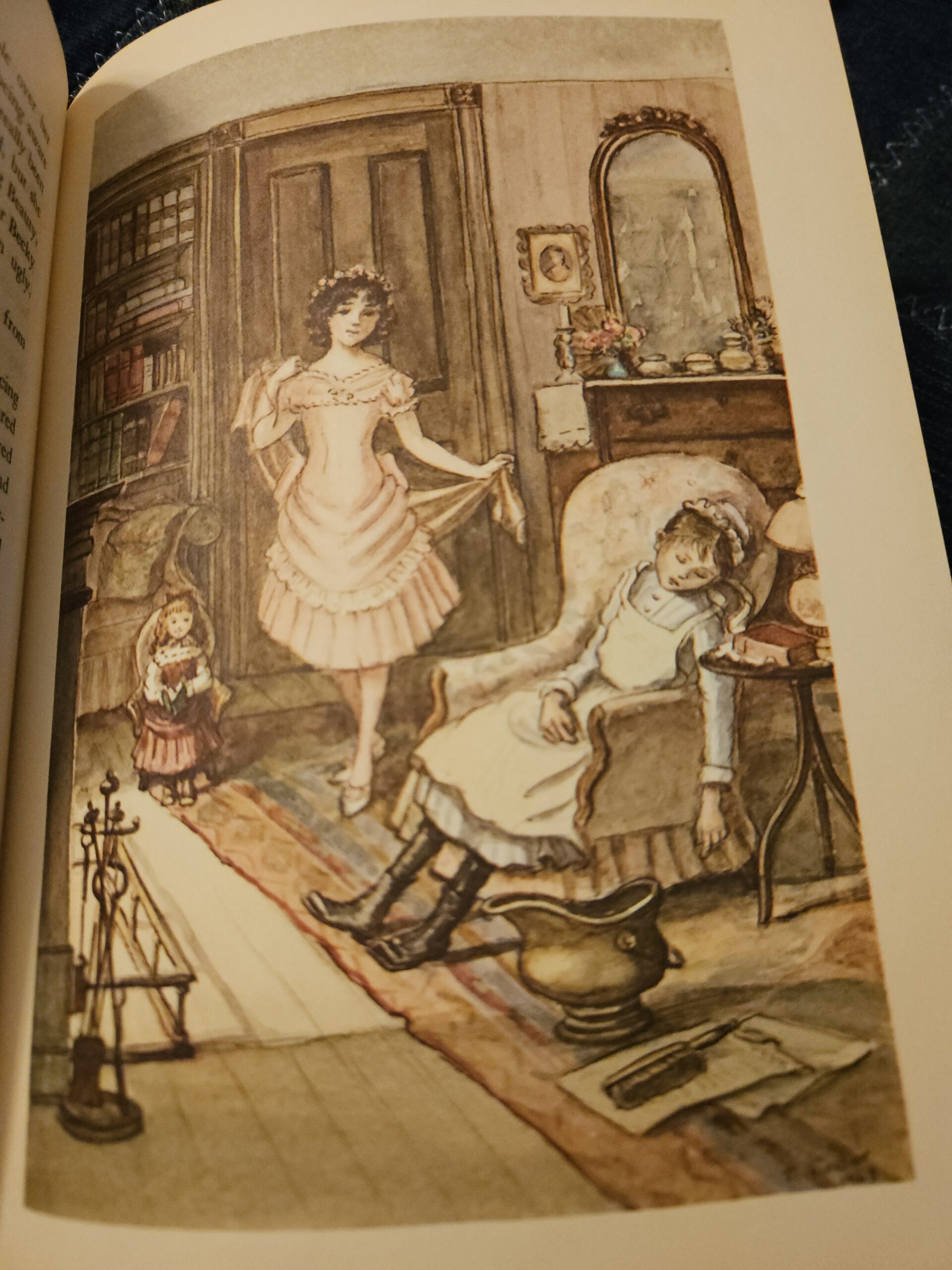
A Little Princess

Like Matilda, this book focuses on a child escaping from awful circumstances by the power of her mind and creativity. I read it over and over as a child–Sara’s times of luxury and deprivation, love and misery, were enthralling (as was the glimpse into British boarding schools of the nineteenth century). And the sumptuous pictures! I read The Secret Garden by the same author around the same time. It never spoke to me in the same way (perhaps it would have if I’d had a copy of the edition Tasha Tudor illustrated), but it did make a a musical I hugely enjoyed as a young teen. (Avoid the movie of A Little Princess with Shirley Temple at all costs.)

Caveat: Keep in mind that both A Little Princess and The Secret Garden are about 120 years old and aspects of them have not aged well at all–read them alone first, there are a lot of things you’ll want to be ready to discuss if you read it to a child.

Author: Frances Hodgson Burnett

Illustrator: Tasha Tudor

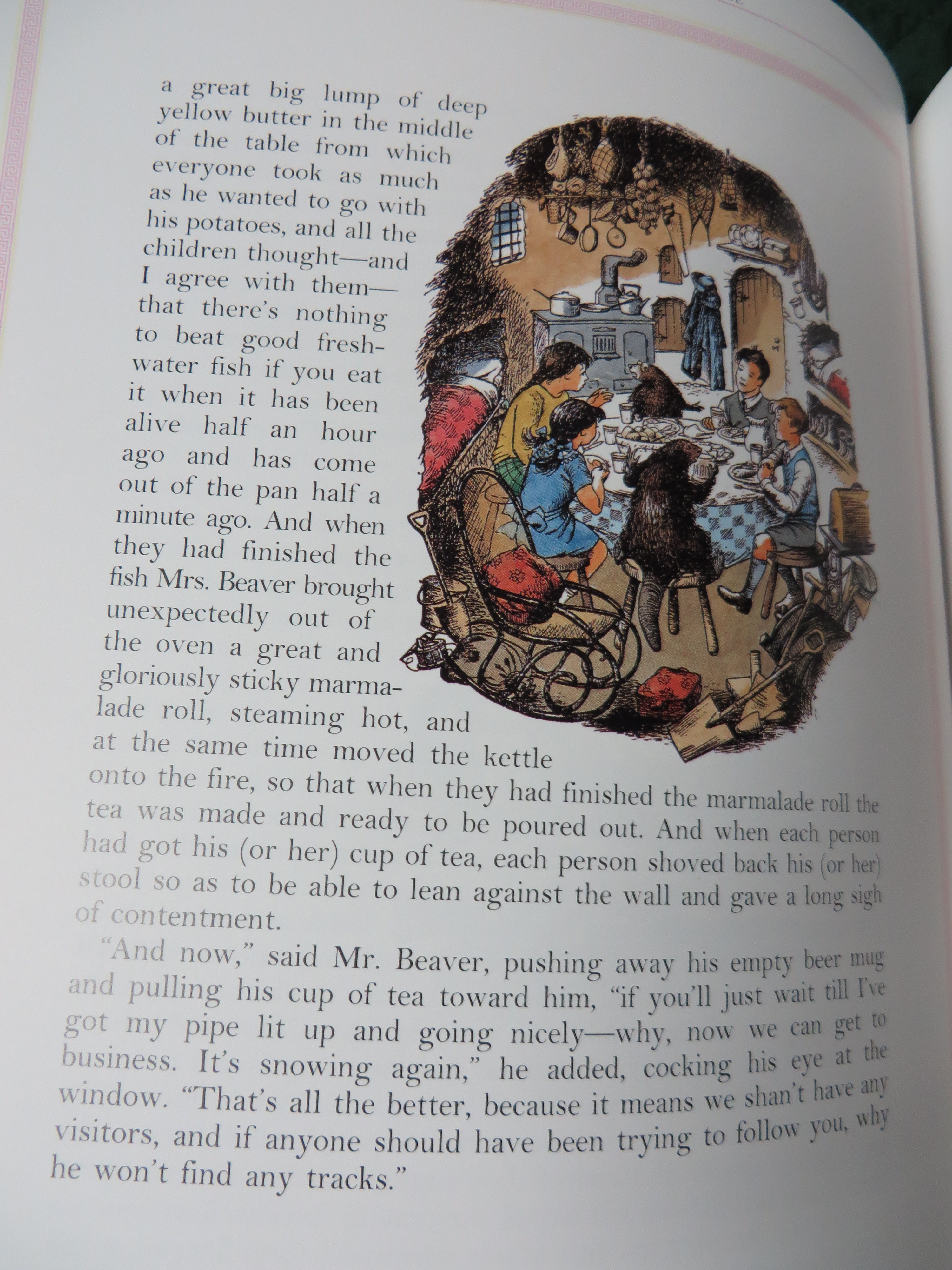
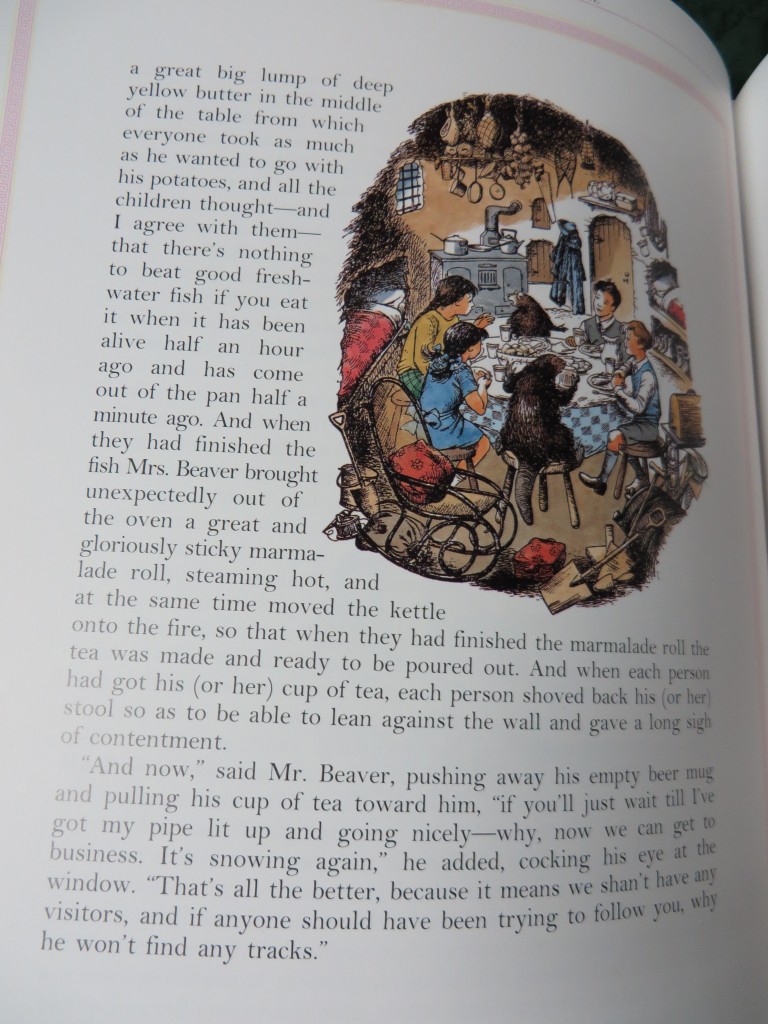
The Lion, the Witch, and the Wardrobe

IMG_4726

I’m going to assume you know the plot of Wardrobe, given its status as an extremely widely-read, acknowledged classic of children’s literature. You may not know, however, that there is much controversy over which book in the Narnia series should be considered the first one. I started our journey to Narnia here, as Mr. Lewis did midway through the last century, because I think starting with the later-written prequel, The Magician’s Nephew, ruins the mystery and magic of Wardrobe.

I wasn’t sure how Wardrobe would work as a read-aloud and was pleasantly surprised to find it worked beautifully. Reading it aloud took much less time than I had expected and my oldest was very interested throughout.

First caveats:

Most adults know the Narnia books have a very Christian subtext, but most children (judging by my son and my childhood self) do not notice, at least with the early books in the series. A lion that dies to redeem the sins of others and then comes back to life? Carry on! It is no stranger than a magical chocolate factory staffed by oompa loompas or a father who goes out for some milk and is delayed by aliens, pirates, vampires, and space-traveling-talking dinosaurs. Whether you love that or hate the subtext, some familiarity with Narnia is is necessary for cultural literacy (for example, without Narnia, the excellent His Dark Materials trilogy wouldn’t make nearly as much sense). There is a bit of obvious sexism in this book, but it is not outrageous, particularly for the time period in which it was written.

Further caveats (with spoilers):

I’m not sure how far we’ll venture into this series together; I read Wardrobe early on as a child and really enjoyed it, but checked others in the series out of the library out of order and got deeply discouraged by The Magician’s Nephew (which I thought explained things that needed no explanation and just wasn’t terribly interesting) and then The Last Battle (which, among many other issues, has the Problem of Susan; nearly universally unsympathetic and one-dimensional characters; and an apocalypse, in every sense of the word, that destroys Narnia) and gave up on the series. But I recently read the third book in the series, The Voyage of the Dawn Treader (which was sent to me through a shipping error), and think my oldest would love it (although it comes with some caveats of its own, which I’ll detail if it ever gets its own entry) so I’ve ordered Prince Caspian to see if we should read it before Dawn Treader.

Final caveat:

Make sure your child is old enough for this book and this series; when good and evil battle things out in Narnia (and they do at least once in each of the Narnia books I have read) the details are vivid and the outcomes can be very, very grim.

Author: C.S. Lewis
Illustrator: Pauline Baynes

The Circus Ship

IMG_4026

Five miles off the coast of Maine
and slightly overdue,
a circus ship was steaming south
in fog as thick as stew.

There is something about Chris Van Dusen–I’m not sure if it is his bouncy rhymes or his bright, beautiful pictures–but the boys go wild for his books. We haven’t had this book terribly long, but it is very frequently requested and seems on track to be as popular as perpetual favorite If I Built a Car. In it, fifteen circus animals find new, much improved, homes on an island in Maine when the ship they are traveling on sinks (finding the animals on the pages is a large part of the fun).

Caveat: The inspiration for this happy story was incredibly grim; Mr. Van Dusen has completely reimagined a true story of an awful shipwreck. Therefore, I suggest saving the author’s note in the back of the book for adults.

Author: Chris Van Dusen
Illustrator: Chris Van Dusen

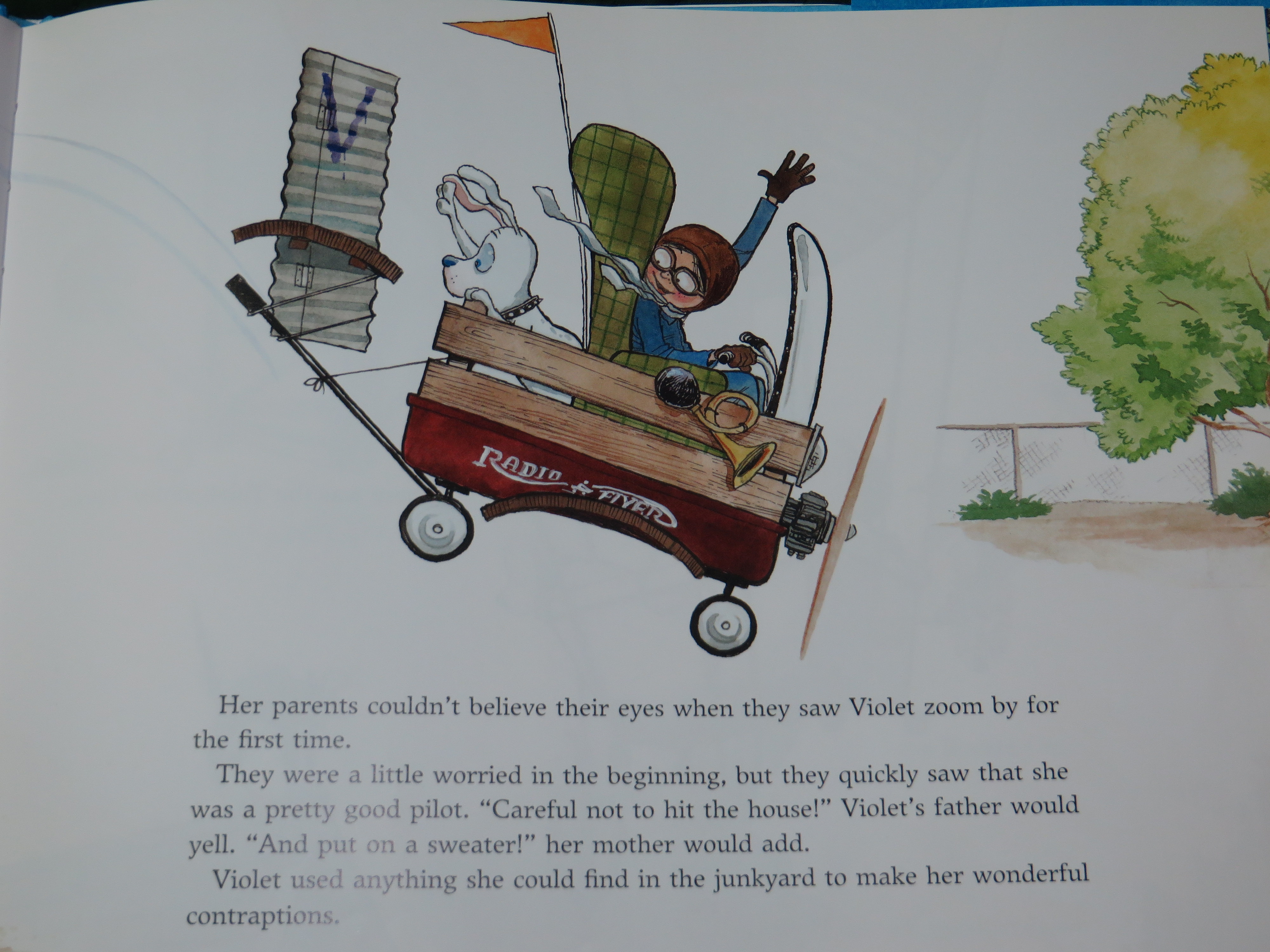
Violet the Pilot

IMG_2226

Violet is “a mechanical genius” with a particular gift for building flying machines, a faithful canine sidekick, and supportive parents. What is not to love about book starring a strong, independent, STEM-focused female protagonist whose skills and moxie lead her to save the day?

Well… First, the book presents Violet’s inclinations as way outside the norm for a girl: “while other girls were playing with dolls and tea sets, Violet played with monkey wrenches and needle-nose pliers.” Although this book was just published six years ago, this feels outdated. Second, Violet is an outcast. She eats lunch alone; other kids make fun of her; and she hopes to compete in an airshow because, if she wins a prize, “maybe then the kids at school would be nice to her.” While she ultimately saves the lives of an entire Boy Scout troop, and gains the respect of her community, there is real pain here that the wish fulfillment doesn’t hide.

But the boys love this book and focus on Violet’s brilliant designs, her dog, and the happy ending. (We do talk a bit about how the other kids at school are being unkind and missing out by not getting to know her.) This is the first book on this blog that we discovered through my oldest bringing home books from his school’s library, but I’m guessing it won’t be the last.

Author: Steve Breen
Illustrator: Steve Breen

Bembelman’s Bakery

IMG_1925

This is the origin story of a (fictional) hugely-popular bakery. Back in the Old Country, seven children decide to help their mama by baking bread. Like The Duchess Bakes a Cake, things quickly spiral out of control, but the flavor of this book is completely different:

“This is not just bread,” he cried. “It’s meat and potatoes!
It’s strudel and pie! It’s breakfast, lunch, and dinner all at
once! It’s apples and raisins, vodka and noodles, every taste
you ever wanted to taste, all in each wonderful bite.”

I always enjoyed this as a kid and it is now one of my youngest’s very favorites.

Caveat: Corporal punishment clearly is an option for this family, but the reference is fleeting.

Author: Melinda Green
Illustrator: Barbara Seuling

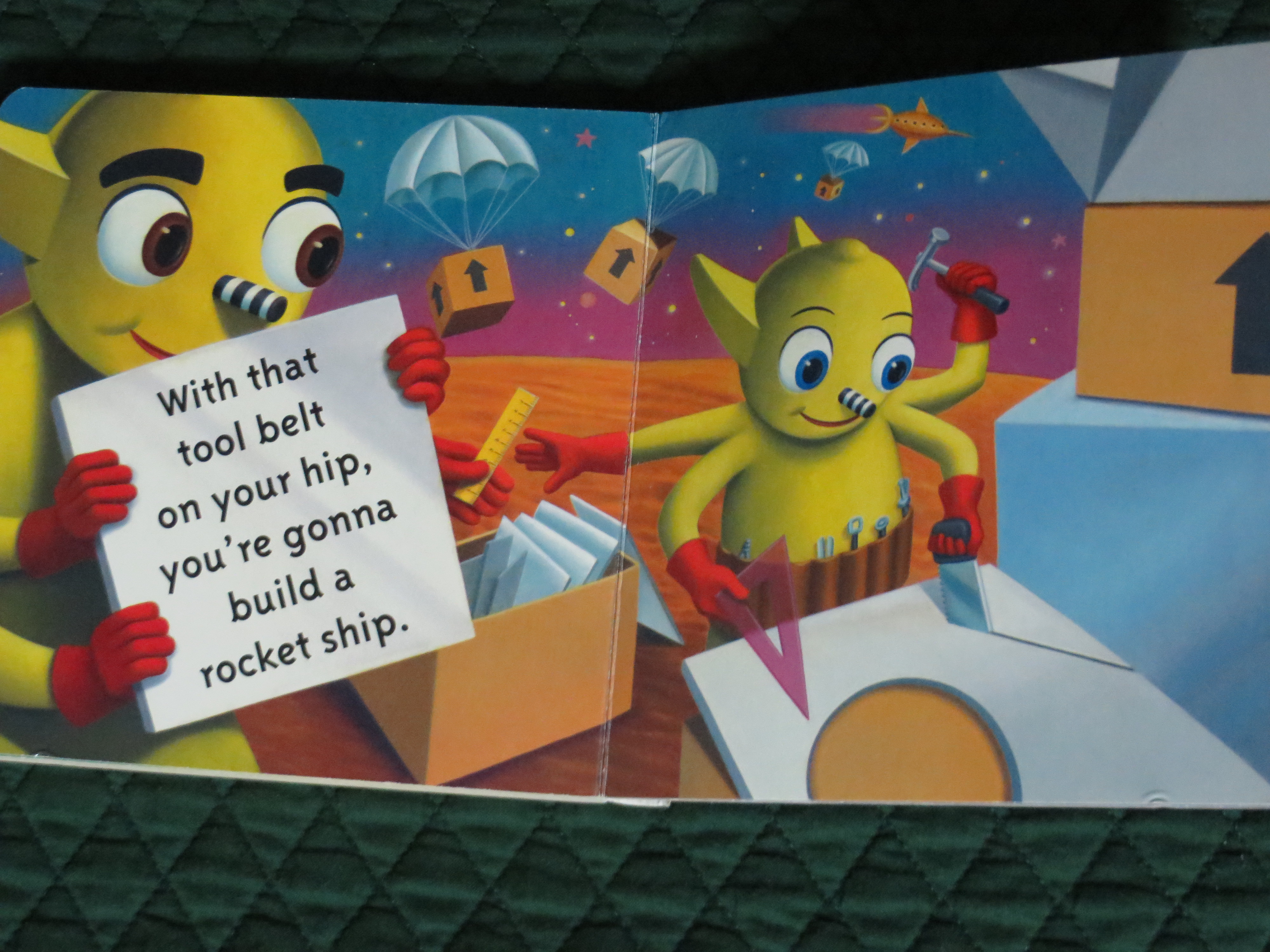
Hush, Little Alien

IMG_1519
Hush, little alien,
don’t say a word,
Papa’s gonna catch
you a goonie bird.

If that goonie bird flies too far,
Papa’s gonna lasso you a shooting star.

If that shooting star’s too hot,
Papa’s gonna
find you an astronaut!

When my oldest was two, he started singing this song. I thought he was making it up as he went along and was absolutely amazed.  Finally I caught on that he had heard it at school, started searching, and found the song has come from this really fun variation on “Hush, Little Baby.”  (Of course, I still think my boy hung the moon.)

Caveat:  The astronaut Papa finds fights back (with his fist), so the aliens move on to something else.  I always just shook my fist, added the line “Put me down, please!” and moved right along, but if you are concerned about any kind of physical confrontation, you may want to skip this one.

Author:  Daniel Kirk
Illustrator:  Daniel Kirk

Charlie and the Chocolate Factory

IMG_0846

This may be the perfect read-aloud chapter book.  It is terribly funny.  There are lots of pictures and they are great (nothing against Quentin Blake, but I suggest sticking with the original illustrator).  The characters are a hoot.  The candy creativity is off the charts.  The author is beautifully off his rocker.

But the best part of all is simply reading it aloud.  I had never realized how the language sings.

Caveat:  While Charlie does quite well for a Dahl protagonist (sure, he nearly starves to death, but he is loved by his family–and for Dahl this is really quite a good start in life–which is more horrifying the more I think about it), terrible things do happen to other children and we are encouraged to react with unadulterated schadenfreude).  Like all Dahl books, I suggest you read it alone first.  And the movies are much less fun.

Author:  Roald Dahl
Illustrator: Joseph Schindelman