Tag Archives: movie

Watership Down

I still can’t believe I read this book aloud. It is huge. There are names that are very challenging to pronounce. There is a seagull character who is supposed to have a Russian accent (who I’m afraid ended up sounding like he came from the south-eastern part of the United States) And did I mention that it is huge? But the boys were getting older and they really enjoyed it, so it was all worth it.

(No, I did not show them the movie. I saw snippets of it as a child, about the same time as I saw snippets of The Last Unicorn and it terrified me–and apparently everyone else, this really is not a movie for children.)

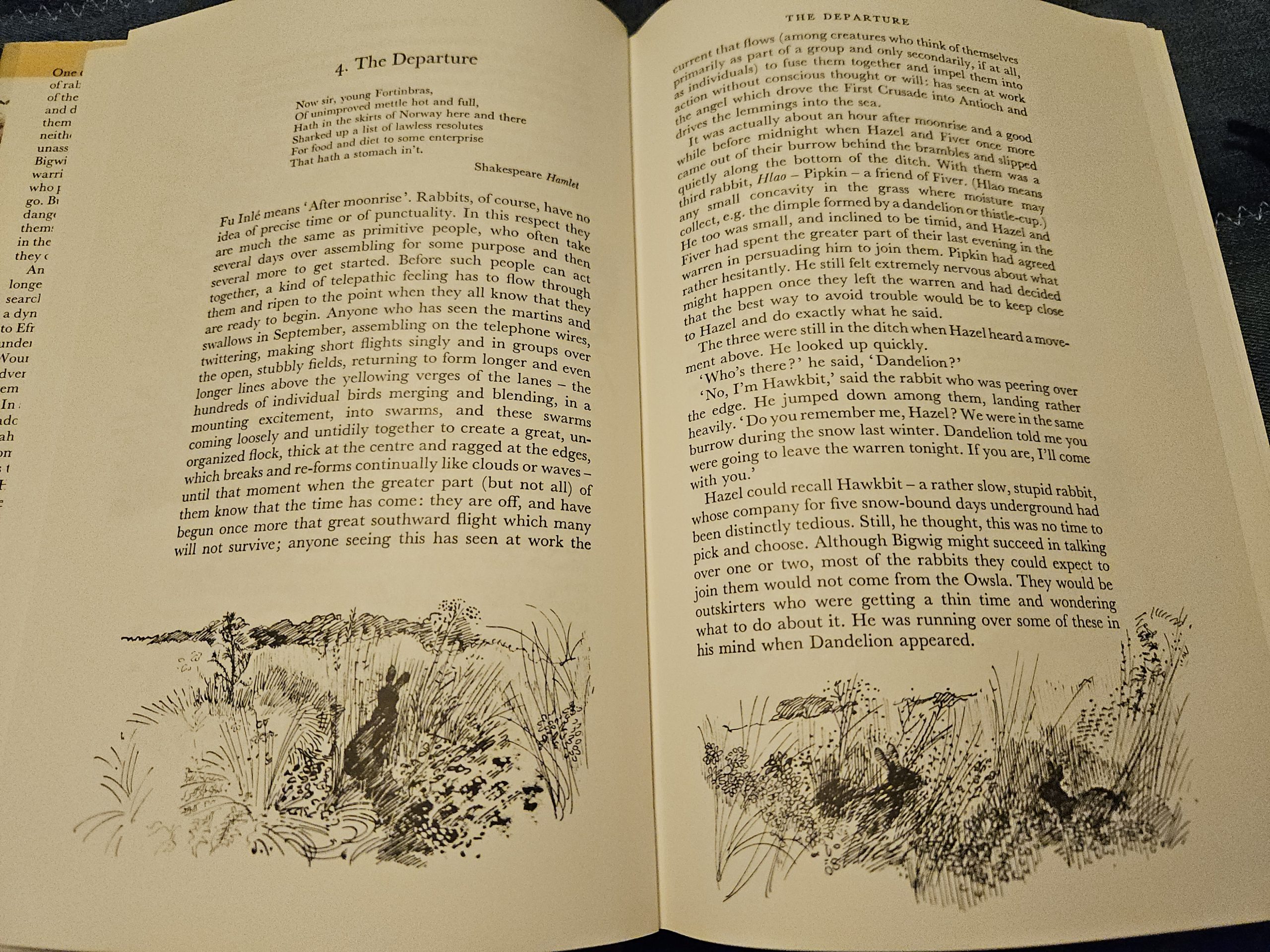
I expect this will be the final entry for this blog. My boys are now well past the optimal age of reading aloud, which means there are no new books waiting to be added. So, although I read this to the boys using a mass market paperback, as a special treat, and commemoration of the end of this project, I purchased an illustrated version of this book from England, pictured below. It has been a true pleasure working on this blog; this time with my boys was incredibly precious and this project has brought back and preserved so many memories. All the best.

Author: Richard Adams

Illustrator: John Lawrence

The Hobbit

This is another one that was so much fun to read aloud! If you’re reading this blog in English, you almost certainly already know the basics of this adventure. But the vibe may be unexpected. J.R.R. Tolkien told this first to his children and it really shows; there is a lightness and sense of play that largely goes by the wayside in the Lord of the Rings series that ended up following it.

Main character Bilbo Baggins is a hobbit and homebody, not a traditional heroic type. But he becomes a hero nonetheless by stepping outside his literal comfort zone and trying new things, while always maintaining his interest in creature comforts (as so lovingly described by Tolkien). It is not to be missed (and neither are the Lord of the Rings movies, which are masterpieces). Unfortunately, however, the three (!) movies made from The Hobbit should absolutely be skipped.

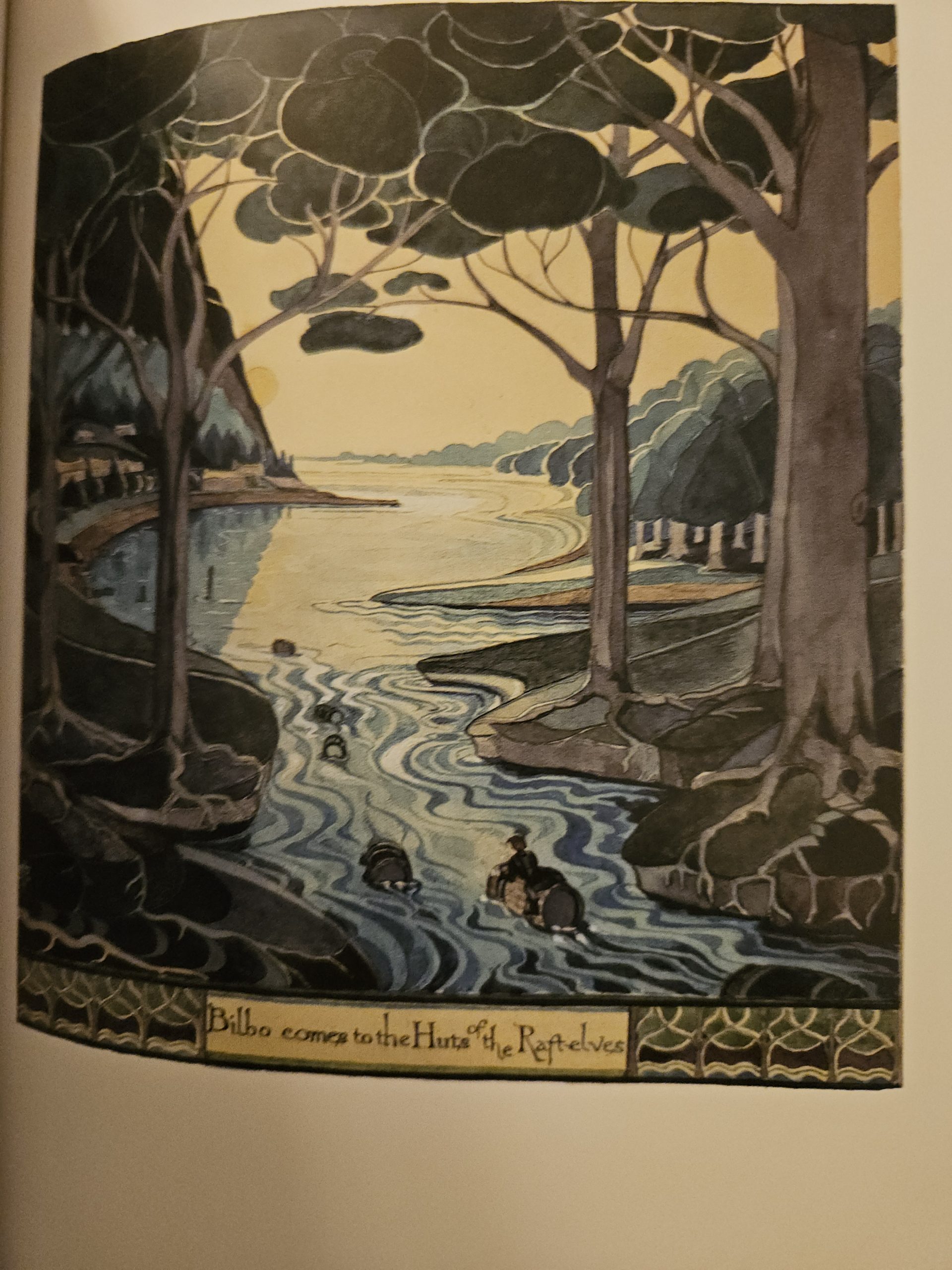
Author: J.R.R. Tolkien

Illustrator: J.R.R. Tolkien

The Last Unicorn

I have very little to say about this book because it speaks for itself so beautifully. It is my absolute favorite book and has been since I stumbled on it in a used bookstore as a young teen. (The snippets of the movie I had somehow seen pieces of terrified and confused me as a young child, but I got over that with time. Beagle himself wrote the screenplay, and the studio who made it later later split and became Studio Ghibli, all of which is very cool.) I loved reading it to the boys and they each have a signed first edition that the absolutely lovely Peter Beagle inscribed to them (for more on that encounter, see my entry on The Sneetches and Other Stories).

I’m not alone in loving this book; over and over again I’ve seen authors pay tribute to it. For example, Ursula Vernon (aka T. Kingfisher), another especial favorite of mine (and of the boys), notes:

It is made of spun glass and fairytales and iron knives and there are individual lines that I would give my lungs to have written.

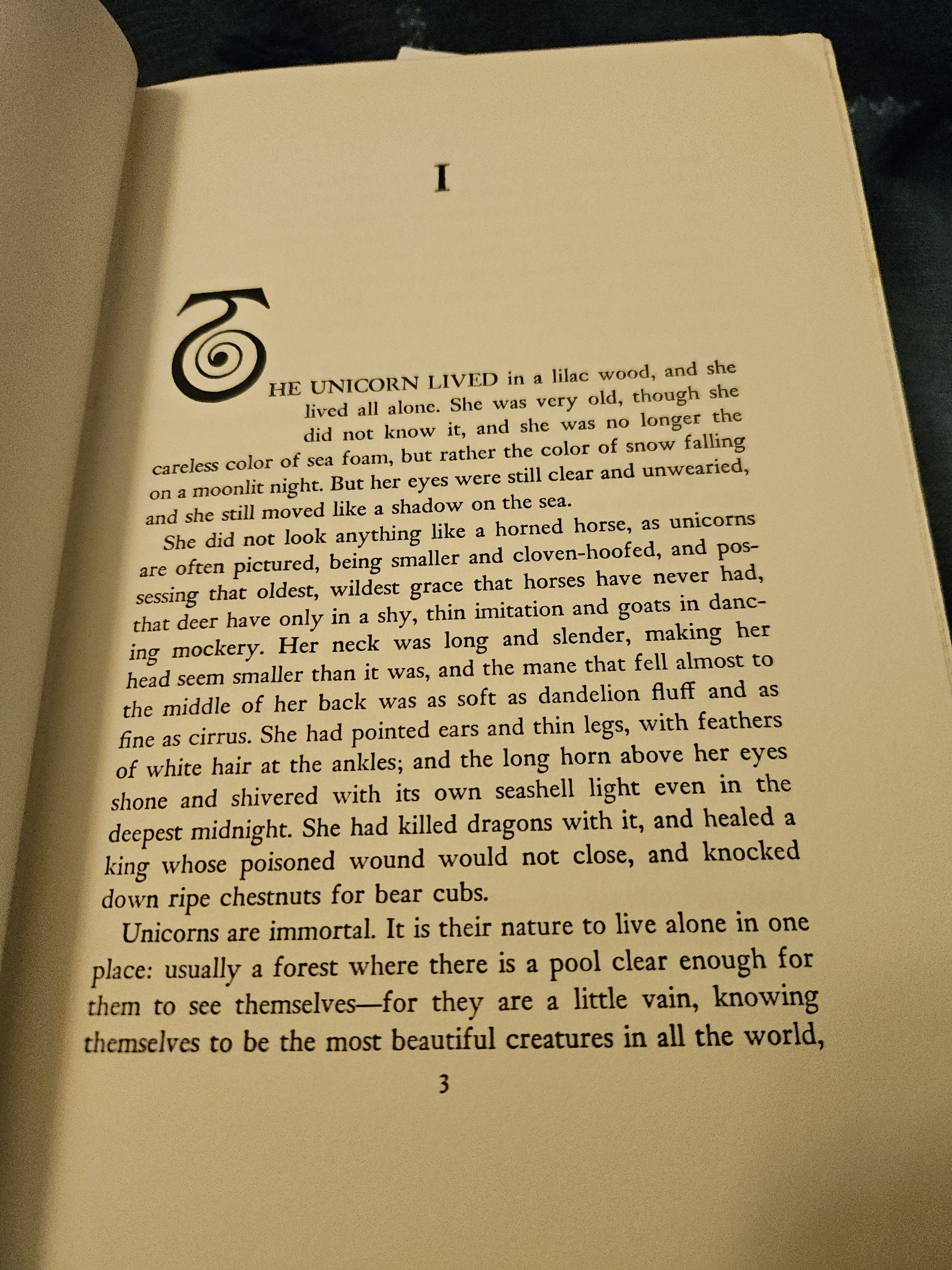
She’s right. I mean, my goodness, just look at the first page below.

Author: Peter S. Beagle

Illustrator: N/A

James and the Giant Peach

In my opinion, this not a top-tier work of Dahl’s (Charlie and Matilda are my favorites of his, and I’m very found of Danny, the Champion of the World, although I didn’t read that one to the boys). But, as I realized when I started reading his books aloud, even his second-tier work sets a high bar. This book is odd and fun and surprising–how many authors would dare, have the hero’s parents, on the first page of the book, “suddenly . . . eaten up (in full daylight, mind you, and on a crowded street) by an enormous angry rhinoceros which had escaped the London Zoo”? Or have the hero’s companions be giant insects? (For obvious reasons, like other Dahl books, this would not be the best book for a particularly sensitive or anxious child. Things are truly terrible for James before they get much better. )

Like Charlie and the Chocolate Factory, I far prefer the original illustrations to those by Quentin Blake (who is now the default Dahl illustrator). Burkert’s pictures are very weird and atmospheric (James looks positively haunted, which makes perfect sense in the context of the book) and I love the subtle light peach color throughout the illustrations. I didn’t find its stop-motion movie very interesting and didn’t show it to the boys.

Author: Roald Dahl

Illustrator: Nancy Ekholm Burkert

The Voyage of the Dawn Treader

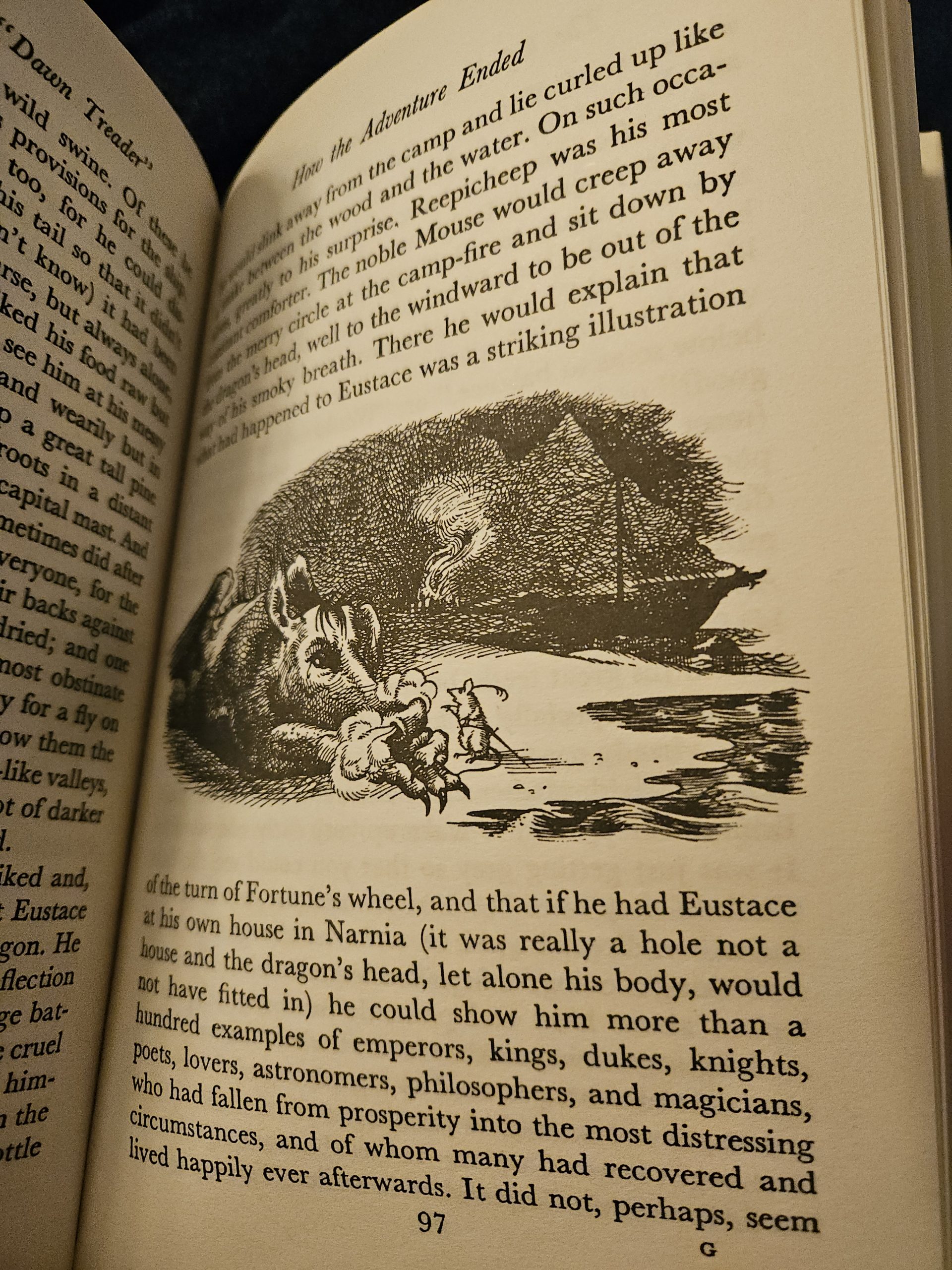
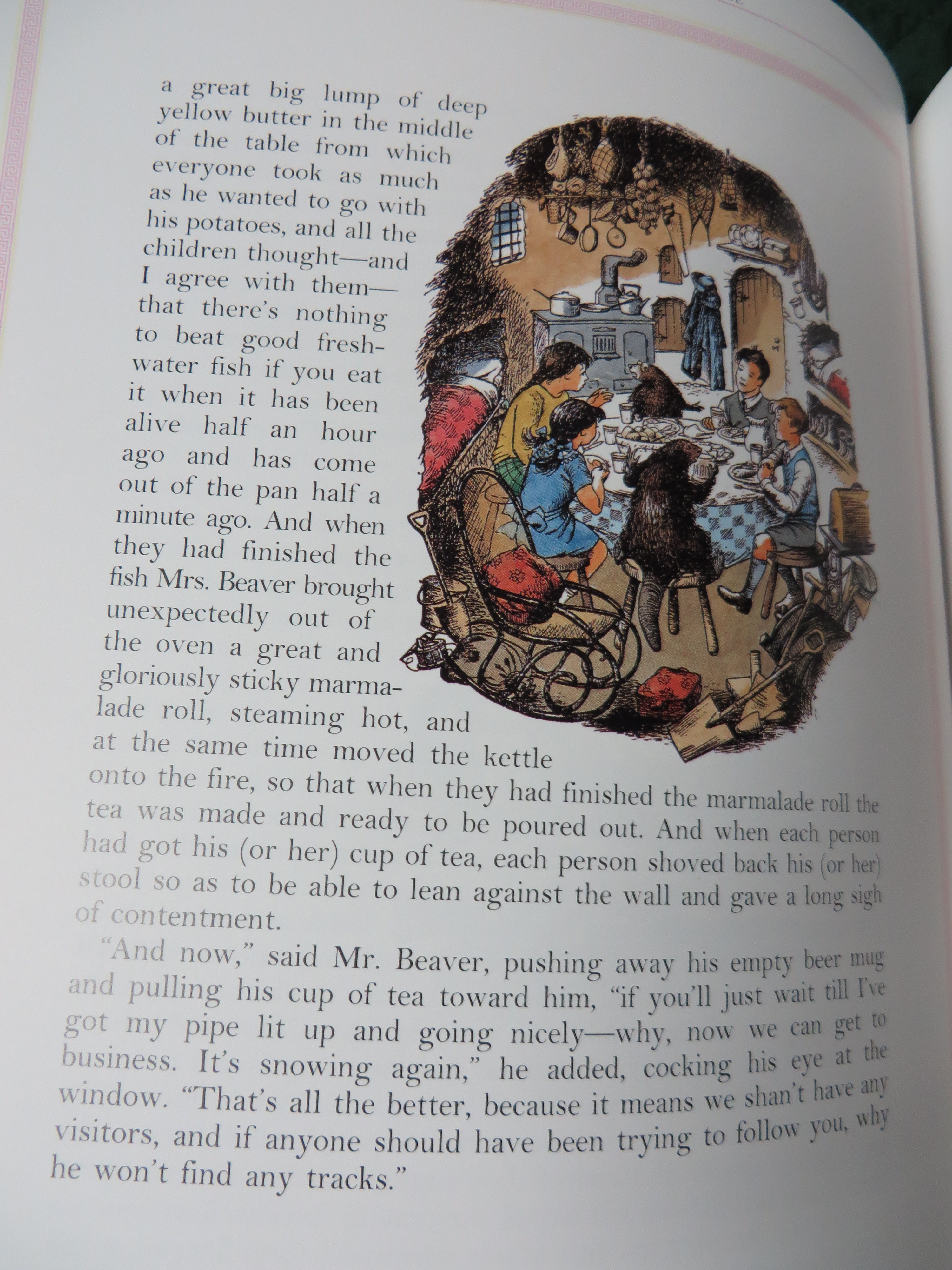
Gracious, Prince Caspian (the second published Narnia book) is boring. I didn’t miss a thing not reading that one as a kid. So, I skipped reading it to the boys, going from Wardrobe straight to The Voyage of the Dawn Treader (the third published Narnia book).  And then, well, I skipped reading them the rest of the series too (because they were dull as Caspian, even more preachy and dated than this book, and the boys never asked about them) and showing them the live-action movies.  So, as far as our family is concerned, I guess this series is a duology.  And a good one!  While Lewis is so very preachy (which I supposes makes sense in the Christian allegory context that he was working within–see my discussion of Wardrobe for more on this) and the pictures are generally awkward (as with Wardrobe), it is full of adventure and a nice change to have an antihero as a main character, someone needs a lot of personal growth rather than starting off perfect.  But the real draw in Dawn Treader, as far as I’m concerned, will always be the glorious Reepicheep.  Well, and the opening line:  “There once was a boy called Eustace Clarence Scrubb and he almost deserved it.”

Author:  C.S. Lewis

Illustrator:  Pauline Baynes   

A Little Princess

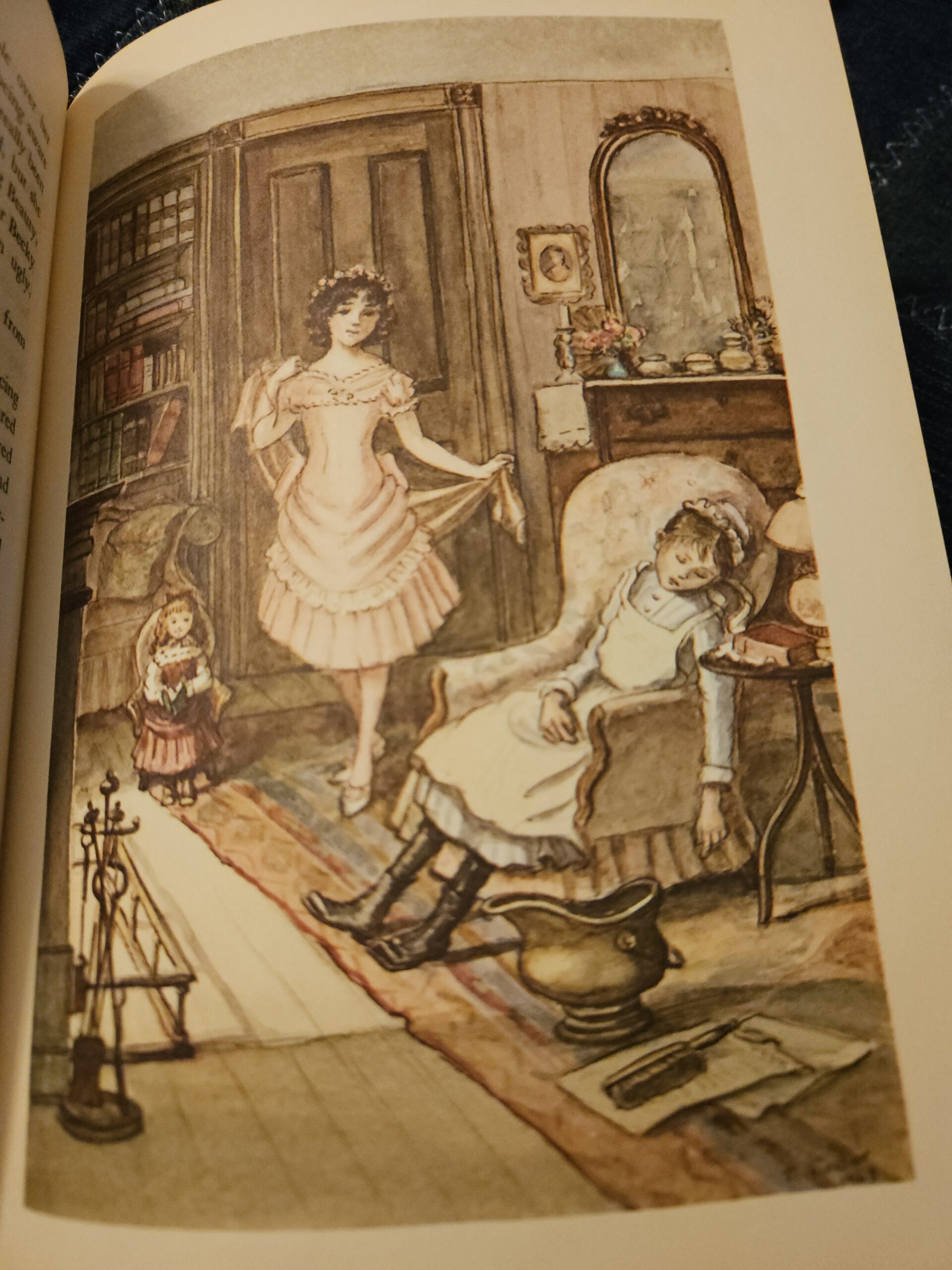
Like Matilda, this book focuses on a child escaping from awful circumstances by the power of her mind and creativity. I read it over and over as a child–Sara’s times of luxury and deprivation, love and misery, were enthralling (as was the glimpse into British boarding schools of the nineteenth century). And the sumptuous pictures! I read The Secret Garden by the same author around the same time. It never spoke to me in the same way (perhaps it would have if I’d had a copy of the edition Tasha Tudor illustrated), but it did make a a musical I hugely enjoyed as a young teen. (Avoid the movie of A Little Princess with Shirley Temple at all costs.)

Caveat: Keep in mind that both A Little Princess and The Secret Garden are about 120 years old and aspects of them have not aged well at all–read them alone first, there are a lot of things you’ll want to be ready to discuss if you read it to a child.

Author: Frances Hodgson Burnett

Illustrator: Tasha Tudor

Matilda

Oh, was there ever a better story for a book lover who doesn’t quite fit in? I knew from my childhood what a wonderful book this was to read alone, but this is another one where reading it aloud unlocks a whole new level of enjoyment. (That it has so many pranks and tricks did not hurt at all in keeping the boys attention.) That it has now been adapted into a musical is a fun bonus (although none of us loved the movie and we never have seen the non-musical live action movie).

Caveat: Like all Dahl books, this would not be the best book for a particularly sensitive or anxious child. Things are truly terrible for Matilda at home and at school for most of the book. But they do get much better!

Author: Roald Dahl

Illustrator: Quentin Blake

How the Grinch Stole Christmas!

Here’s the tart palate cleanser for all those (truly beloved!) sweet and cozy Christmas books. Who among us doesn’t sometimes feel a bit out of step, contrary, grinch-ish? And while I’m no Boris Karloff (the 1966 Grinch television special he narrated may be the best Christmas special ever–the live action version is a travesty), Dr. Seuss books are a pure pleasure to read aloud.

Author: Dr. Seuss

Illustrator: Dr. Seuss

Harry Potter and the Chamber of Secrets

IMG_4831

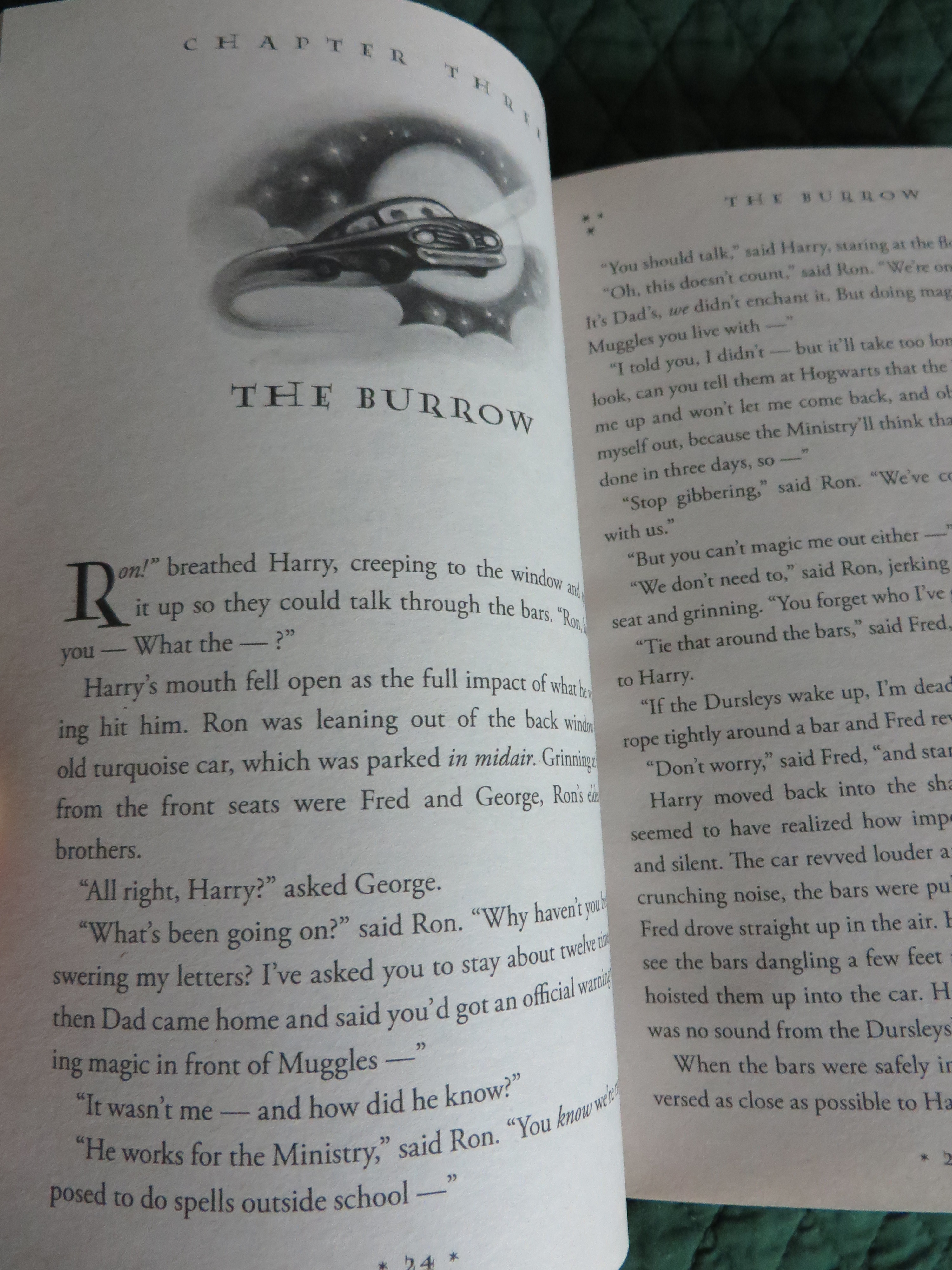
Harry Potter and the Chamber of Secrets is another book that needs no introduction and is utterly wonderful. Though there are many hints of the darkness to come (gulp), the tone is largely playful and the story and setting are as imaginative as ever. And it is here that Ms. Rowling, through Dumbledore, quietly states a message that goes to the heart of the series: “It is our choices, Harry, that show what we truly are, far more than our abilities.”

About a year and a half ago, after we enjoyed reading the first book in this series together, I read half of this second book to my oldest before he lost interest. Now a number of his friends are reading the series and he decided to give it another try. He raced through the rest of the book (mostly by himself) in a matter of days and then hopped straight into the third and fourth books in the series.

Author: J.K. Rowling
Illustrator: Mary Grandpre

The Lion, the Witch, and the Wardrobe

IMG_4726

I’m going to assume you know the plot of Wardrobe, given its status as an extremely widely-read, acknowledged classic of children’s literature. You may not know, however, that there is much controversy over which book in the Narnia series should be considered the first one. I started our journey to Narnia here, as Mr. Lewis did midway through the last century, because I think starting with the later-written prequel, The Magician’s Nephew, ruins the mystery and magic of Wardrobe.

I wasn’t sure how Wardrobe would work as a read-aloud and was pleasantly surprised to find it worked beautifully. Reading it aloud took much less time than I had expected and my oldest was very interested throughout.

First caveats:

Most adults know the Narnia books have a very Christian subtext, but most children (judging by my son and my childhood self) do not notice, at least with the early books in the series. A lion that dies to redeem the sins of others and then comes back to life? Carry on! It is no stranger than a magical chocolate factory staffed by oompa loompas or a father who goes out for some milk and is delayed by aliens, pirates, vampires, and space-traveling-talking dinosaurs. Whether you love that or hate the subtext, some familiarity with Narnia is is necessary for cultural literacy (for example, without Narnia, the excellent His Dark Materials trilogy wouldn’t make nearly as much sense). There is a bit of obvious sexism in this book, but it is not outrageous, particularly for the time period in which it was written.

Further caveats (with spoilers):

I’m not sure how far we’ll venture into this series together; I read Wardrobe early on as a child and really enjoyed it, but checked others in the series out of the library out of order and got deeply discouraged by The Magician’s Nephew (which I thought explained things that needed no explanation and just wasn’t terribly interesting) and then The Last Battle (which, among many other issues, has the Problem of Susan; nearly universally unsympathetic and one-dimensional characters; and an apocalypse, in every sense of the word, that destroys Narnia) and gave up on the series. But I recently read the third book in the series, The Voyage of the Dawn Treader (which was sent to me through a shipping error), and think my oldest would love it (although it comes with some caveats of its own, which I’ll detail if it ever gets its own entry) so I’ve ordered Prince Caspian to see if we should read it before Dawn Treader.

Final caveat:

Make sure your child is old enough for this book and this series; when good and evil battle things out in Narnia (and they do at least once in each of the Narnia books I have read) the details are vivid and the outcomes can be very, very grim.

Author: C.S. Lewis
Illustrator: Pauline Baynes