Tag Archives: I read this as a kid

Matilda

Oh, was there ever a better story for a book lover who doesn’t quite fit in? I knew from my childhood what a wonderful book this was to read alone, but this is another one where reading it aloud unlocks a whole new level of enjoyment. (That it has so many pranks and tricks did not hurt at all in keeping the boys attention.) That it has now been adapted into a musical is a fun bonus (although none of us loved the movie and we never have seen the non-musical live action movie).

Caveat: Like all Dahl books, this would not be the best book for a particularly sensitive or anxious child. Things are truly terrible for Matilda at home and at school for most of the book. But they do get much better!

Author: Roald Dahl

Illustrator: Quentin Blake

How the Grinch Stole Christmas!

Here’s the tart palate cleanser for all those (truly beloved!) sweet and cozy Christmas books. Who among us doesn’t sometimes feel a bit out of step, contrary, grinch-ish? And while I’m no Boris Karloff (the 1966 Grinch television special he narrated may be the best Christmas special ever–the live action version is a travesty), Dr. Seuss books are a pure pleasure to read aloud.

Author: Dr. Seuss

Illustrator: Dr. Seuss

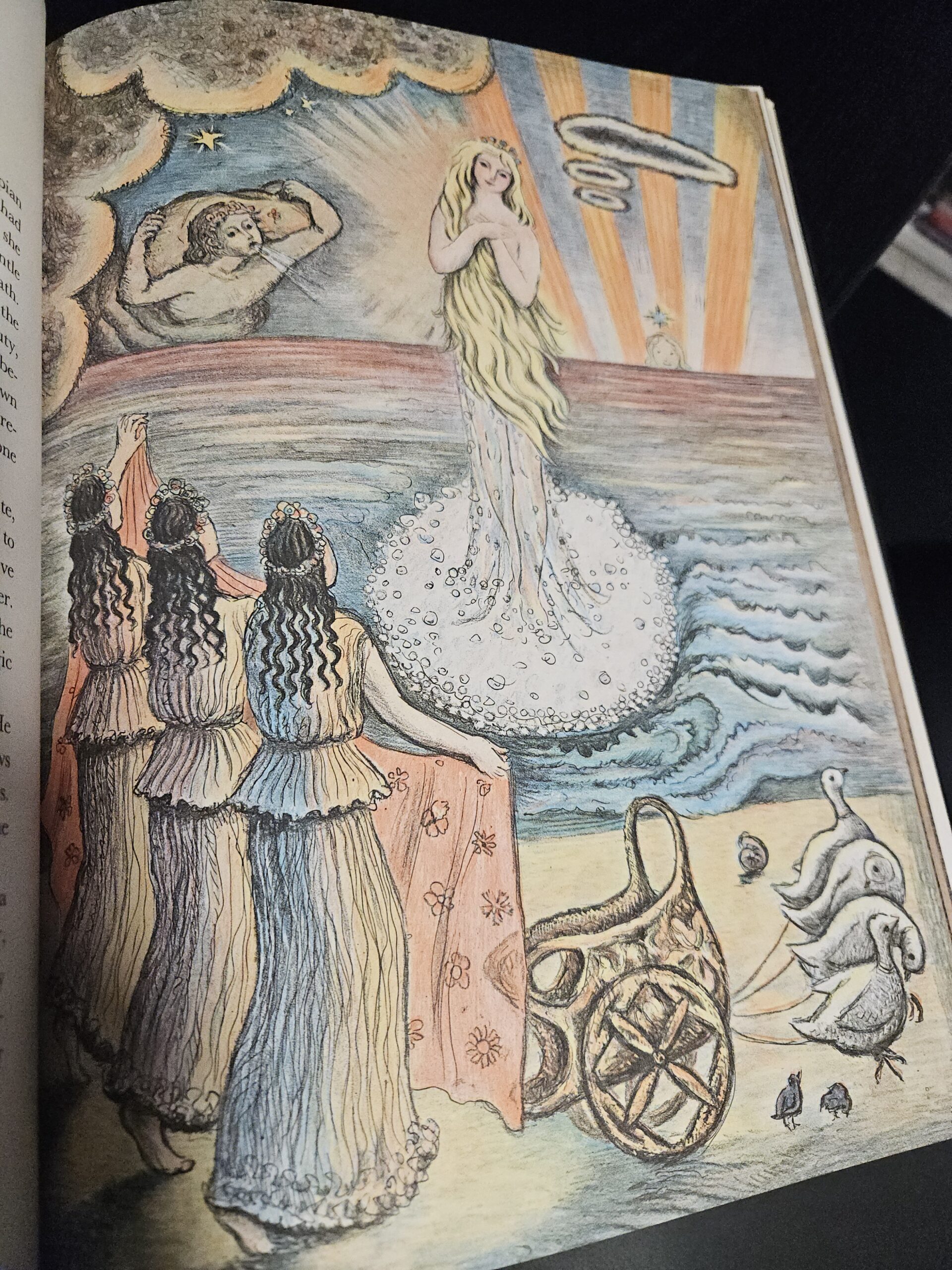
D’Aulaires’ Book of Greek Myths

This book is irresistible. Stunning, unforgettable illustrations, utterly bizarre and intriguing stories. I loved reading it over and over in my school’s library as a child and couldn’t wait to grab a copy of our own for the boys. Even better, there is also an unabridged audio version (read by Paul Newman, Sidney Poitier, Kathleen Turner, and Matthew Broderick), which means the boys know how to pronounce all the names correctly. These stories are foundational texts for Western culture, and you couldn’t ask for a better introduction. And then they discovered Percy Jackson, which they deeply loved, but I never read it to them, so I’m not sure I’ll be talking abut that here.

Authors: Ingri and Edgar Parin D’Aulaire

Illustrators: Ingri and Edgar Parin D’Aulaire

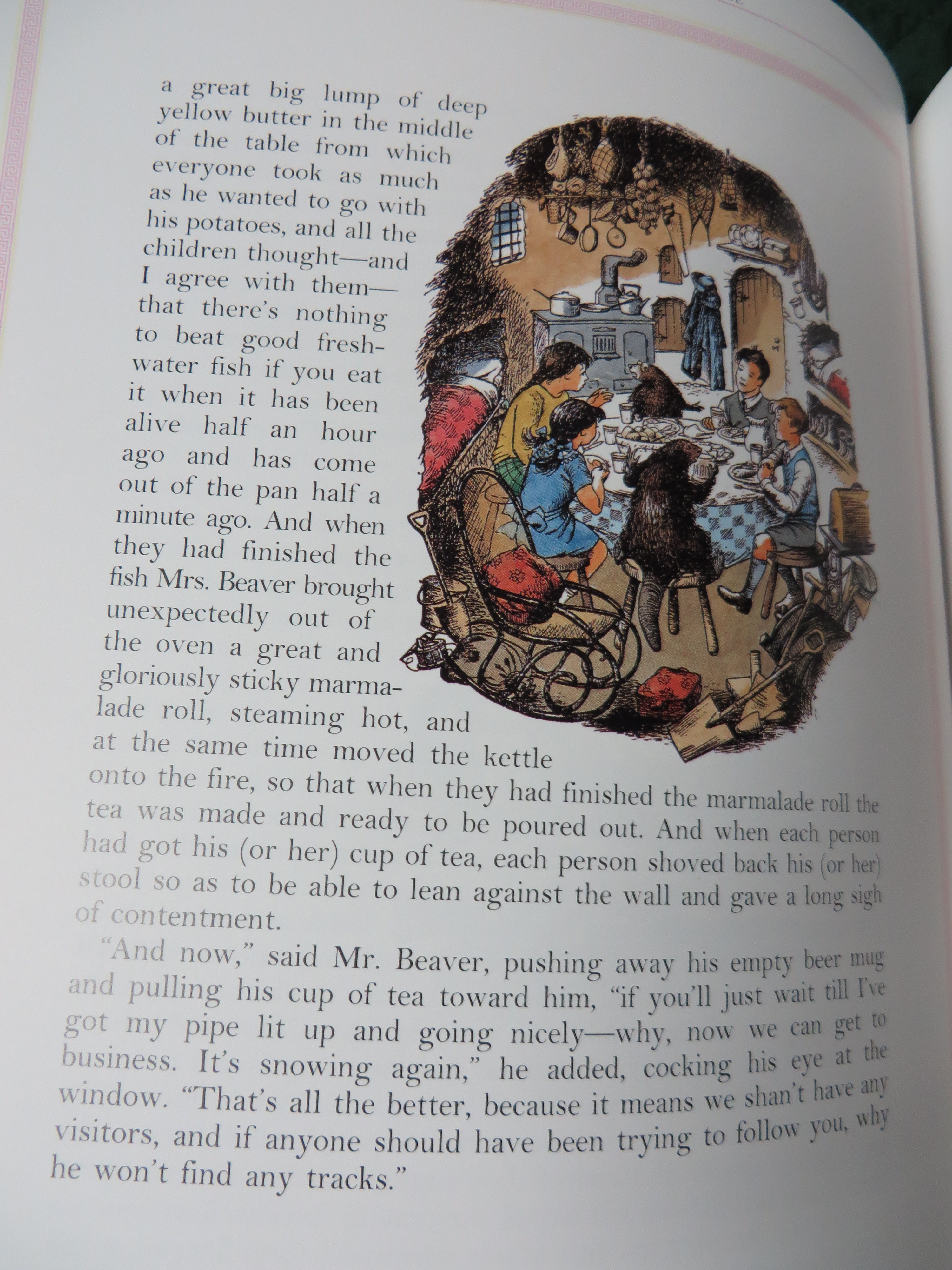
The Lion, the Witch, and the Wardrobe

IMG_4726

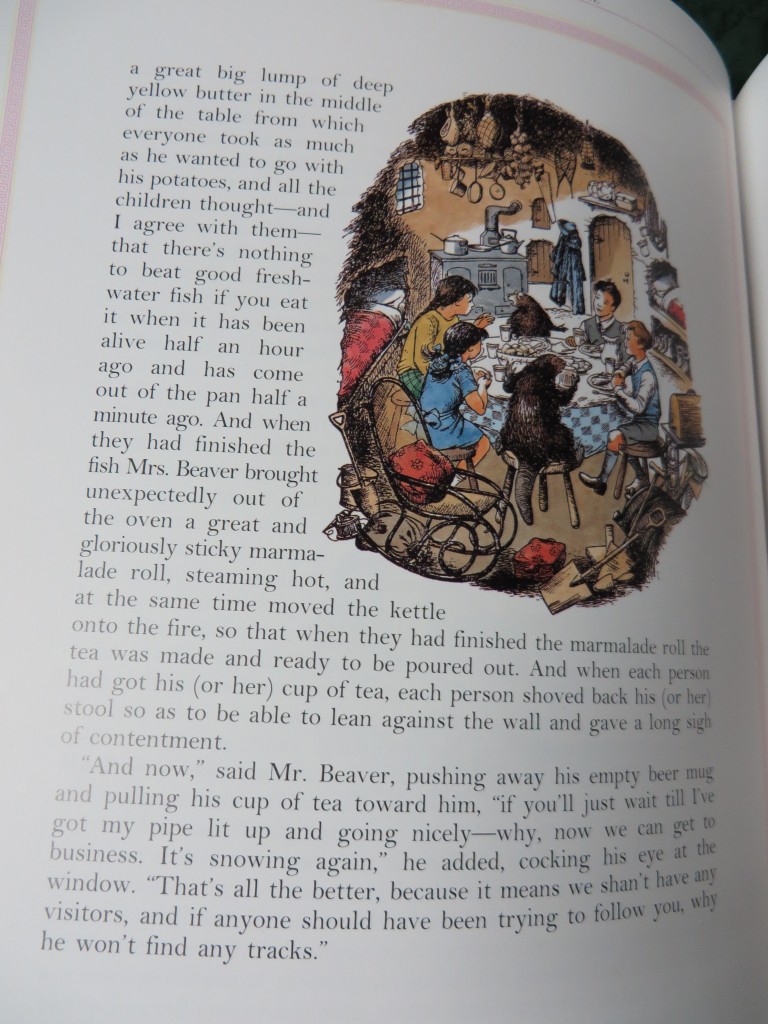
I’m going to assume you know the plot of Wardrobe, given its status as an extremely widely-read, acknowledged classic of children’s literature. You may not know, however, that there is much controversy over which book in the Narnia series should be considered the first one. I started our journey to Narnia here, as Mr. Lewis did midway through the last century, because I think starting with the later-written prequel, The Magician’s Nephew, ruins the mystery and magic of Wardrobe.

I wasn’t sure how Wardrobe would work as a read-aloud and was pleasantly surprised to find it worked beautifully. Reading it aloud took much less time than I had expected and my oldest was very interested throughout.

First caveats:

Most adults know the Narnia books have a very Christian subtext, but most children (judging by my son and my childhood self) do not notice, at least with the early books in the series. A lion that dies to redeem the sins of others and then comes back to life? Carry on! It is no stranger than a magical chocolate factory staffed by oompa loompas or a father who goes out for some milk and is delayed by aliens, pirates, vampires, and space-traveling-talking dinosaurs. Whether you love that or hate the subtext, some familiarity with Narnia is is necessary for cultural literacy (for example, without Narnia, the excellent His Dark Materials trilogy wouldn’t make nearly as much sense). There is a bit of obvious sexism in this book, but it is not outrageous, particularly for the time period in which it was written.

Further caveats (with spoilers):

I’m not sure how far we’ll venture into this series together; I read Wardrobe early on as a child and really enjoyed it, but checked others in the series out of the library out of order and got deeply discouraged by The Magician’s Nephew (which I thought explained things that needed no explanation and just wasn’t terribly interesting) and then The Last Battle (which, among many other issues, has the Problem of Susan; nearly universally unsympathetic and one-dimensional characters; and an apocalypse, in every sense of the word, that destroys Narnia) and gave up on the series. But I recently read the third book in the series, The Voyage of the Dawn Treader (which was sent to me through a shipping error), and think my oldest would love it (although it comes with some caveats of its own, which I’ll detail if it ever gets its own entry) so I’ve ordered Prince Caspian to see if we should read it before Dawn Treader.

Final caveat:

Make sure your child is old enough for this book and this series; when good and evil battle things out in Narnia (and they do at least once in each of the Narnia books I have read) the details are vivid and the outcomes can be very, very grim.

Author: C.S. Lewis
Illustrator: Pauline Baynes

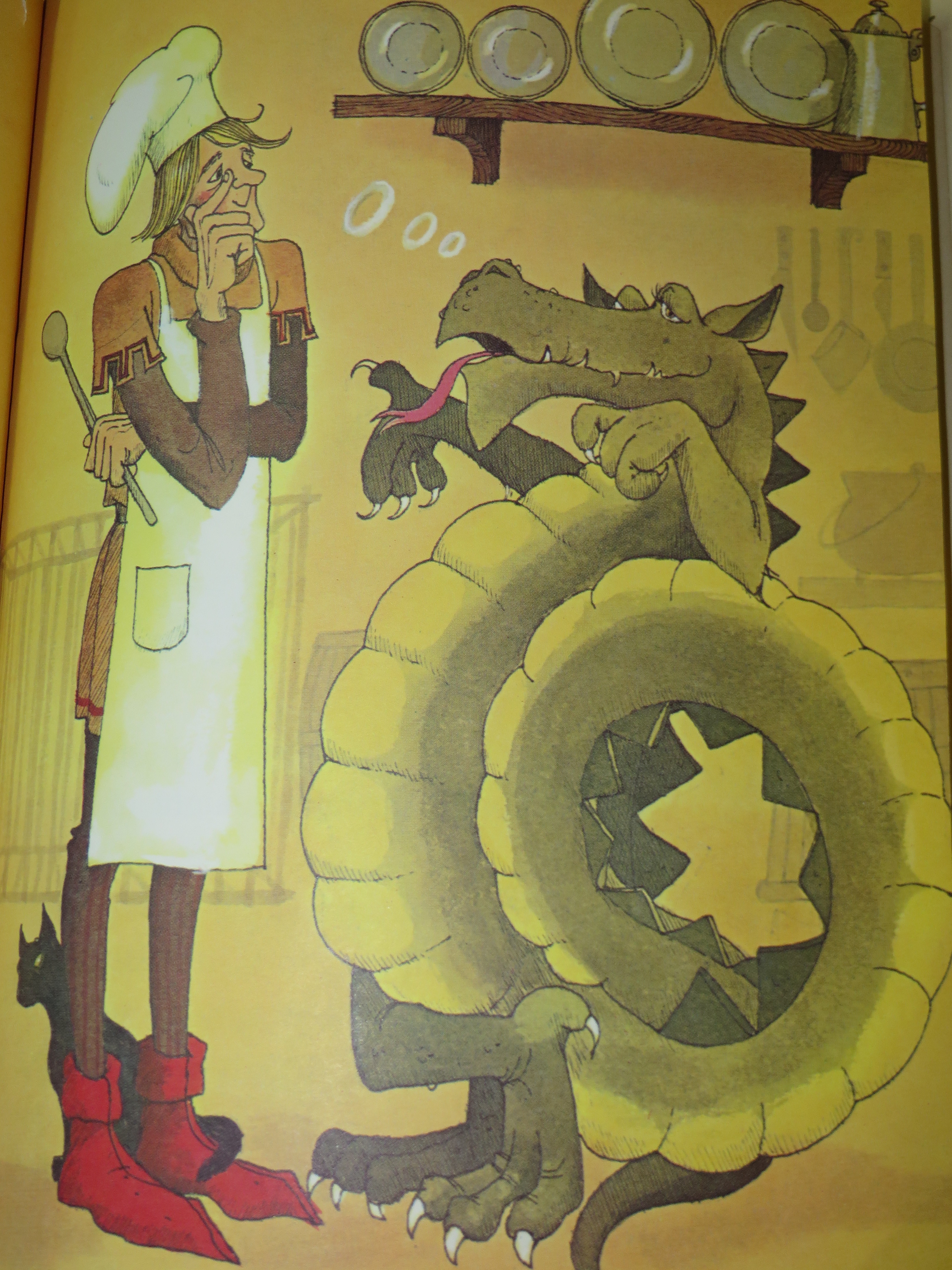
Dragon Stew

IMG_4452

. . . a shabby young
man came trudging up the road toward the
castle. He had patched knees and elbows, and
the feather in his worn hat was bedraggled,
but he had a merry grin, and he was whistling
a gay tune. When he saw the long line of people,
he asked a soldier, “What’s going on?”

“The king’s looking for a new royal cook,”
the soldier replied. “The cook with the most
unusual recipe will get the job and will live in
the palace off the best of the land!”

“Wouldn’t that be wonderful!”

“Well, I don’t know,” said the soldier.
“Cooks don’t get along with the king. He tells
’em what to do, puts things in their pots–he
all but does the cooking himself.”

“You don’t say?” said the young man, and
he got into line.

Much like The King of Pizza, this book begins with a monarch that loves food but is never satisfied with it. And once again, after some twists and turns, everyone ends up happy (including the kids it is read to). The illustrations, by Ms. Hyman, are very good and particularly interesting when you compare them to her later (much more detailed) illustrations for Saint George and the Dragon.

Author: Tom McGowen
Illustrator: Trina Schart Hyman

Grandfather Twilight

IMG_4187

You could say that this book tells a simple story about the quiet routine of a grandfather. Or you could say that it is about cosmic matters of great significance. Either way, you’d be right.

Like When the Sun Rose, by the same author/illustrator, this book is peaceful and quiet and absolutely beautiful. And, also just like Sun Rose, the boys just aren’t that interested in it (perhaps because it dreamlike and has very few words).

Author: Barbara Helen Berger
Illustrator: Barbara Helen Berger


On Market Street

IMG_4179

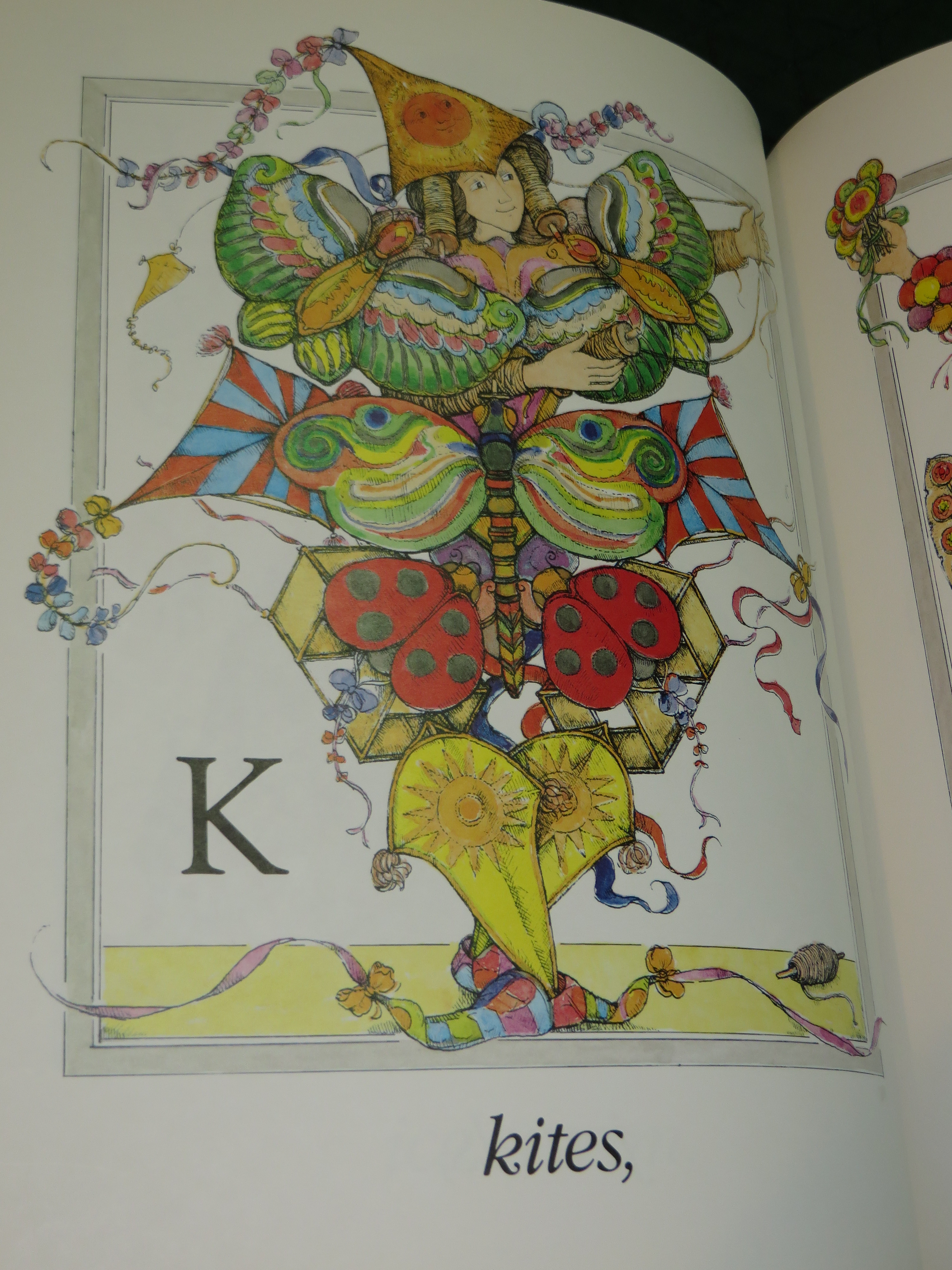
On Market Street, vendors of items from apples to zippers all wear (or are made of) their wares. I’ve loved this beautiful alphabet book from the first time I saw it as a child. The boys prefer The Racecar Alphabet, but this is the week when I share some of the books that I currently enjoy more than they do, in honor of Mother’s Day.

Author: Arnold Lobel
Illustrator: Anita Lobel


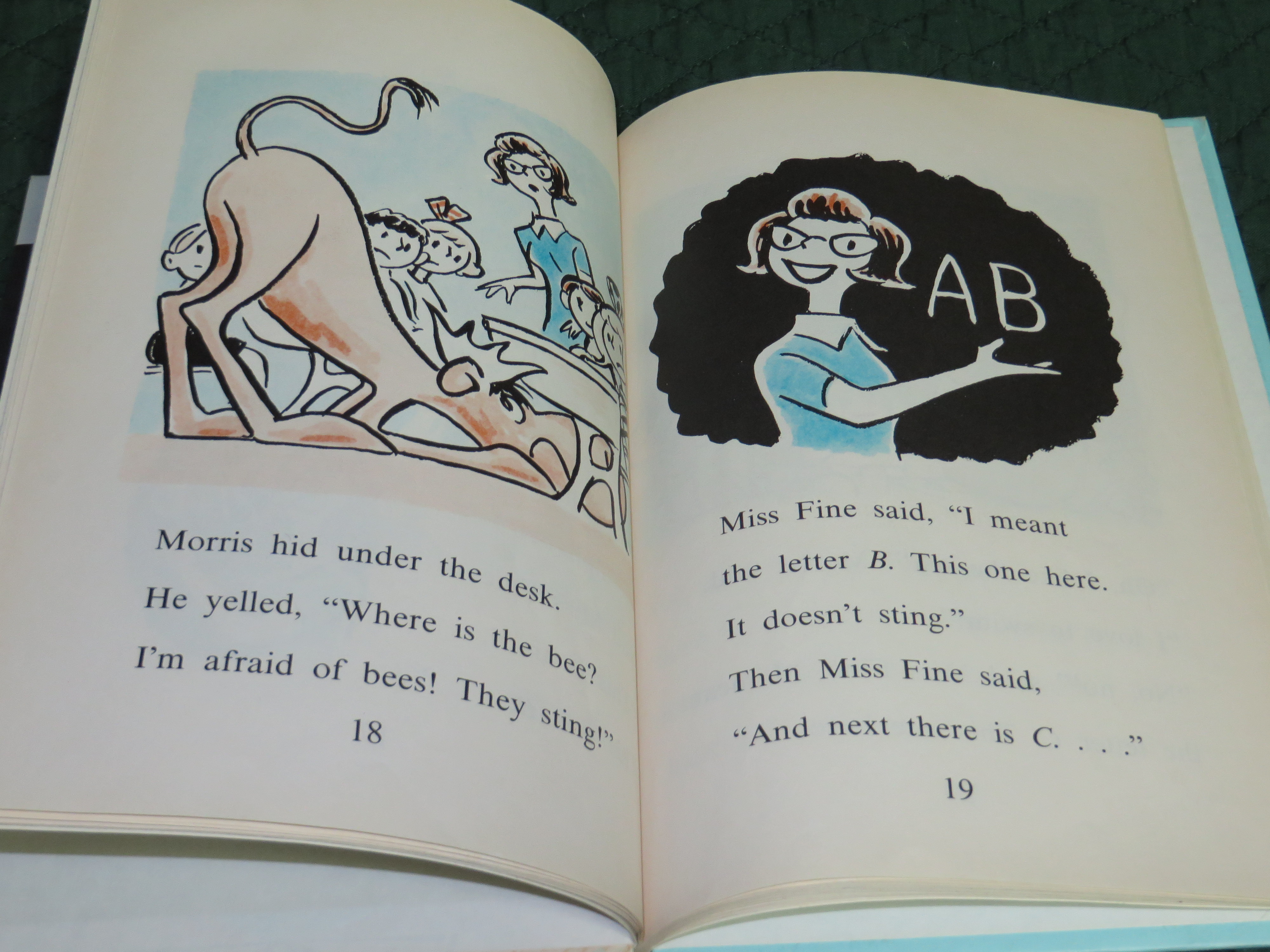
Morris Goes to School

IMG_4085

Morris looked at the candy.
He liked the gumdrops.
He said, “Give me some of those.”
The man said,
“They are one for a penny.
How much money do you have?”
Morris looked. He had six pennies.
“I have four pennies,” he said.
The man laughed. “You have six!
Can’t you count? Don’t you go to school?”
Morris asked, “What is school?”

The rest of the book answers this question, as Morris immediately heads off to school and learns lots of new things. Perhaps most importantly, by the end of the day he knows how to purchase the right amount of gumdrops.

Morris takes things very literally, and the resulting misunderstandings (like in the picture above) really tickle my youngest (who is getting ready to start school himself). This book also presents many opportunities for him to participate in the reading (for example, by counting Morris’ pennies).

Author: B. Wiseman
Illustrator: B. Wiseman

Fuzzy Rabbit Series

IMG_4079

Fuzzy Rabbit had been with the family for
as long as he could remember. His dungarees
were faded. He had a hole in the elbow of his
sweater, and his buttons were all odd ones of
different sizes. One of the stitches of his mouth
had come undone, and he couldn’t even smile.

Fuzzy has been feeling sad of late. His little girl, Ellen, used to take him to school with her, but recently she has started leaving him at home with the other toys. And, for the first time, she forgets to take him downstairs for her birthday party. Fuzzy is starting to wonder where he fits in. Luckily, by the end of the book he is reassured he is loved and regains his confidence (and his smile).

The pictures here are a big part of the attraction; I remember poring over them as a girl, wishing I could play in (or, better yet, have) Ellen’s room and toys. Now I enjoy noting that Fuzzy Rabbit (or “Alpaca,” as he is known in the U.K.) was made for Ellen by her mother and that Ellen has all the skills she needs to repair him. This is a favored book of my youngest, who is very interested in stuffed animals, birthdays, and school.  He also loves the book where Fuzzy Rabbit saves Christmas by (spoiler!) waking Santa up from an ill-timed nap.

Author: Rosemary Billam
Illustrator: Vanessa Julian-Ottie

The Complete Calvin and Hobbes

IMG_4014

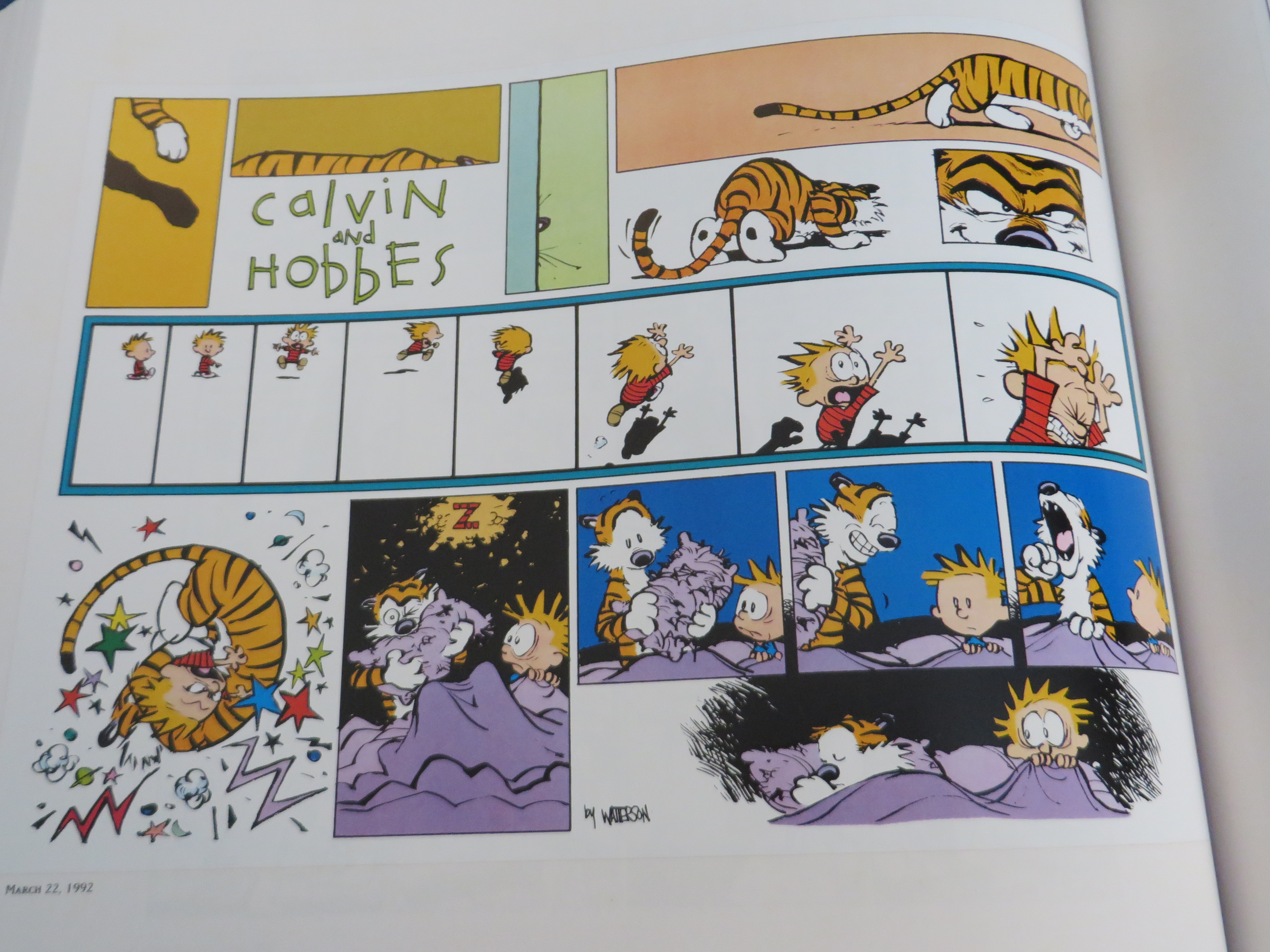
When I was a kid, Calvin and Hobbes was the highlight of the comics page. When this big box set came out in paperback a bit over two years ago, I pounced. Last year, I started reading it to my oldest before bed. Now he is devouring it without me (but he loves to show me the strips he thinks are the funniest, like the one above).

Author: Bill Watterson
Illustrator: Bill Watterson